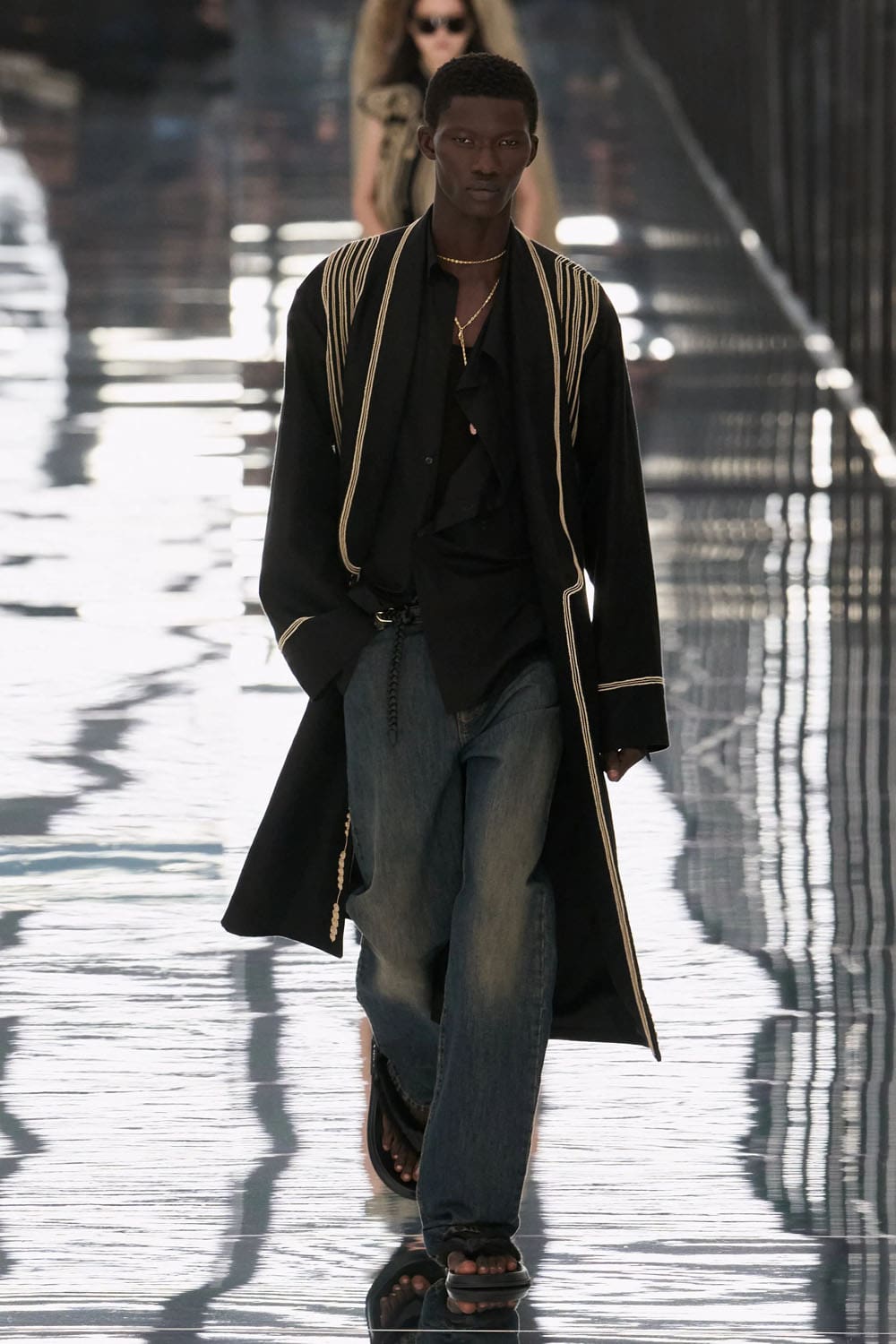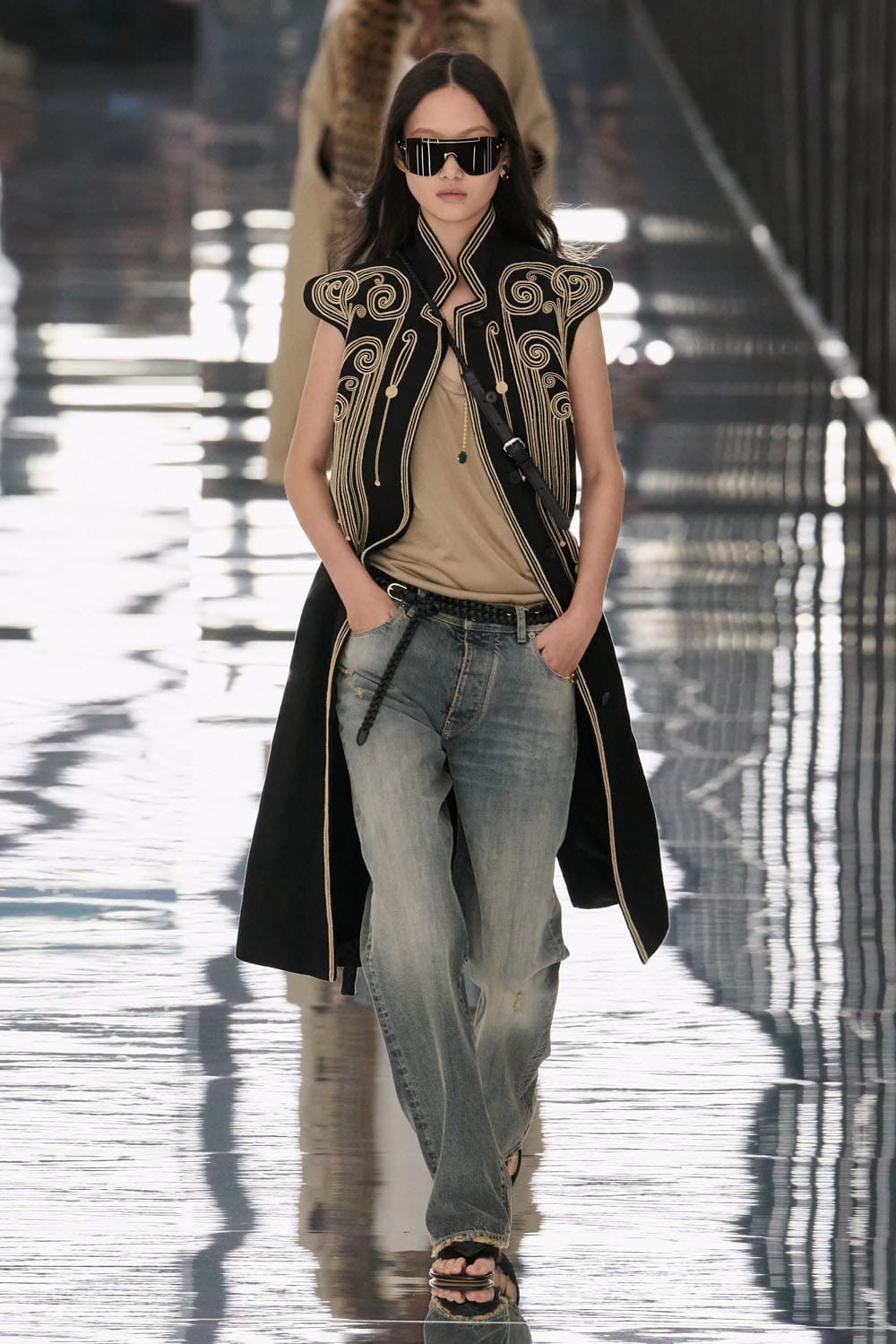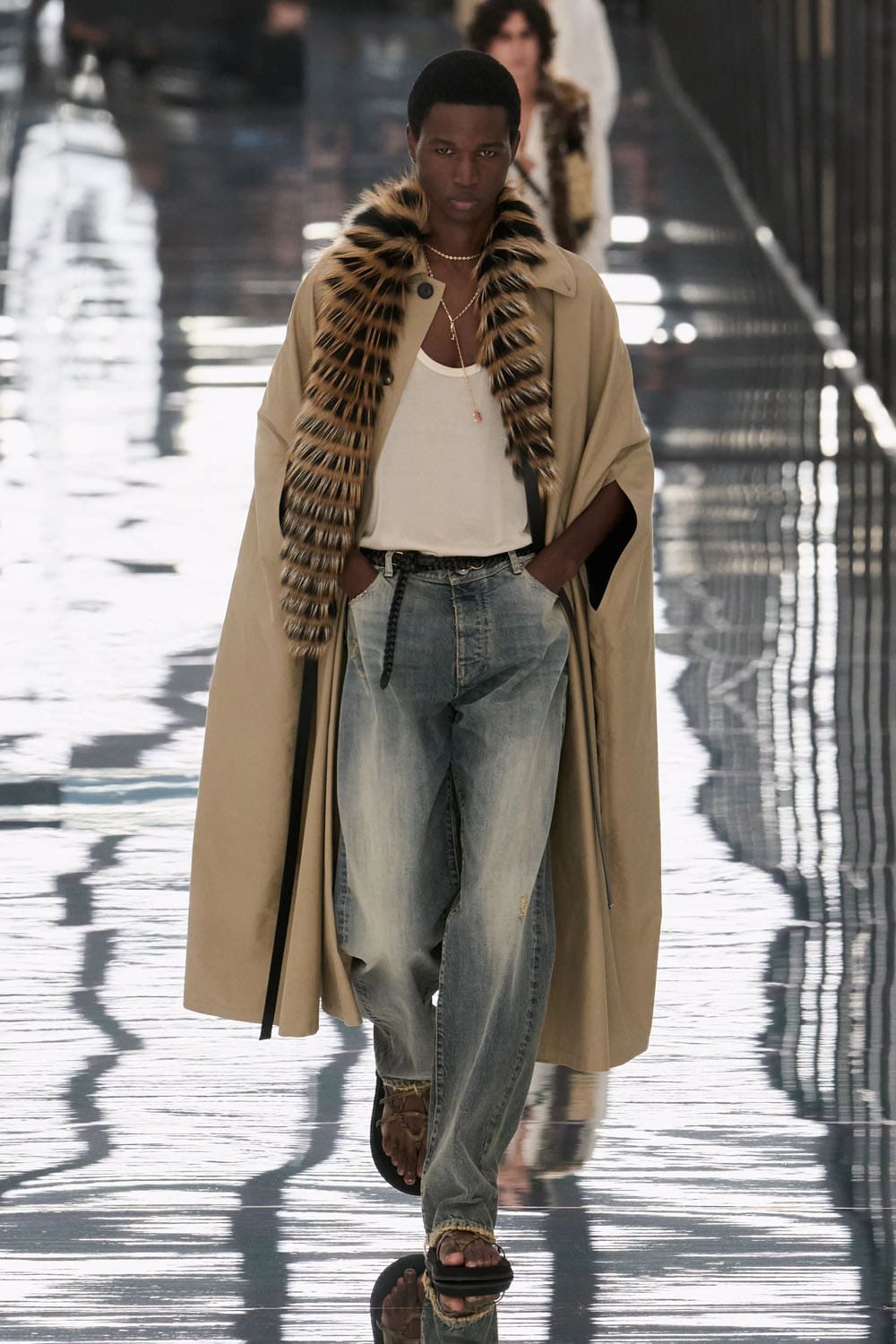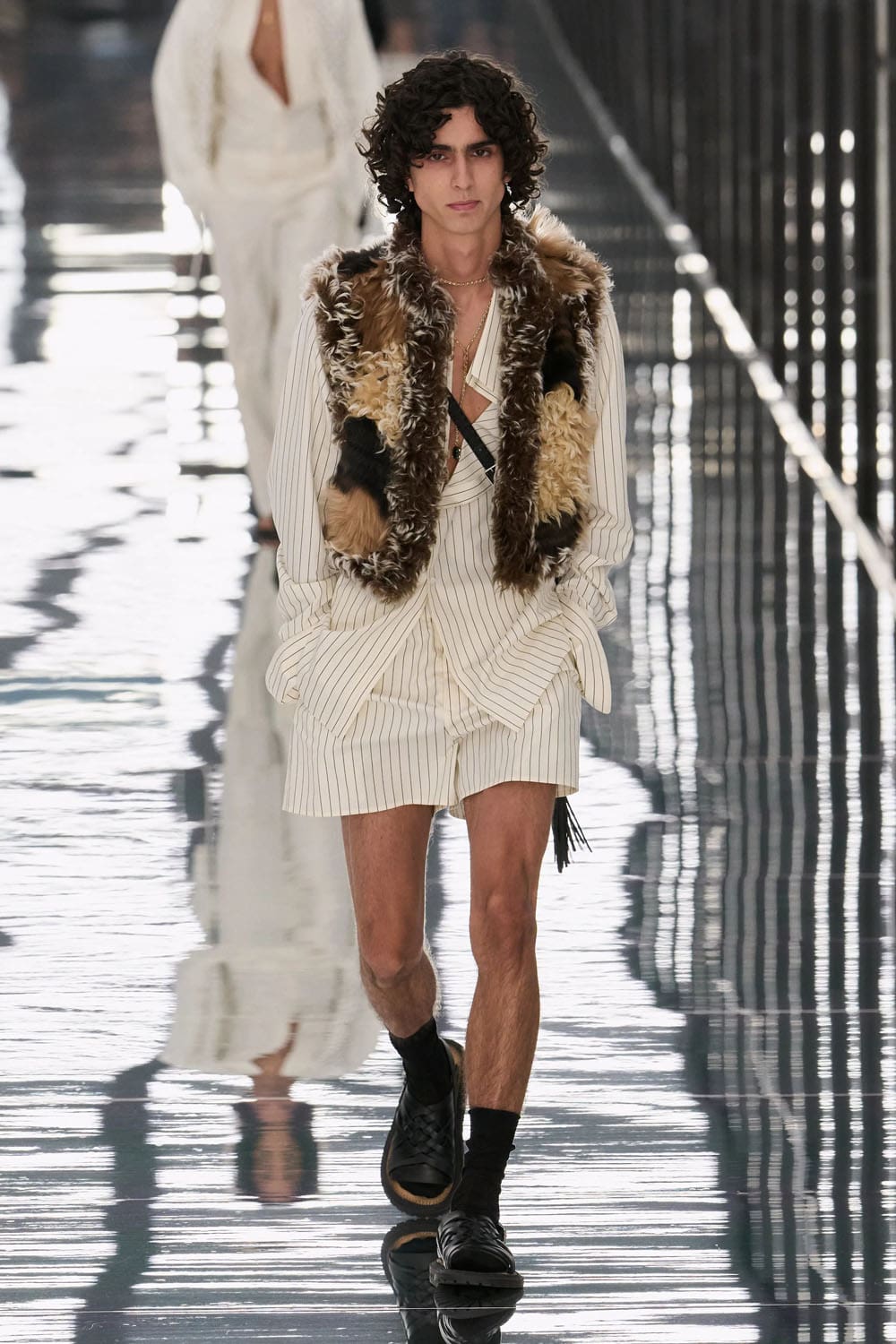
Fendi Spring Summer 2027 “I like my body when it is with your body”. Story by Eleonora de Gray, Editor-in-Chief of RUNWAY マガジン。写真/ビデオ提供: フェンディ。
The Funhouse of Broken Echoes
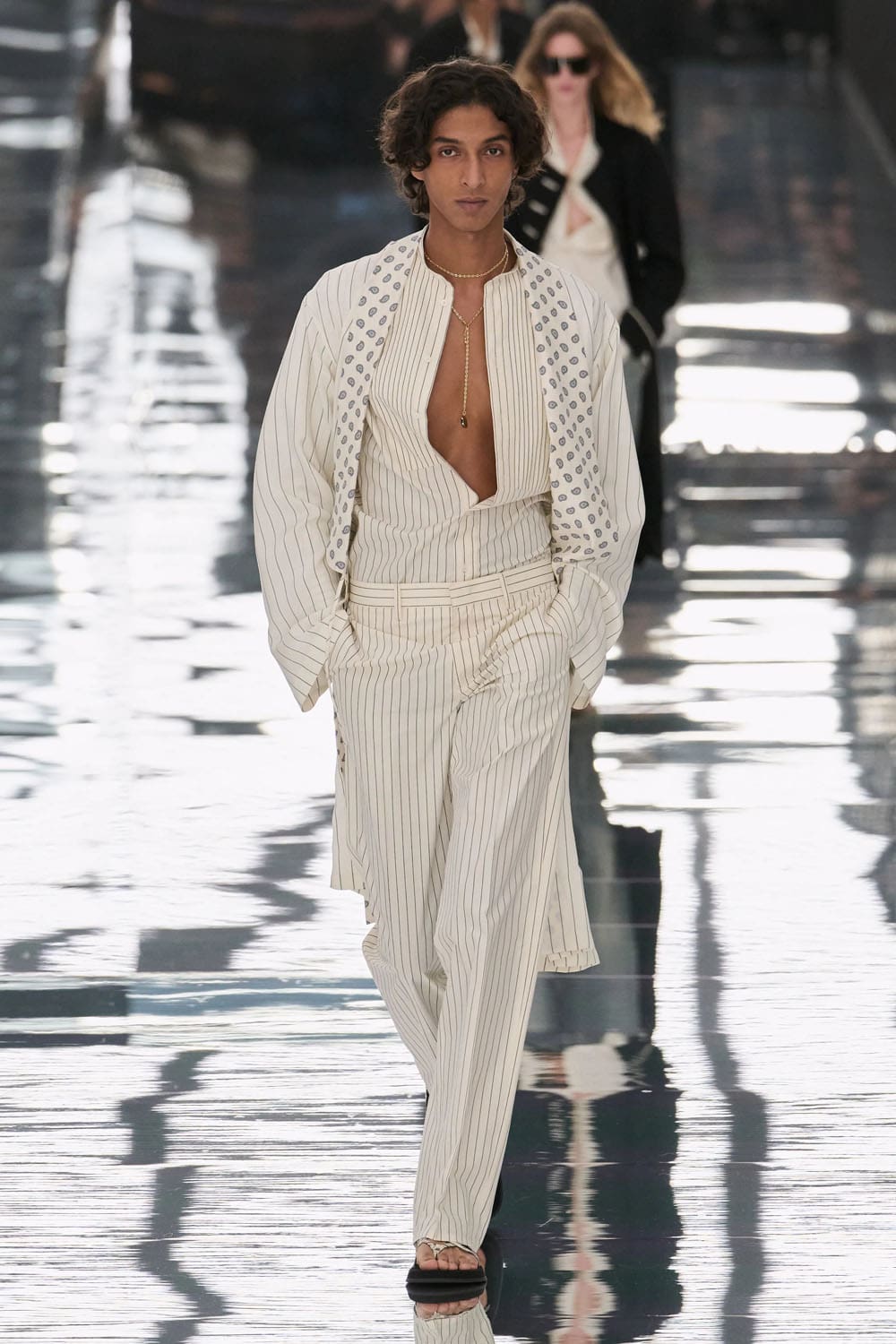
“We exist in relation to others, to what surrounds us.” So announced the program notes, setting an impeccably high bar of pseudo-philosophical gravitas for a spectacle staged inside an architectural facsimile of Luciano Fabro’s Cubo di specchi. There we sat in Milan, trapped inside a mirrored cube where models drifted past like half-glimpsed apparitions in a carnival funhouse. The intended conceit was noble enough: to subvert the narcissistic gaze, turning self-reflection into a shared communal encounter. The unintended effect, however, was far more pragmatic. Facing a fractured prism of our own exhausted expressions, we spent fifty minutes desperately searching for the clothes while squinting through our own distorted silhouettes.
When Maria Grazia Chiuri invoked both the poetic yearning of “I like my body when it is with your body” and the joyful, liberated spirit of Raffaella Carrà, one anticipated an explosion of audacious Roman verve. Carrà was unapologetic electricity: a whirlwind of blonde fringe, pelvic emancipation, glittering catsuits, and disco bravura that kicked television censors squarely in the teeth. What glided across the polished reflective floor, however, bore about as much resemblance to Carrà’s kinetic joy as a lukewarm espresso does to a riot. The mirror here did not reveal new relational horizons. It merely reflected an all-too-familiar pastiche of ideas borrowed from every corner of the fashion landscape, reconstituted under the house moniker.
The Great Déjà-Vu Bazaar
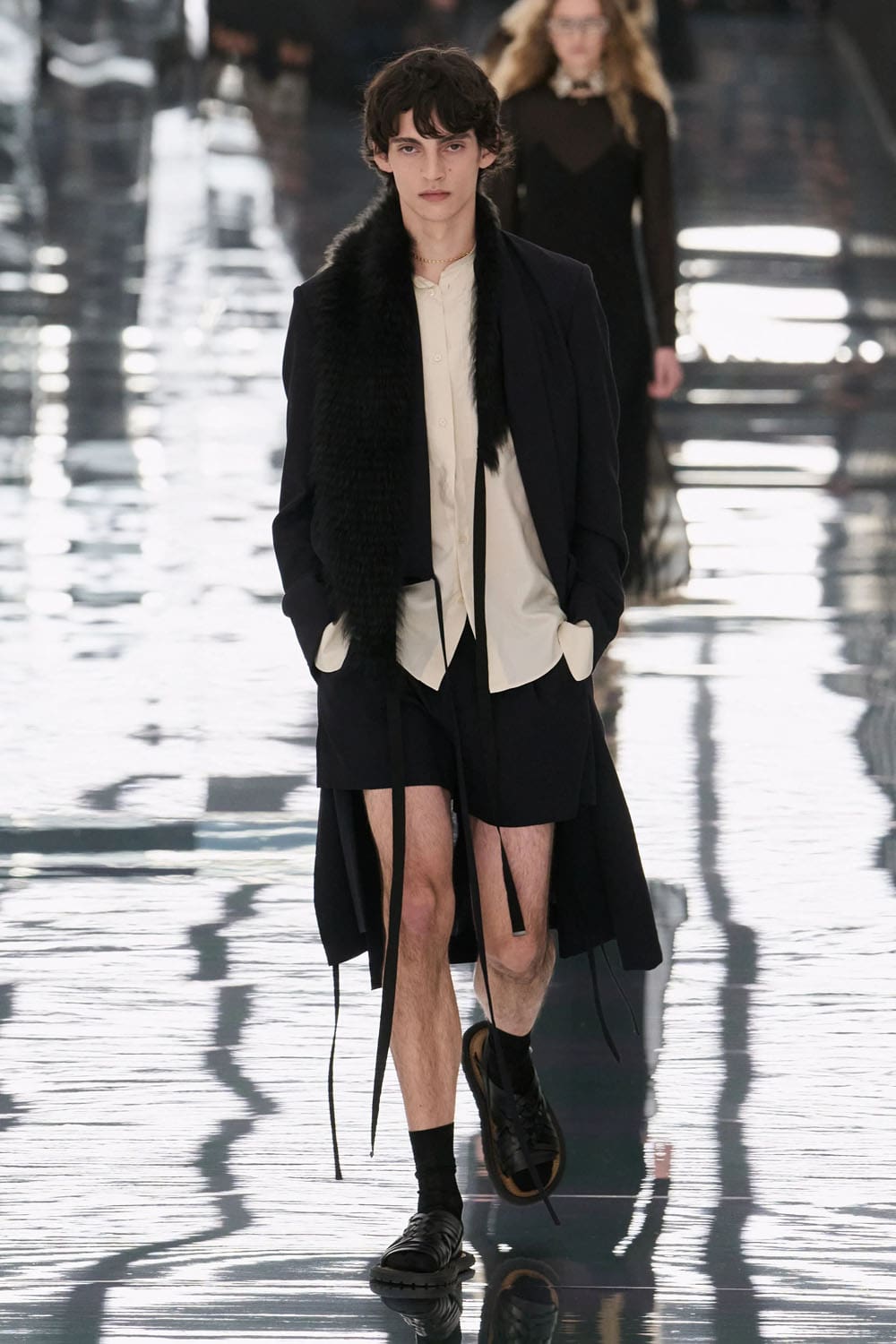
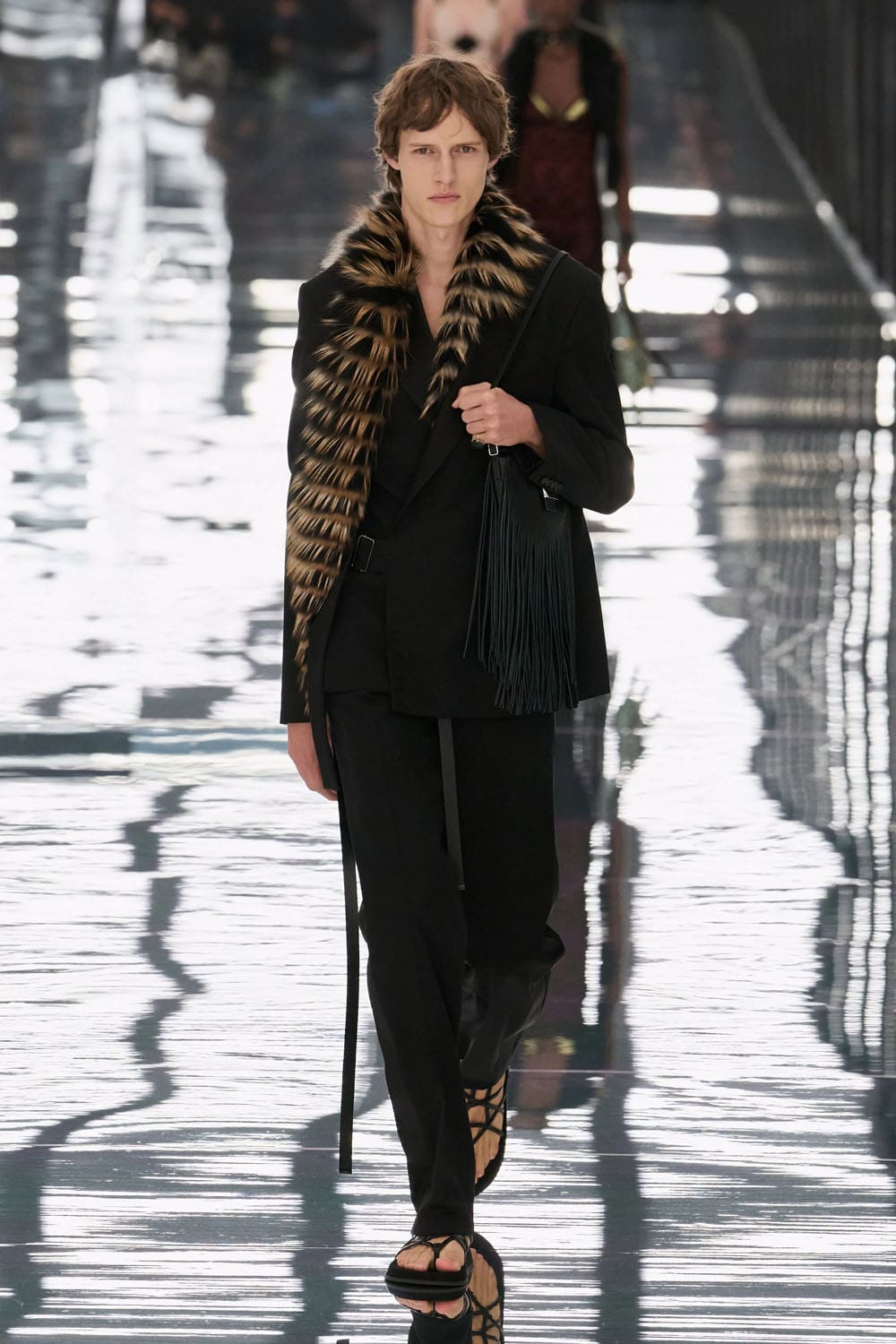
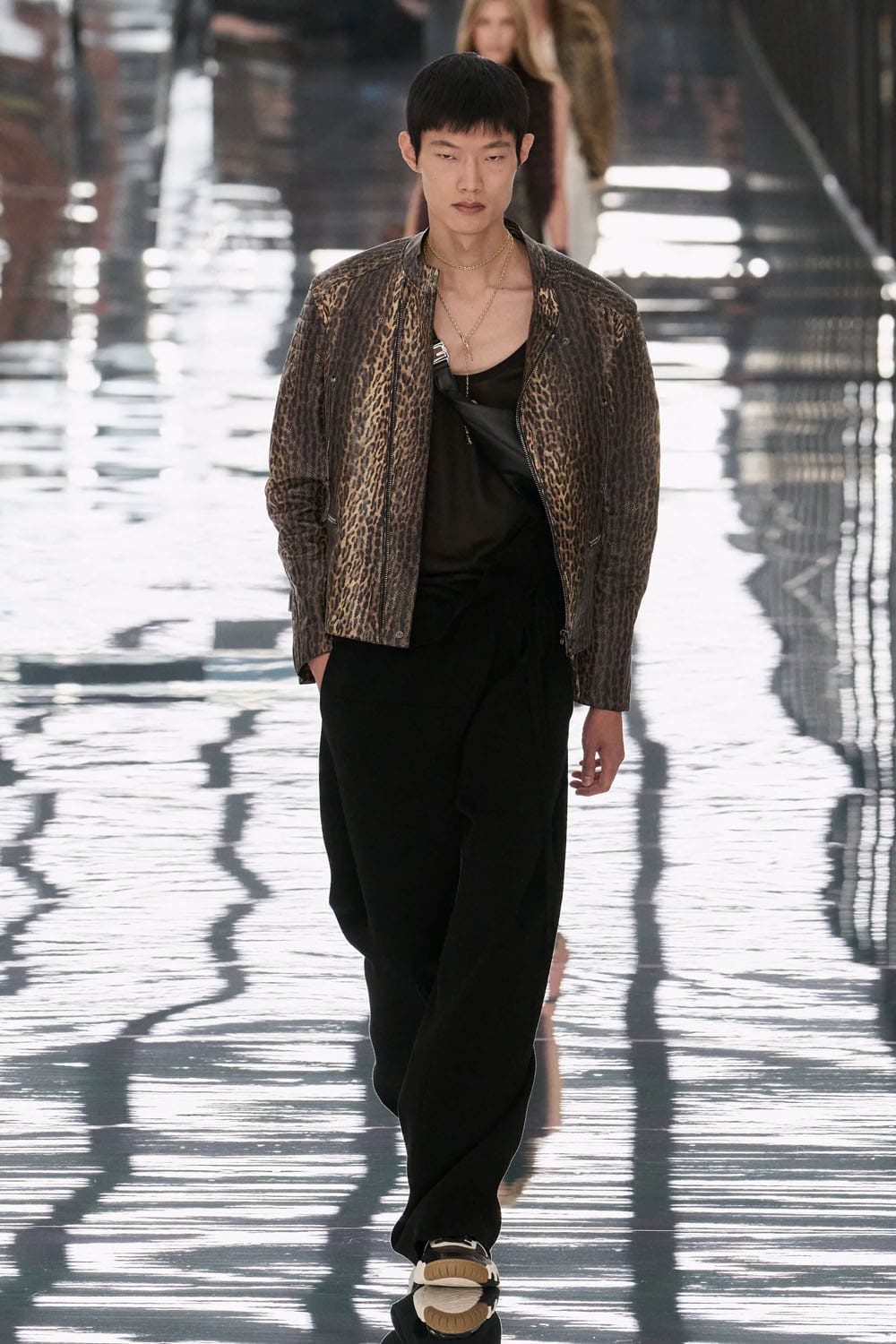
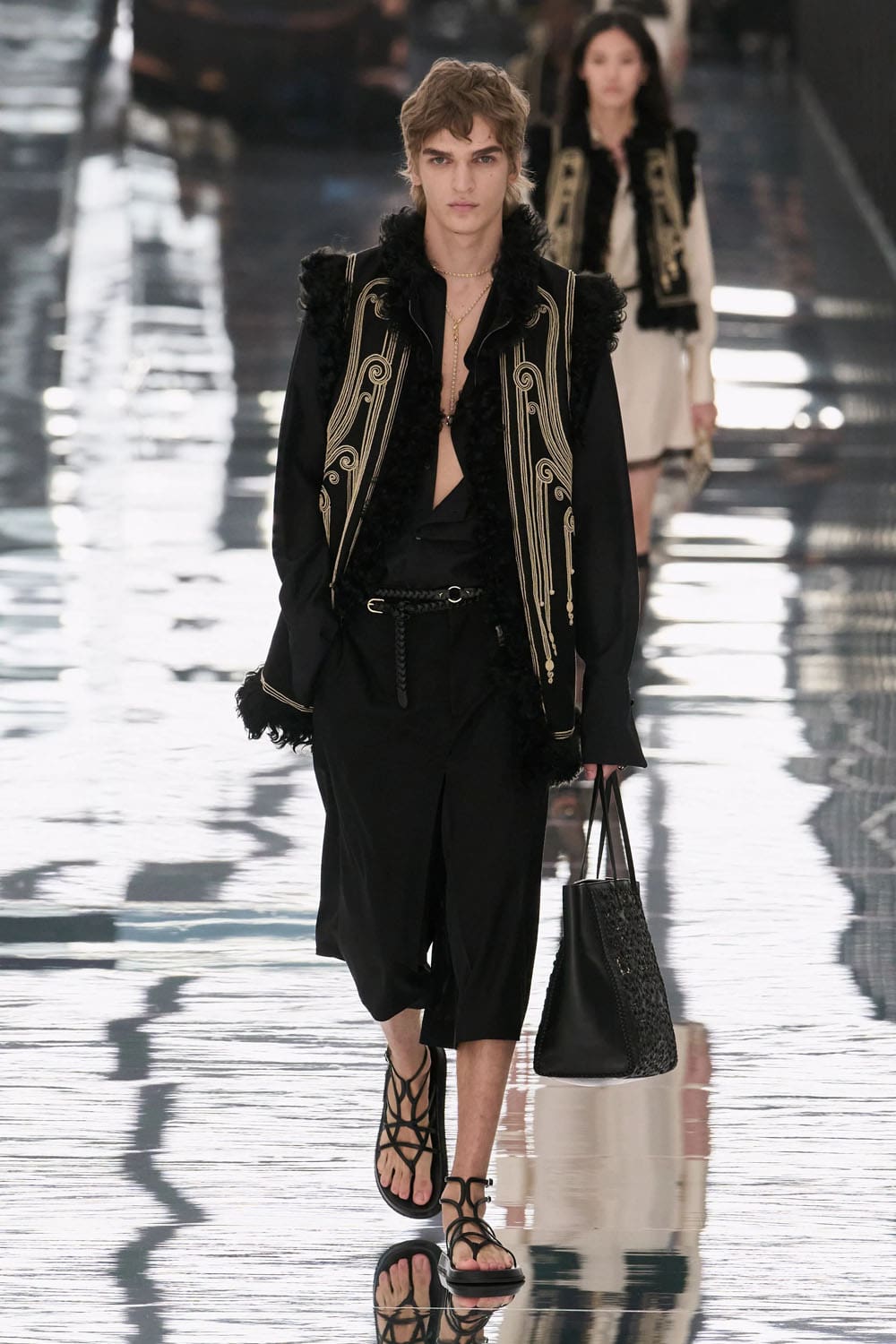
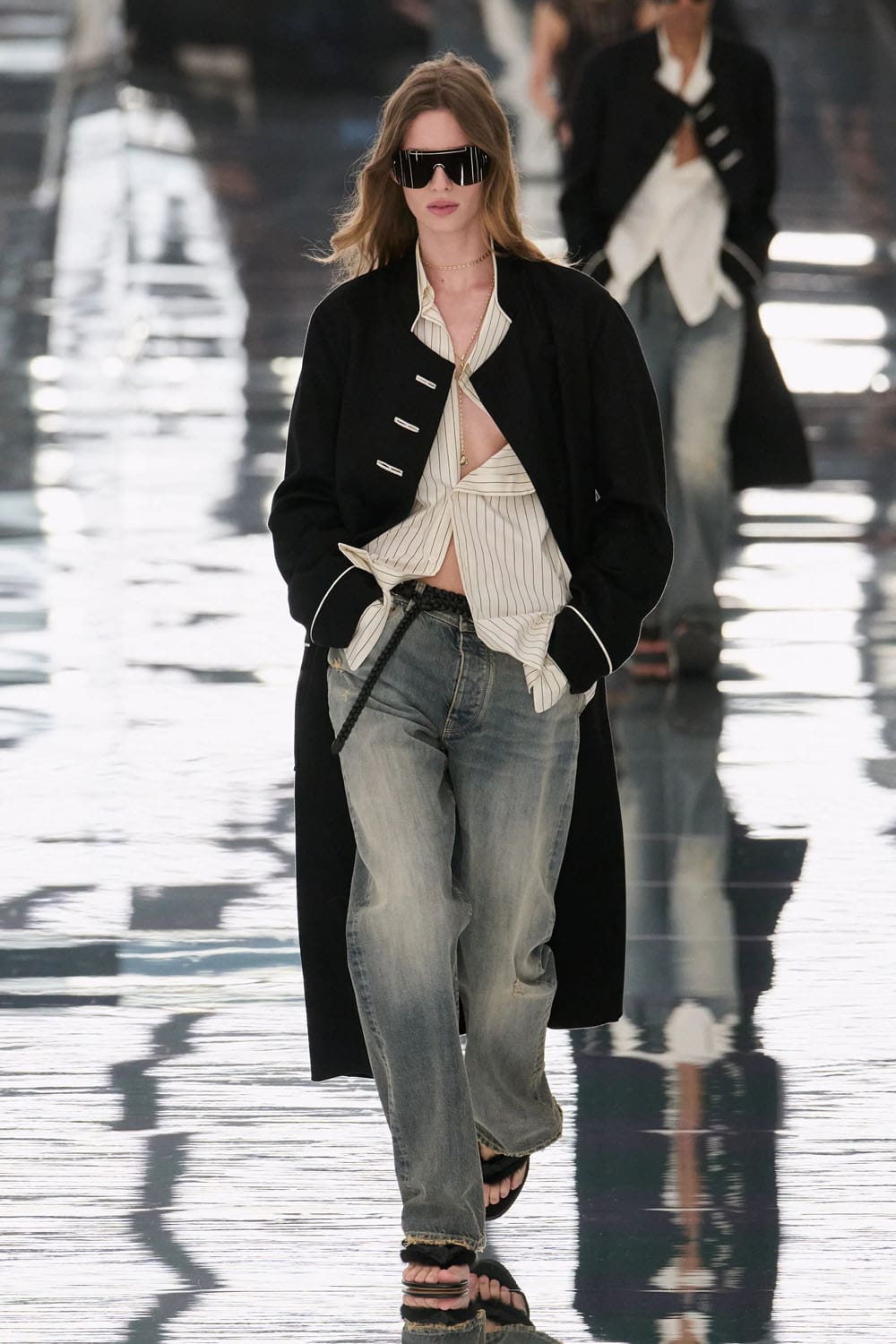
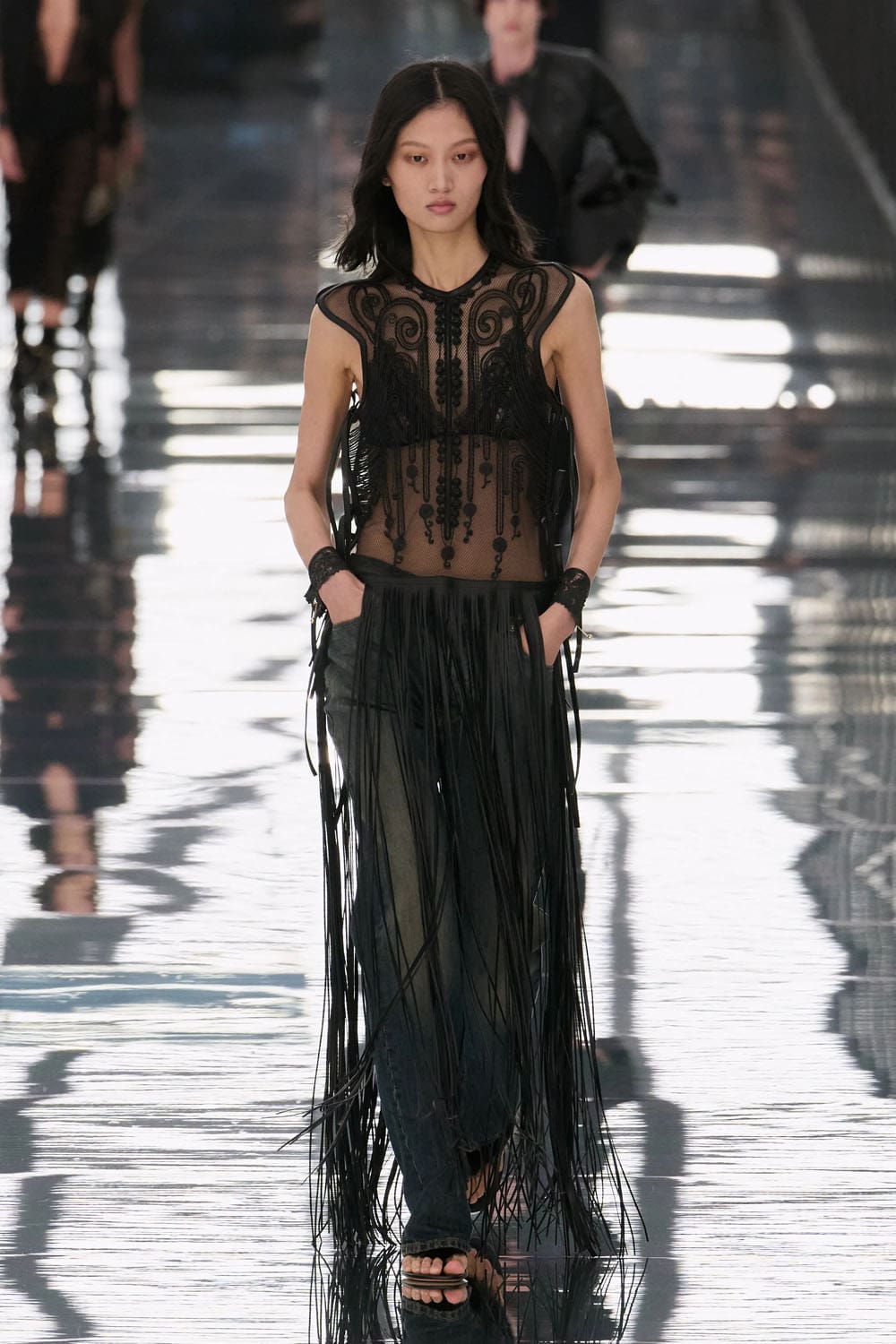
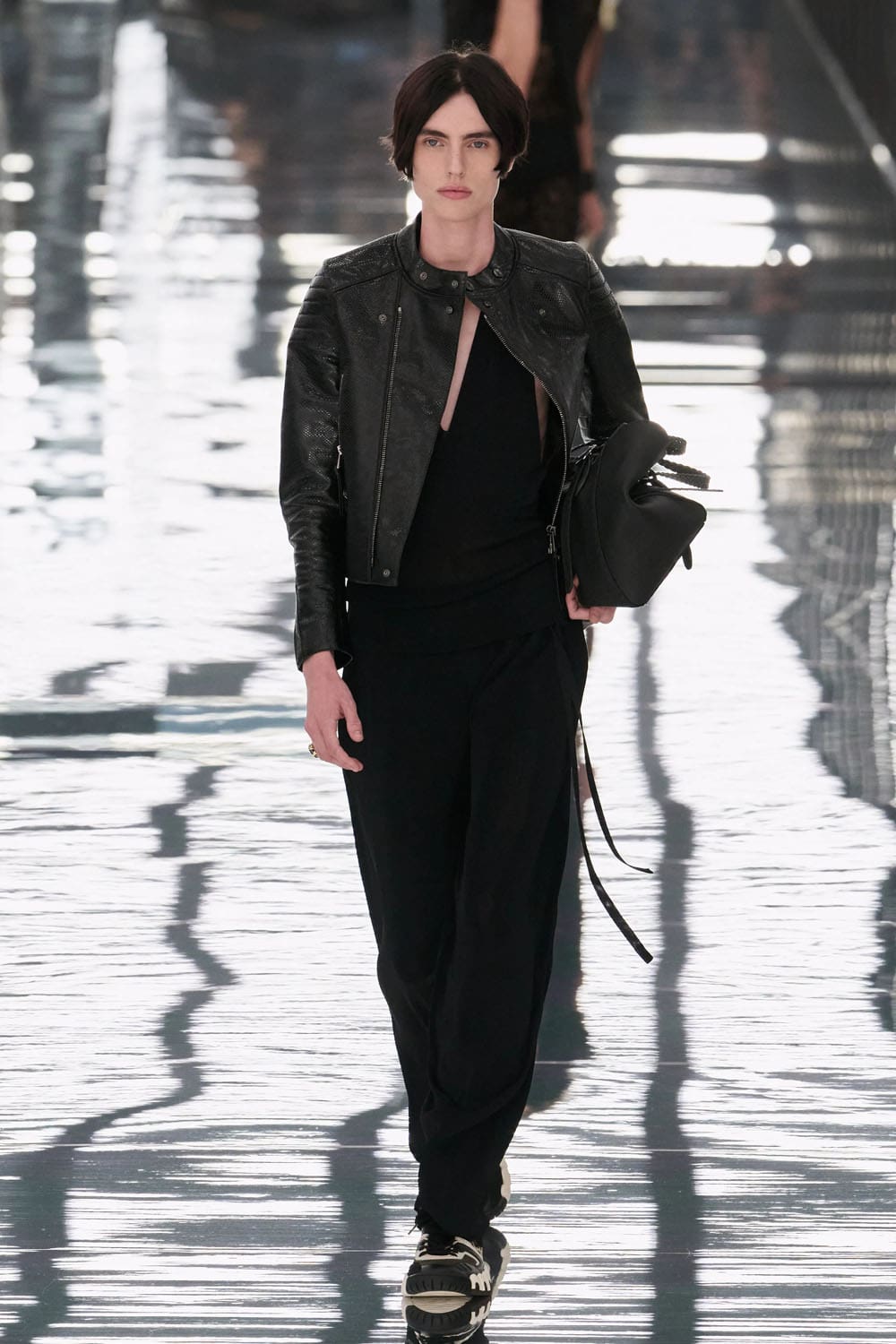
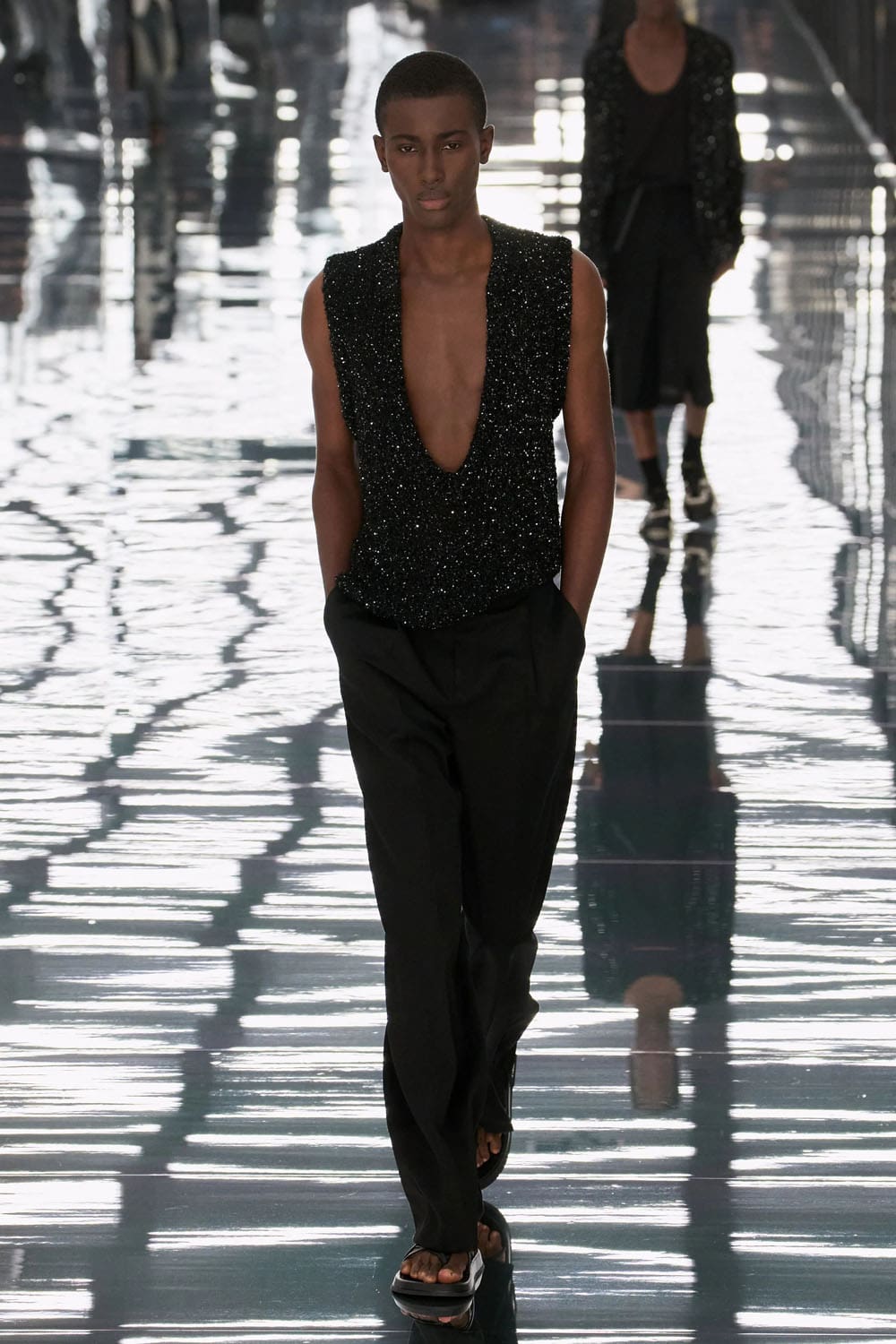
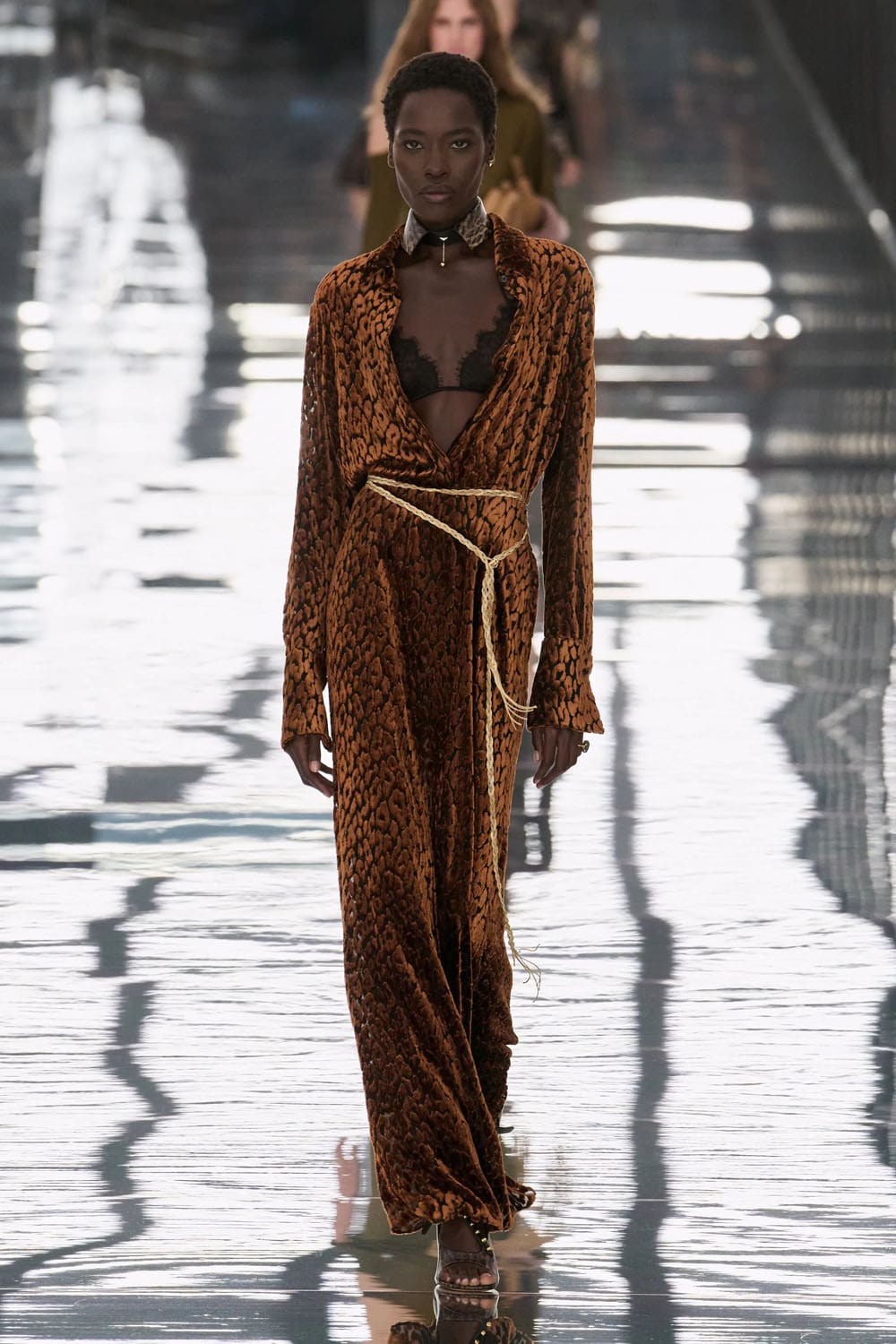
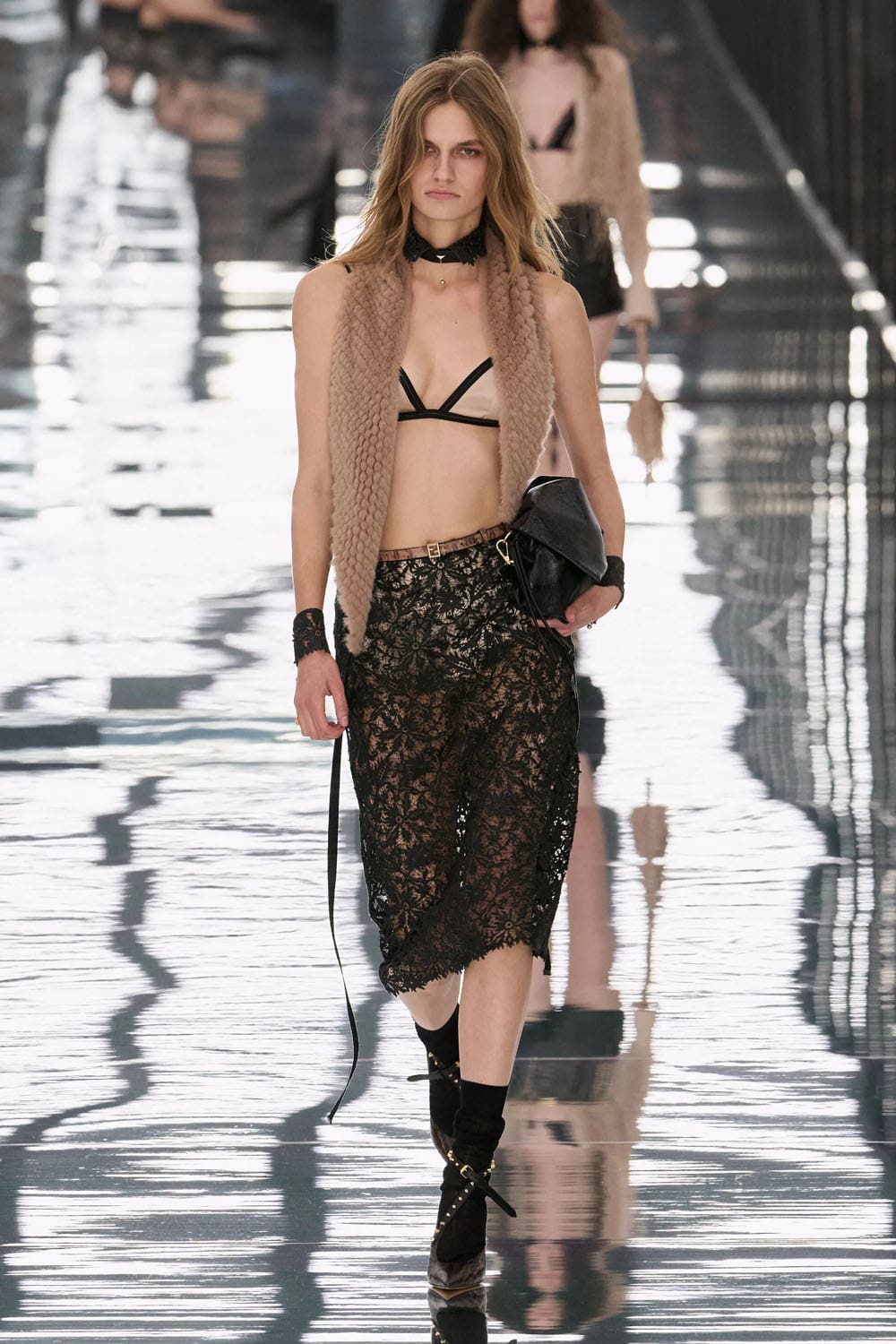
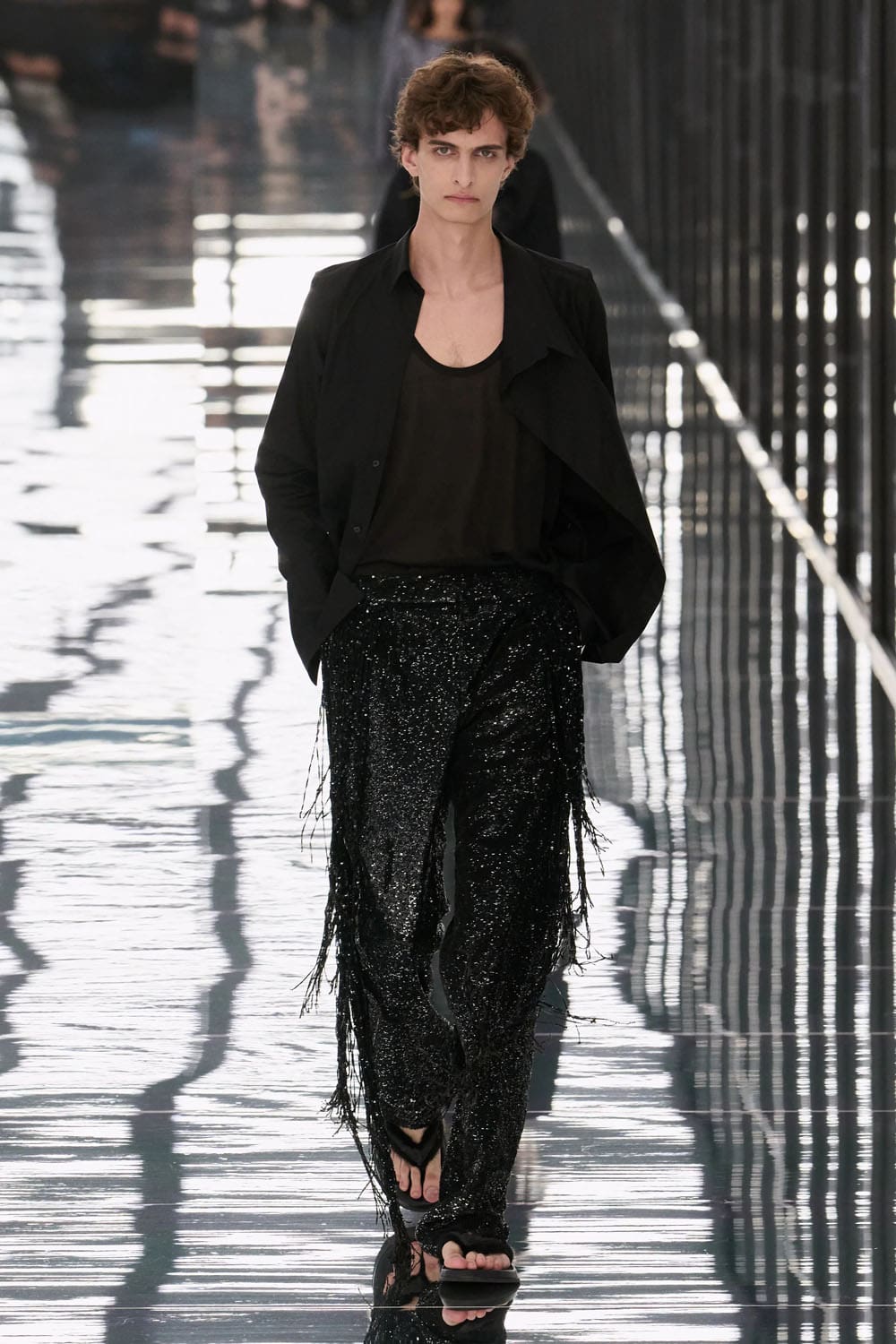
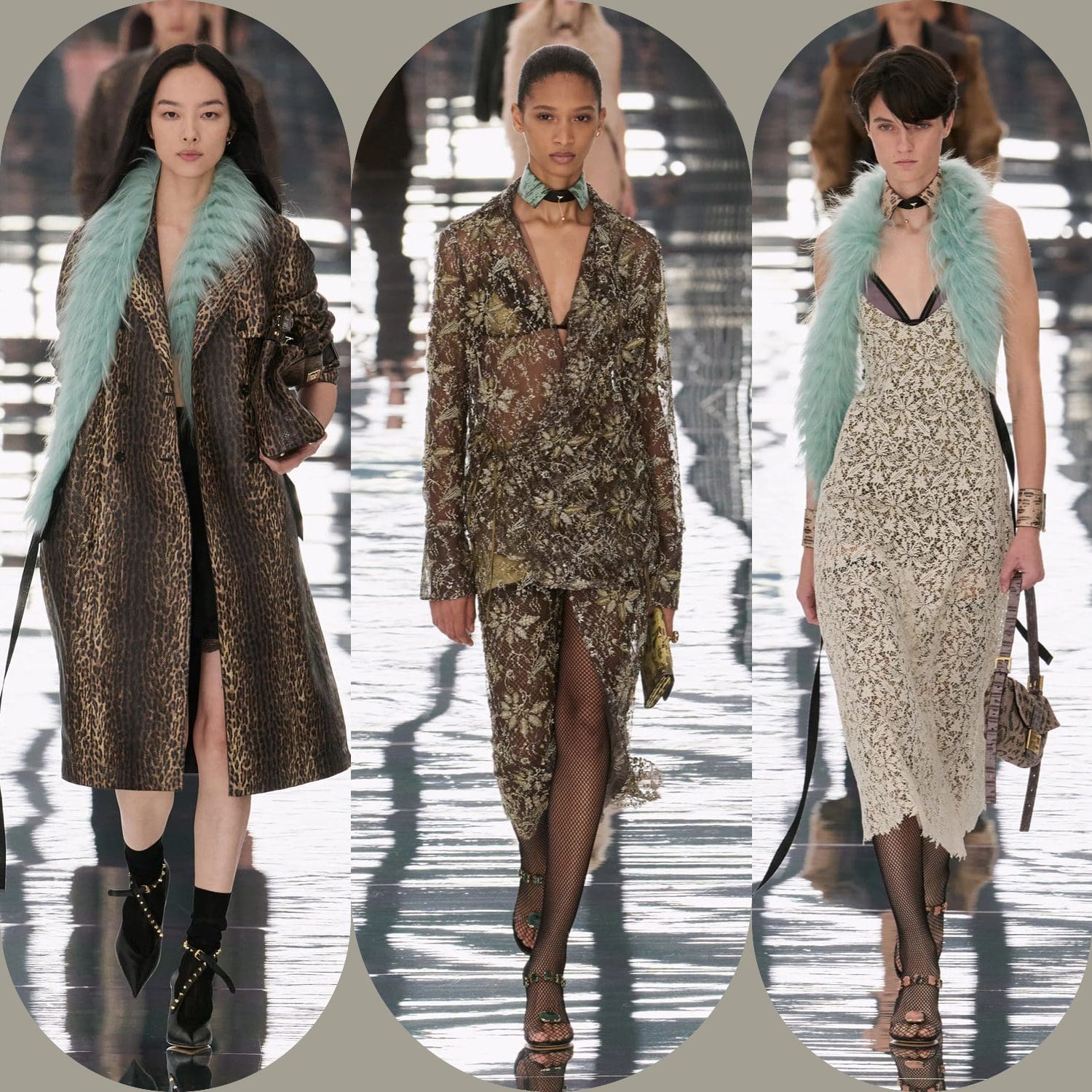
What marched into view was a kaleidoscopic assemblage of references that felt intensely, almost aggressively seen before. Rather than a singular stylistic proposition, the runway served an uneven tasting menu of other designers’ career highlights. There were whispers of late-nineties provocation, splashes of grunge masquerading as boudoir rebellion, and generous doses of the rocker uniforms—all haphazardly bound together by the obligatory Fendi fur stole.
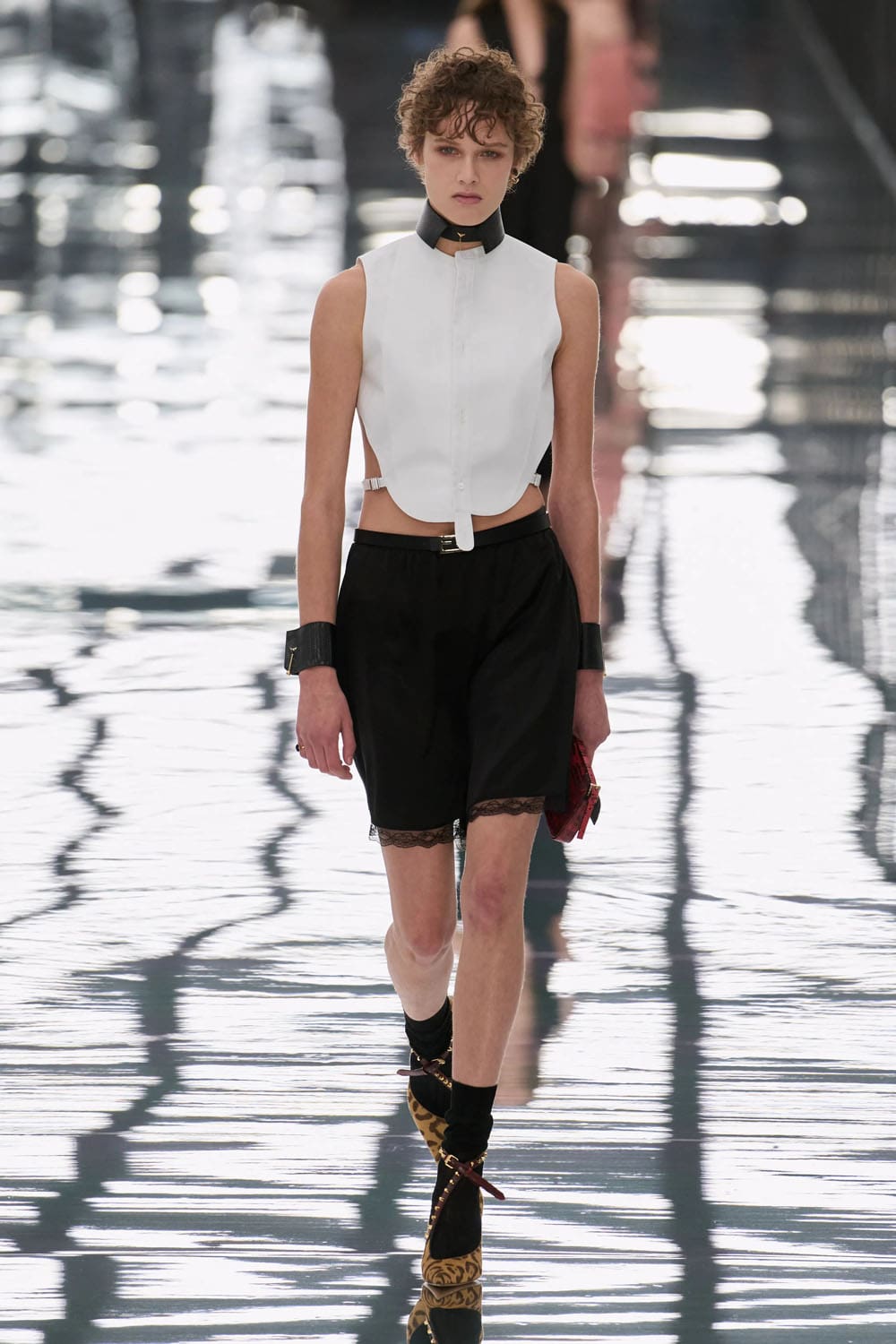
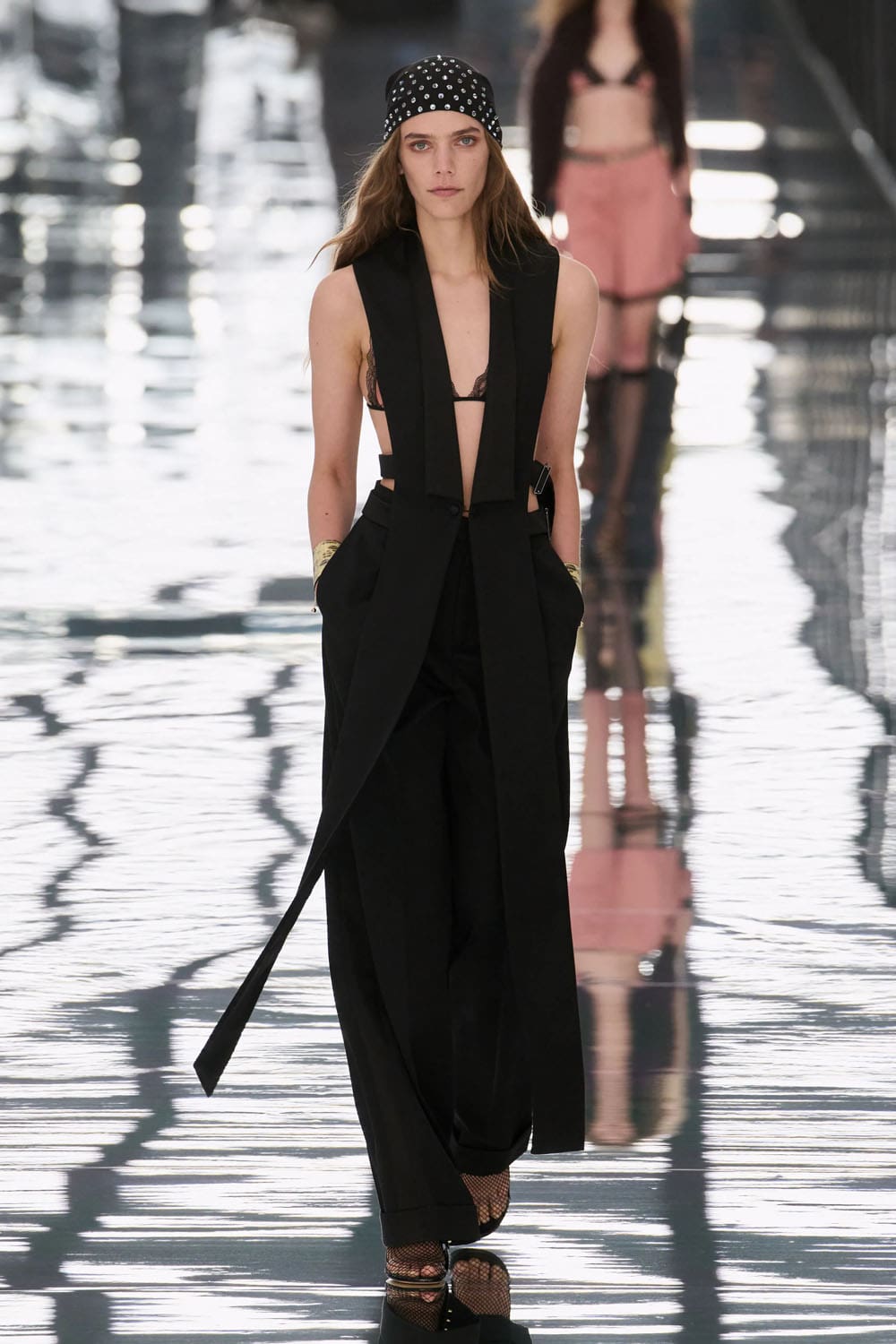
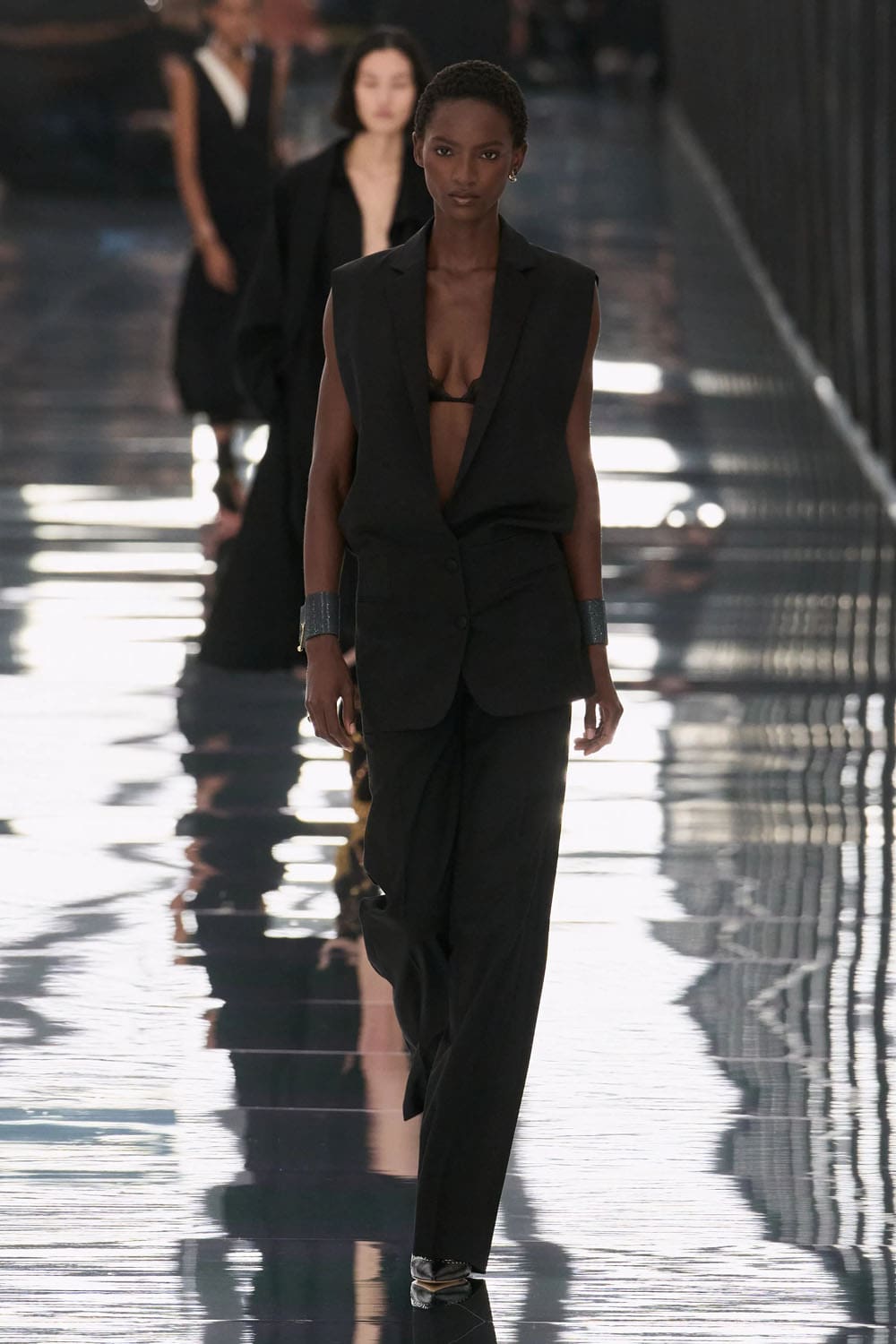
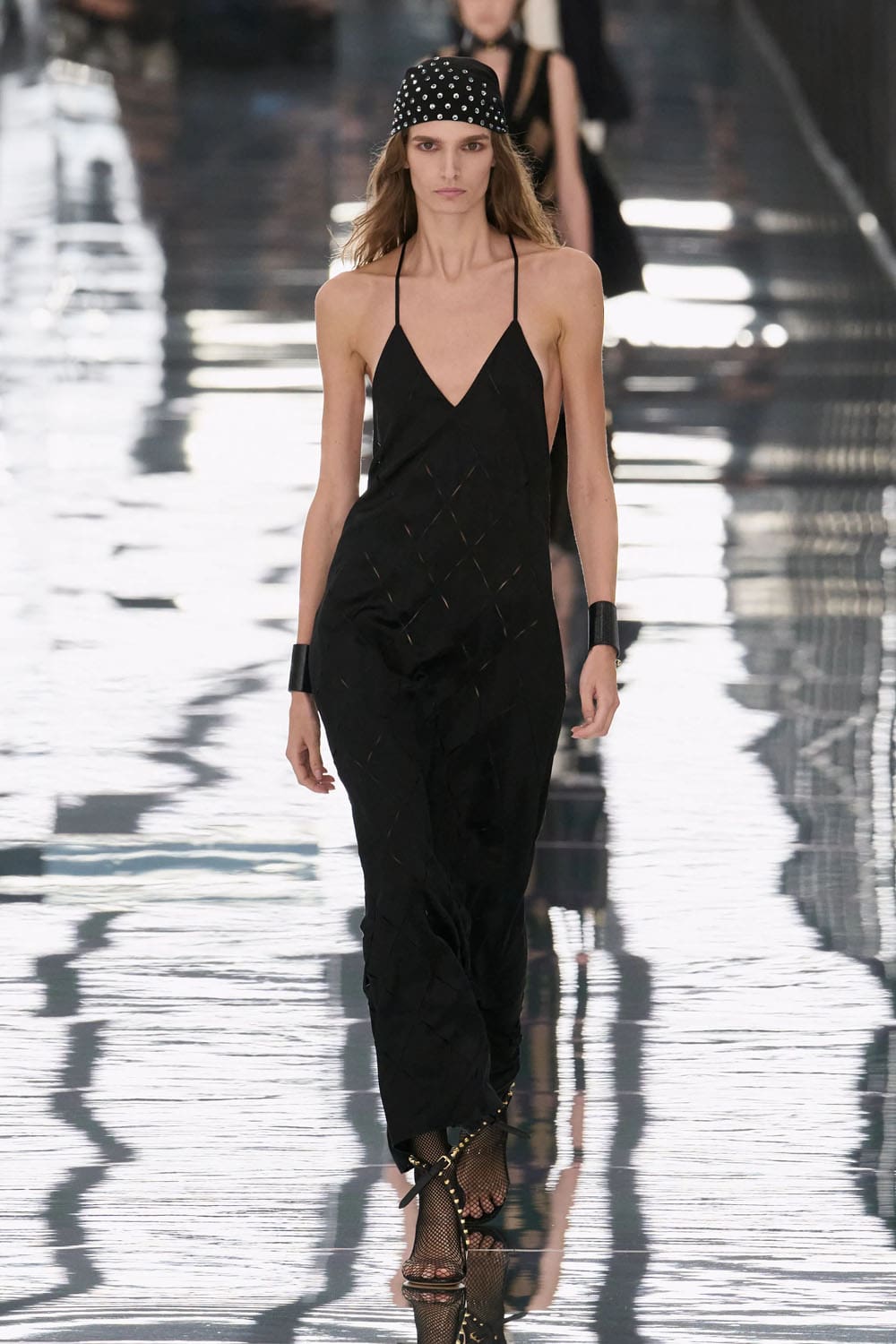
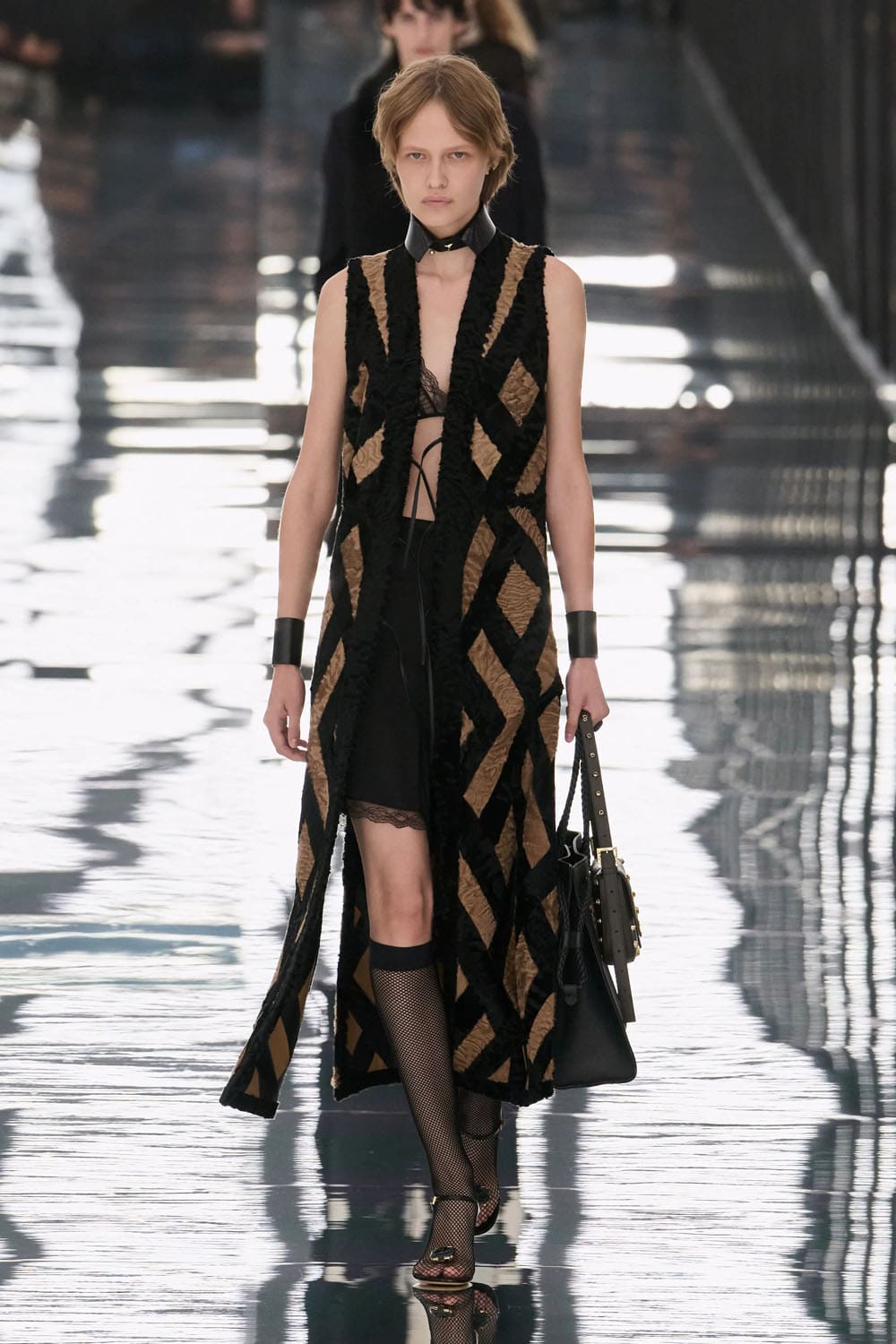
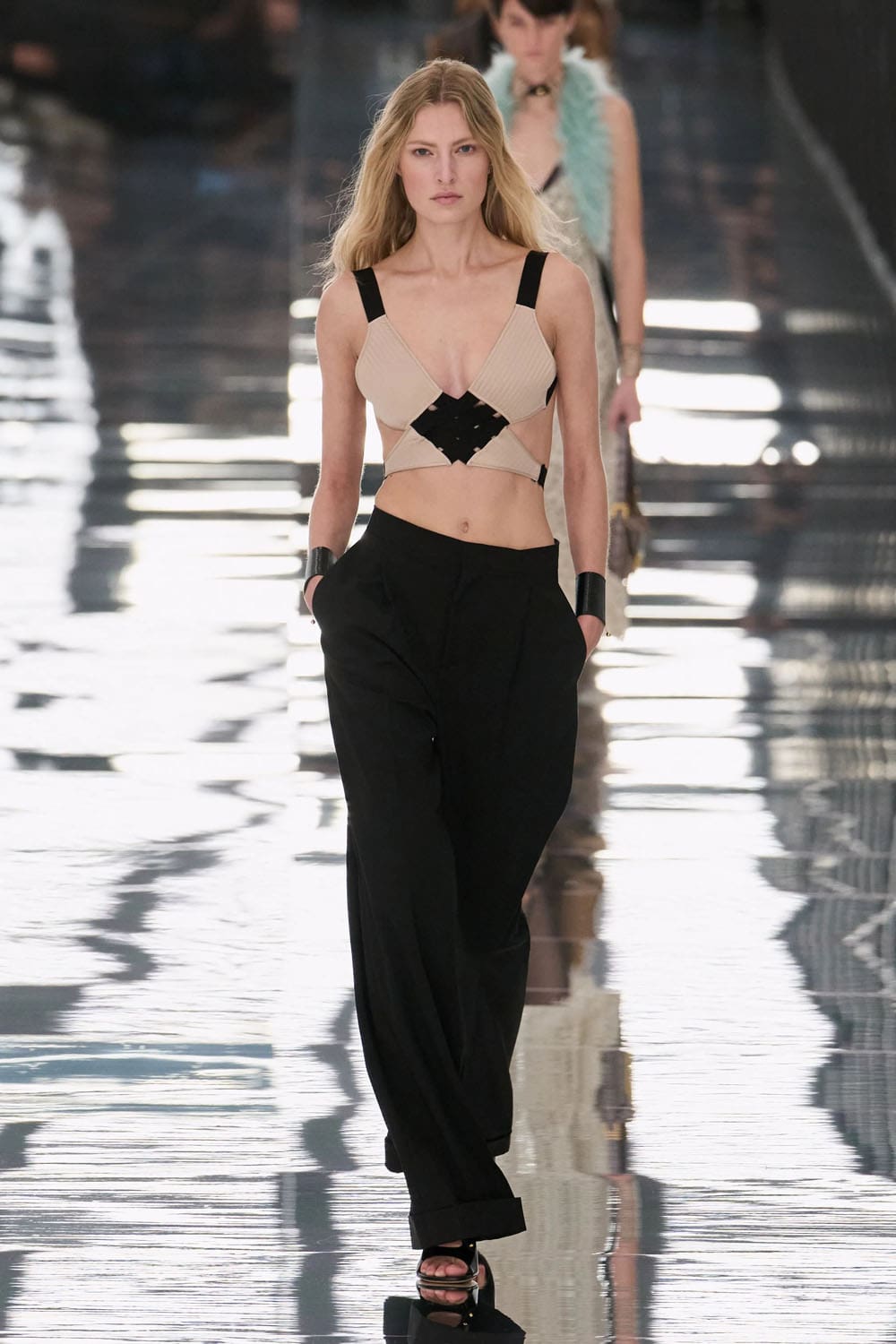
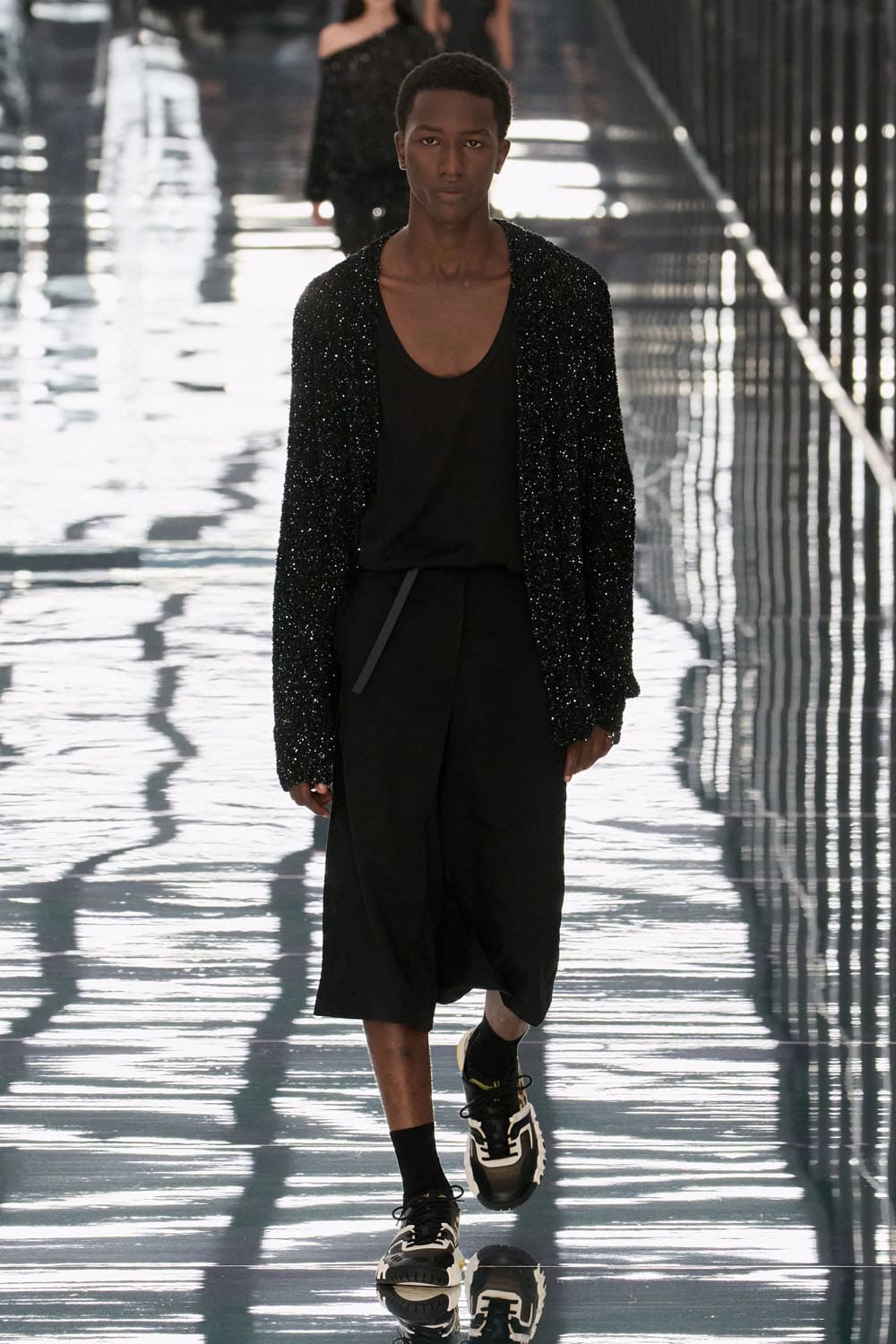
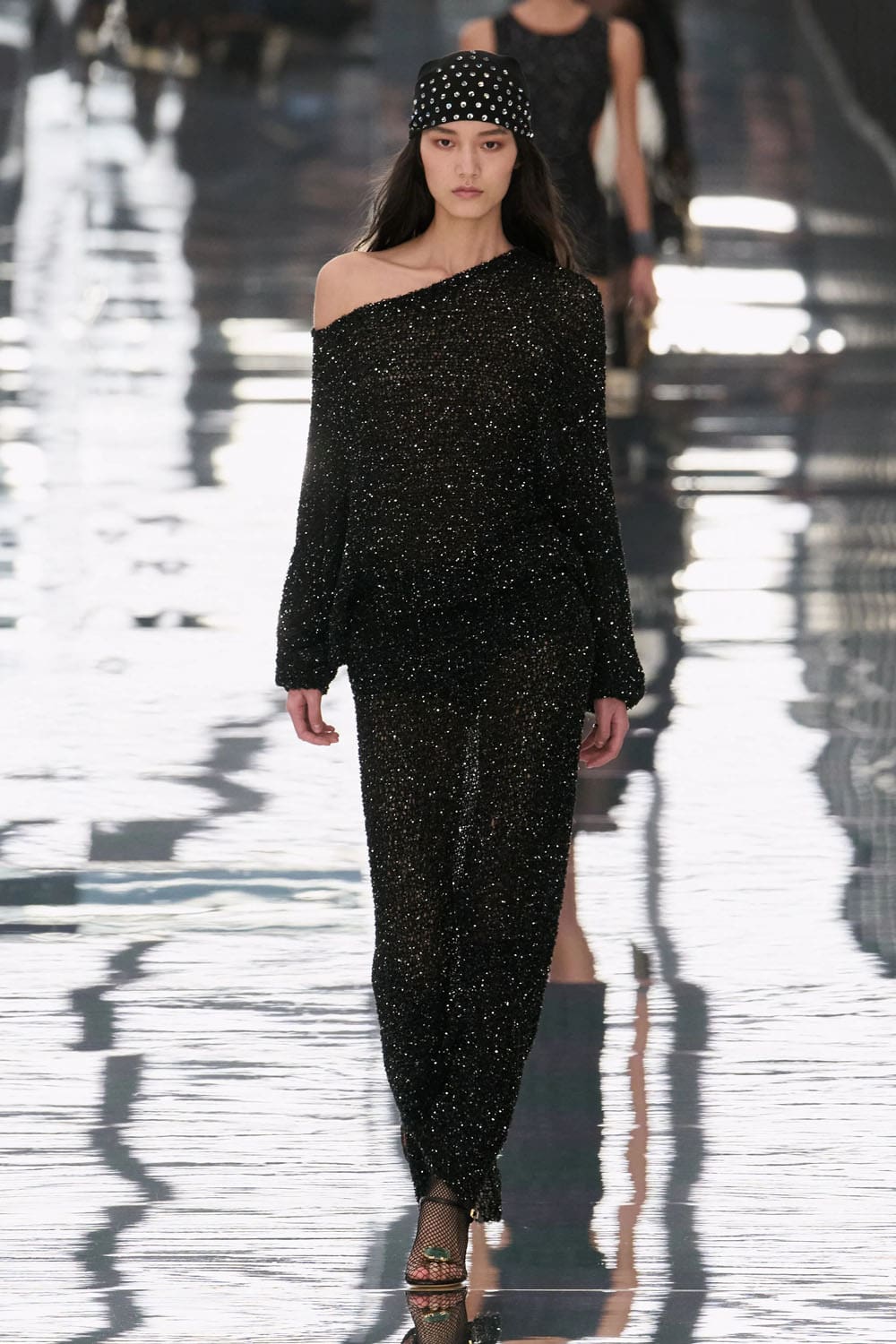
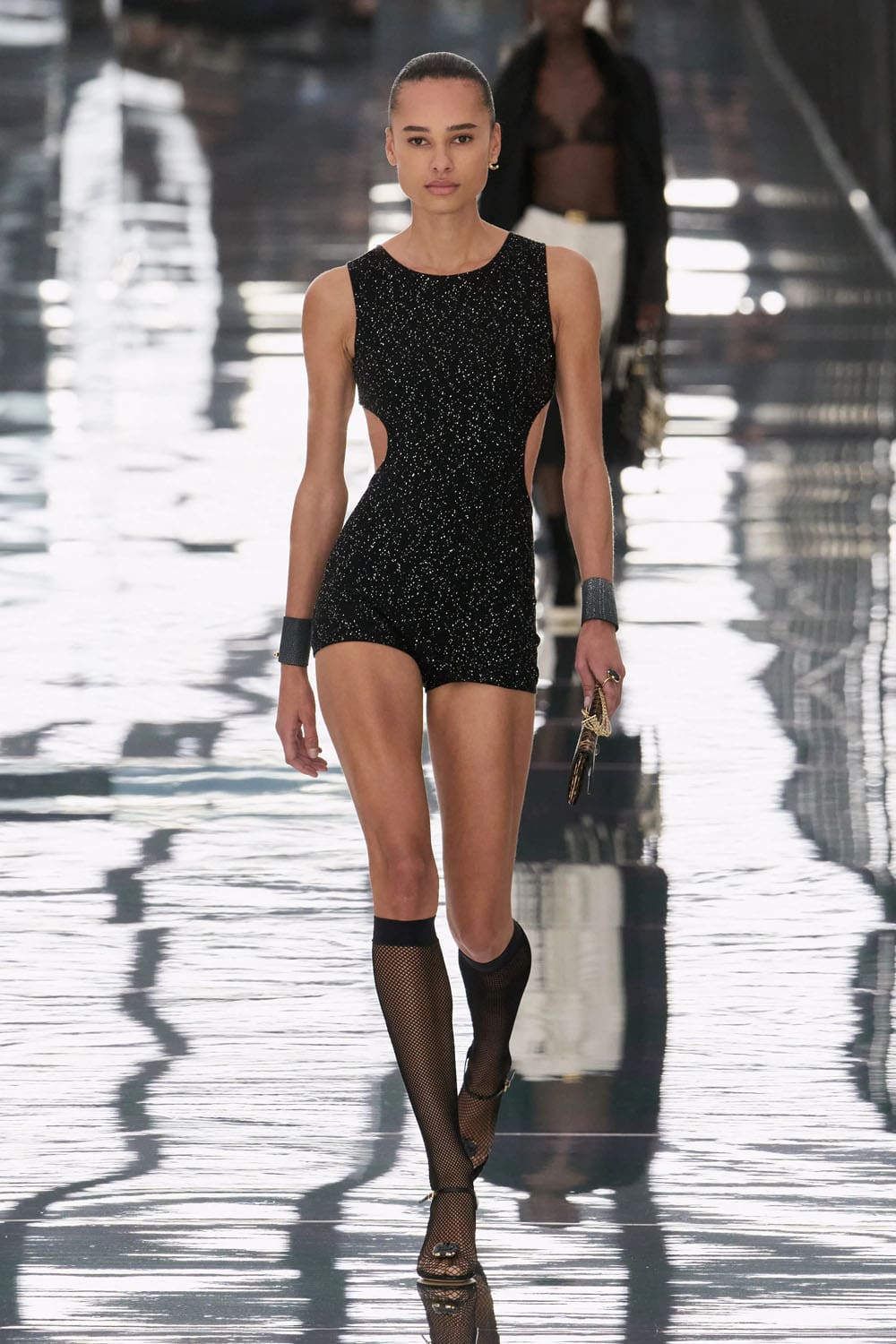
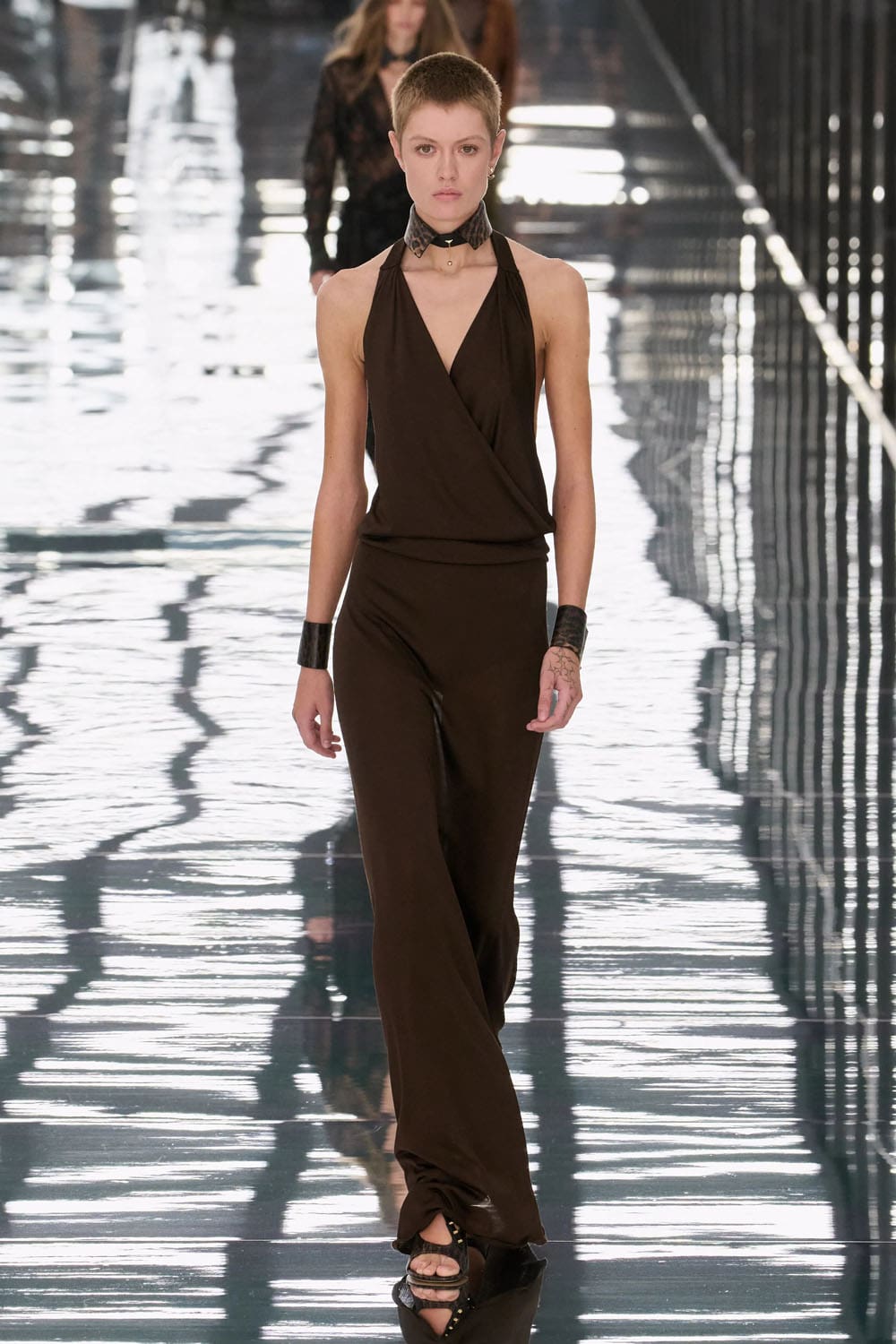
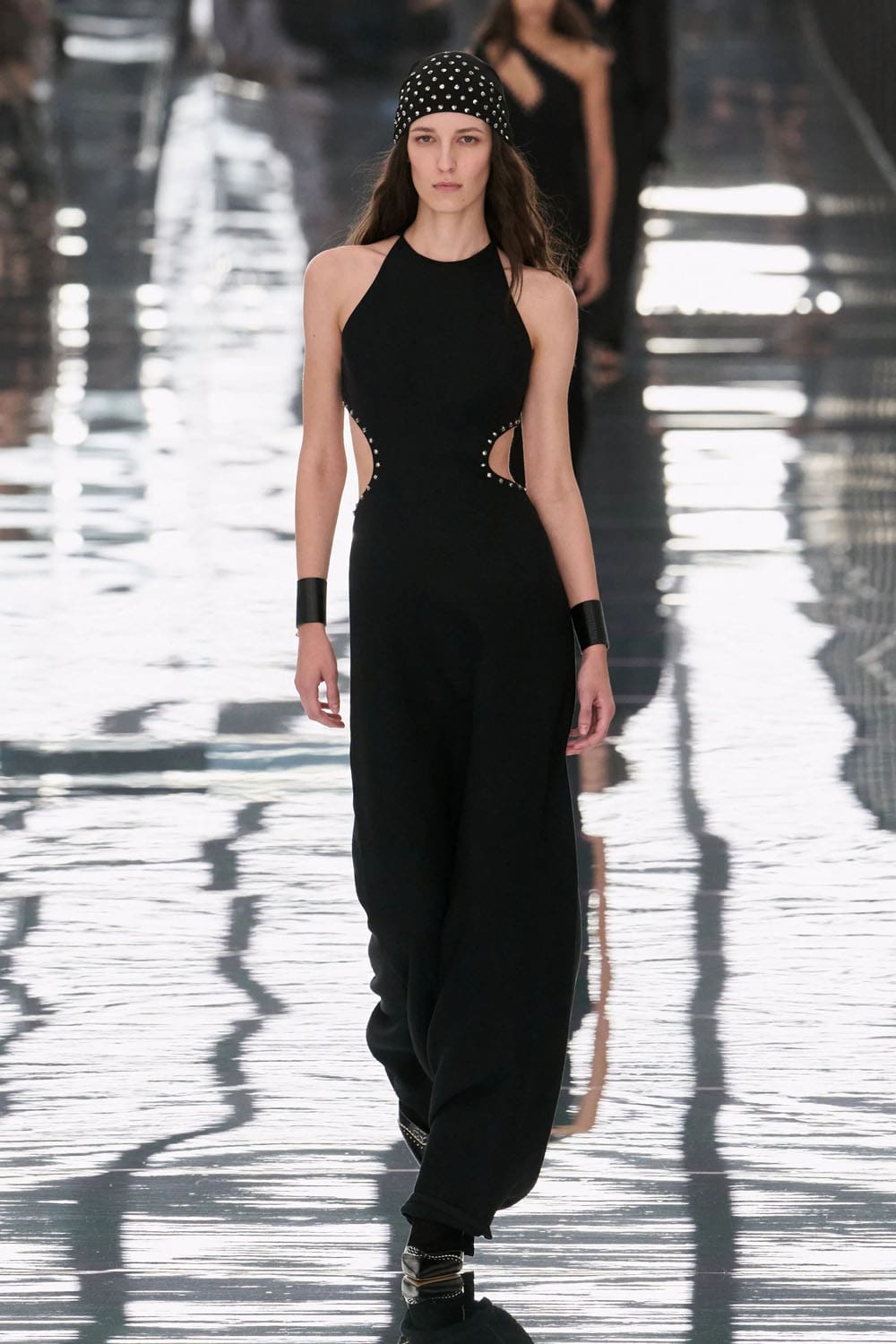
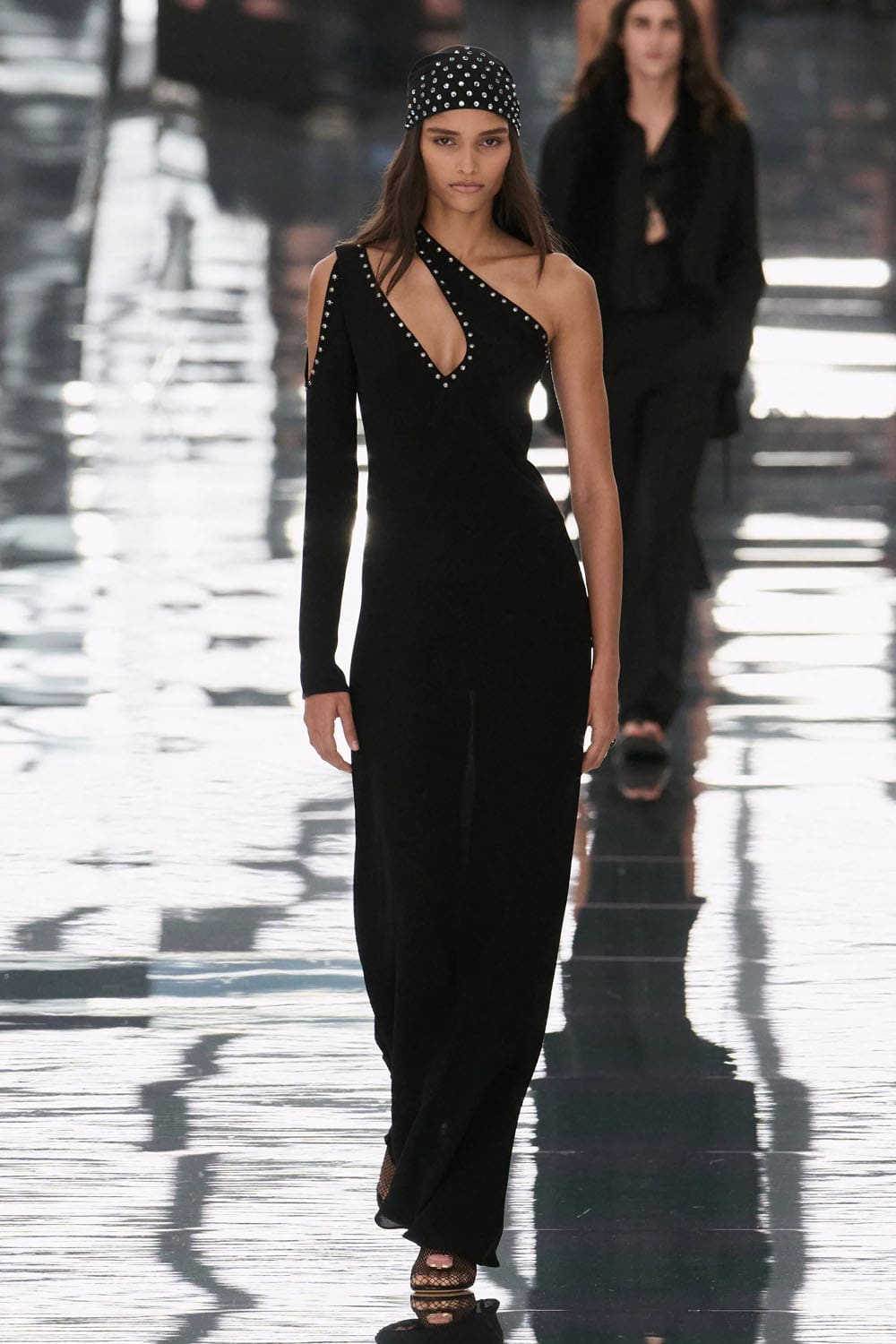
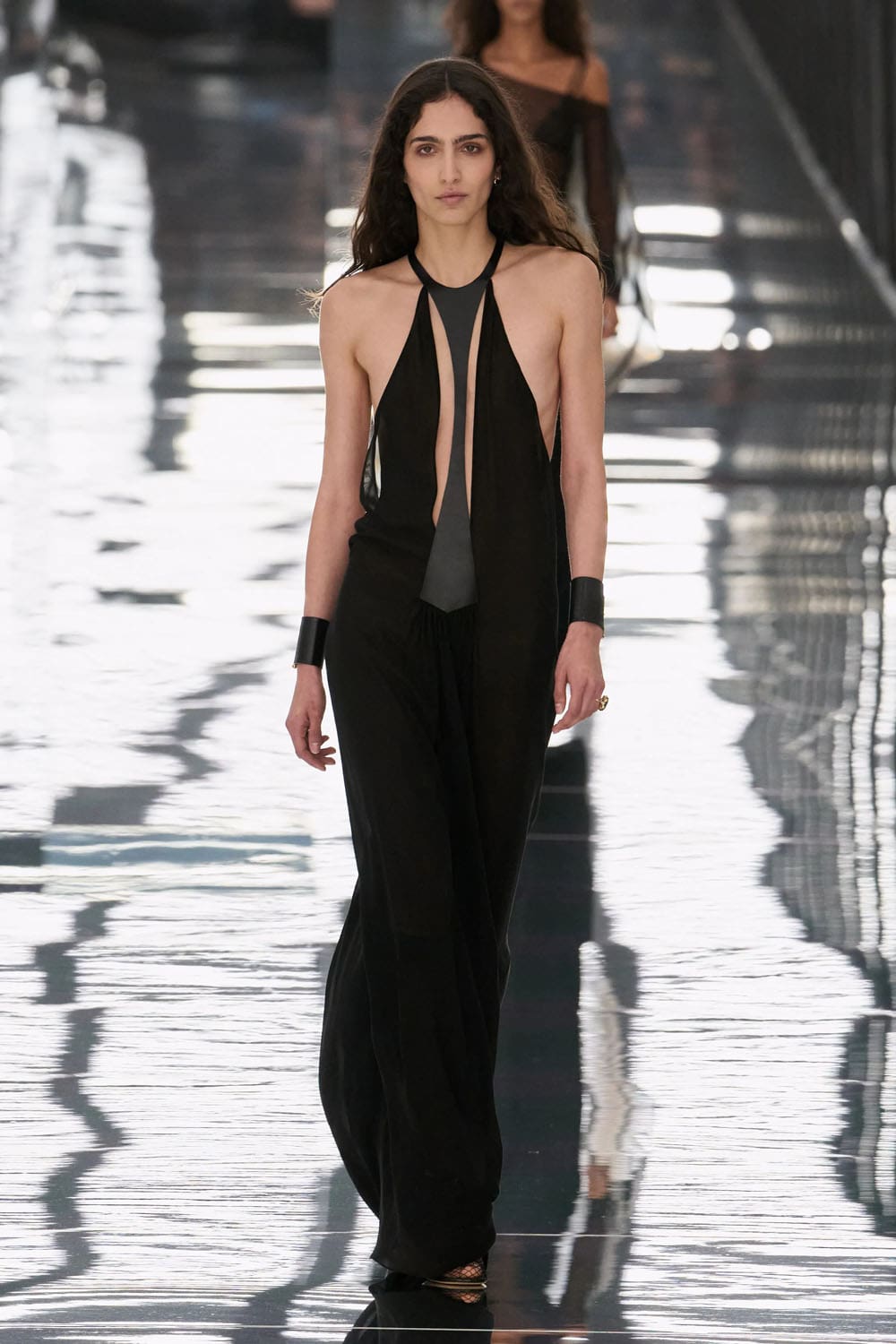
Take the curious opening gestures: a tailored tuxedo front severed at the ribs, suspended by metal clips like an orthopedic bib over knee-length black gym shorts trimmed in boudoir lace. Paired with a leather choker and chunky cuffs, it possessed neither the decadent glamour of a Roman palazzo nor the subversive edge of a subterranean club. Elsewhere, deep-cut halter necklines fell into sweeping, wide-legged palazzo trousers, accented by a studded bandana wrapped across the forehead. It tried to whisper seventies rock royalty, yet landed with the studied enthusiasm of a themed festival pass.
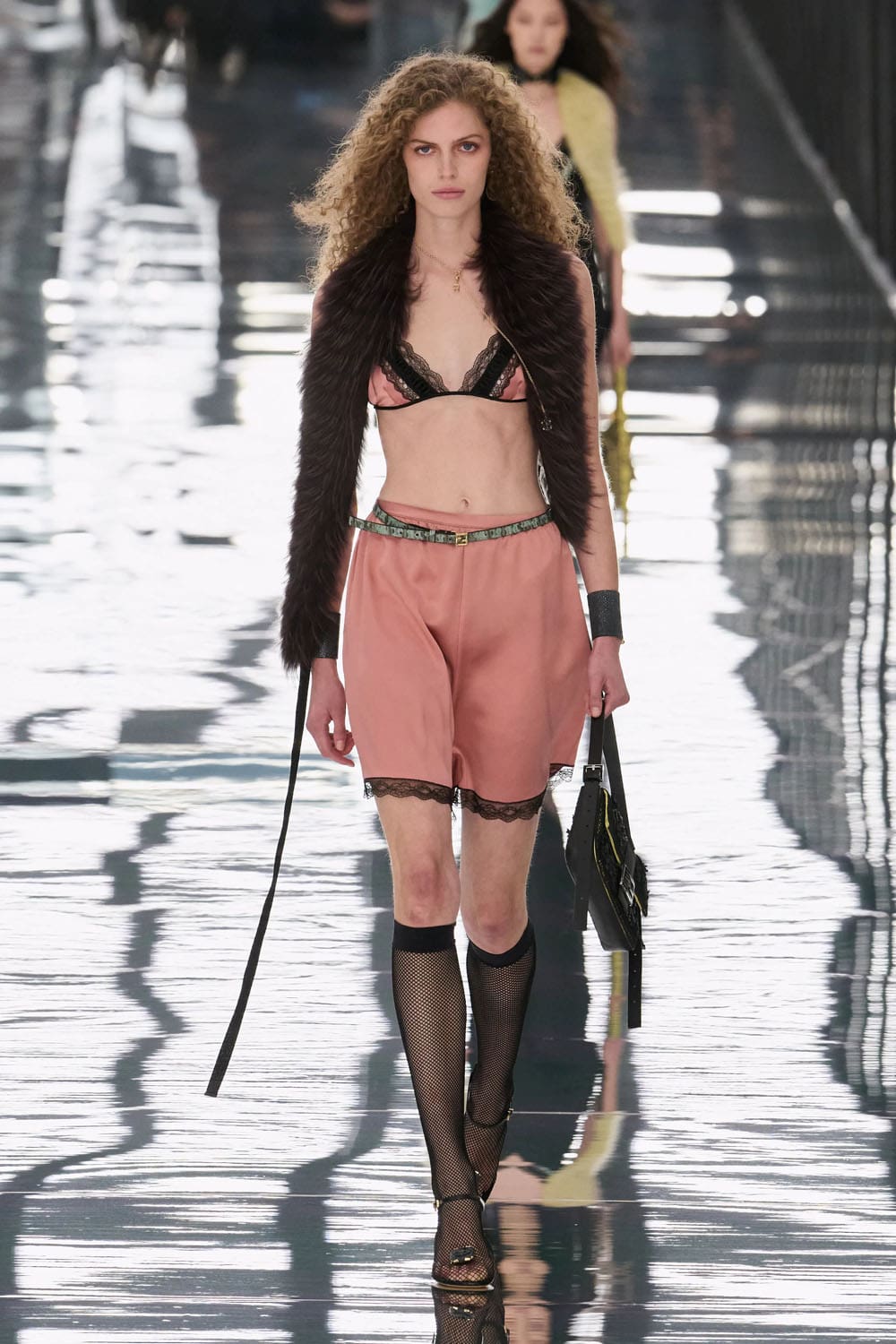
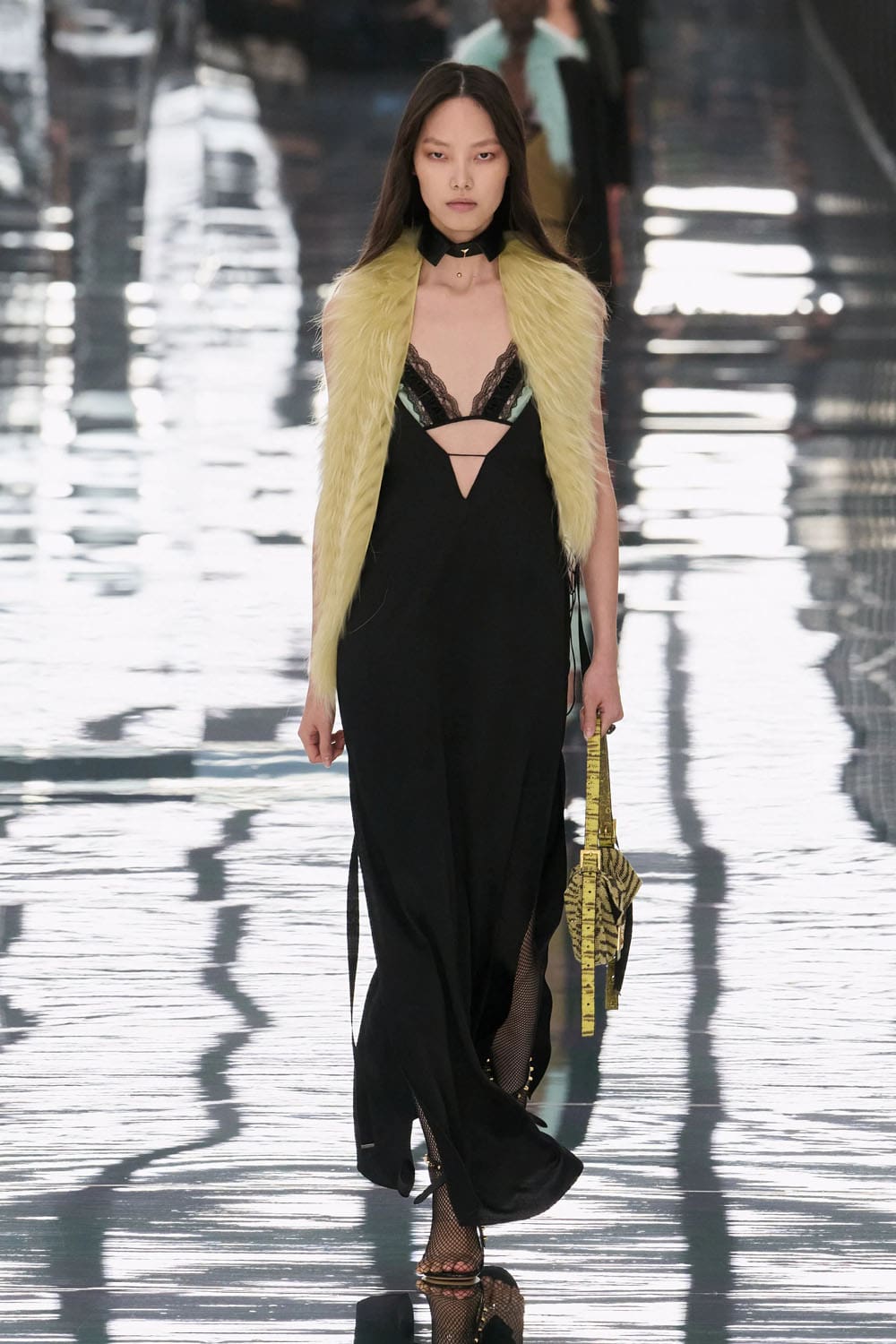
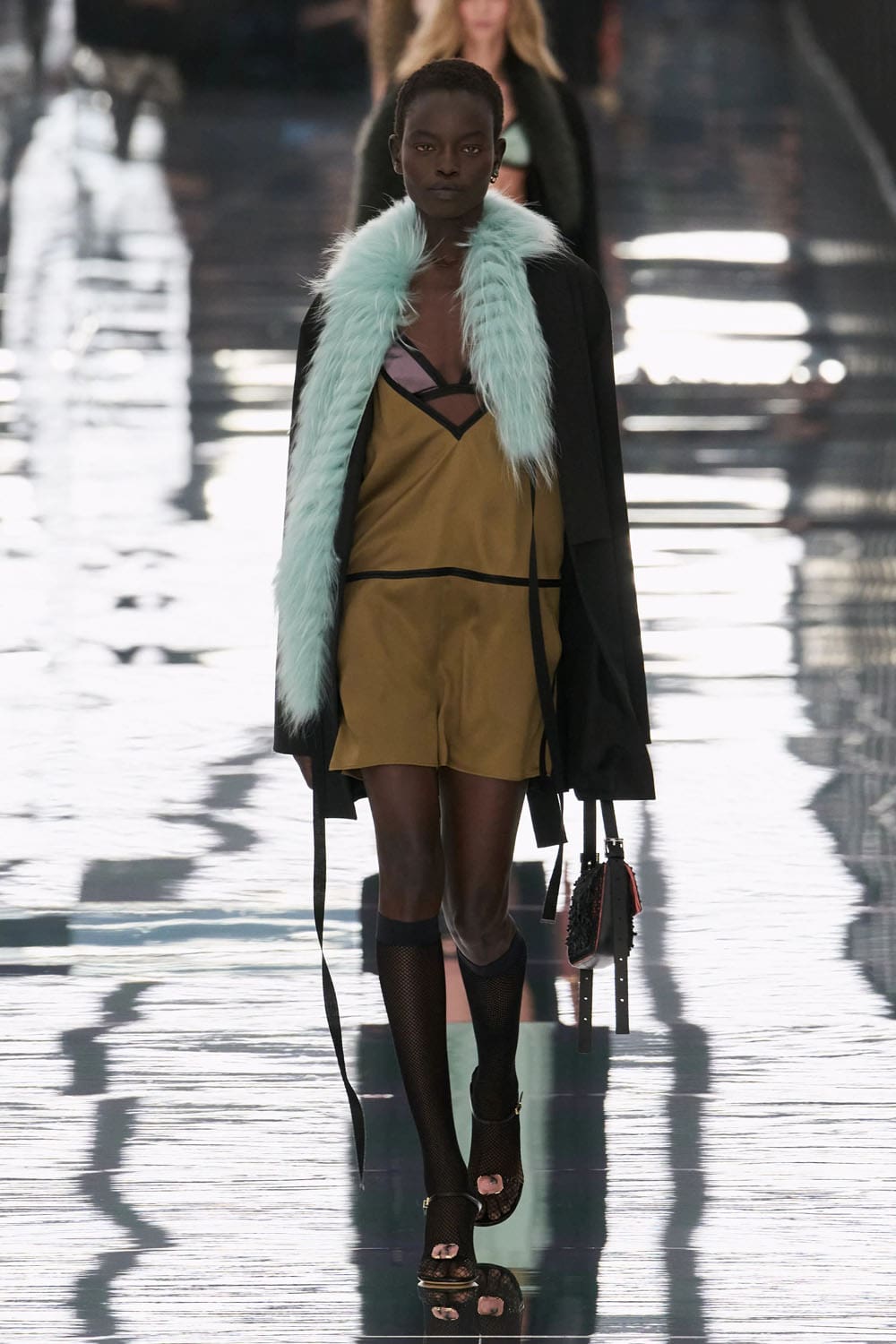
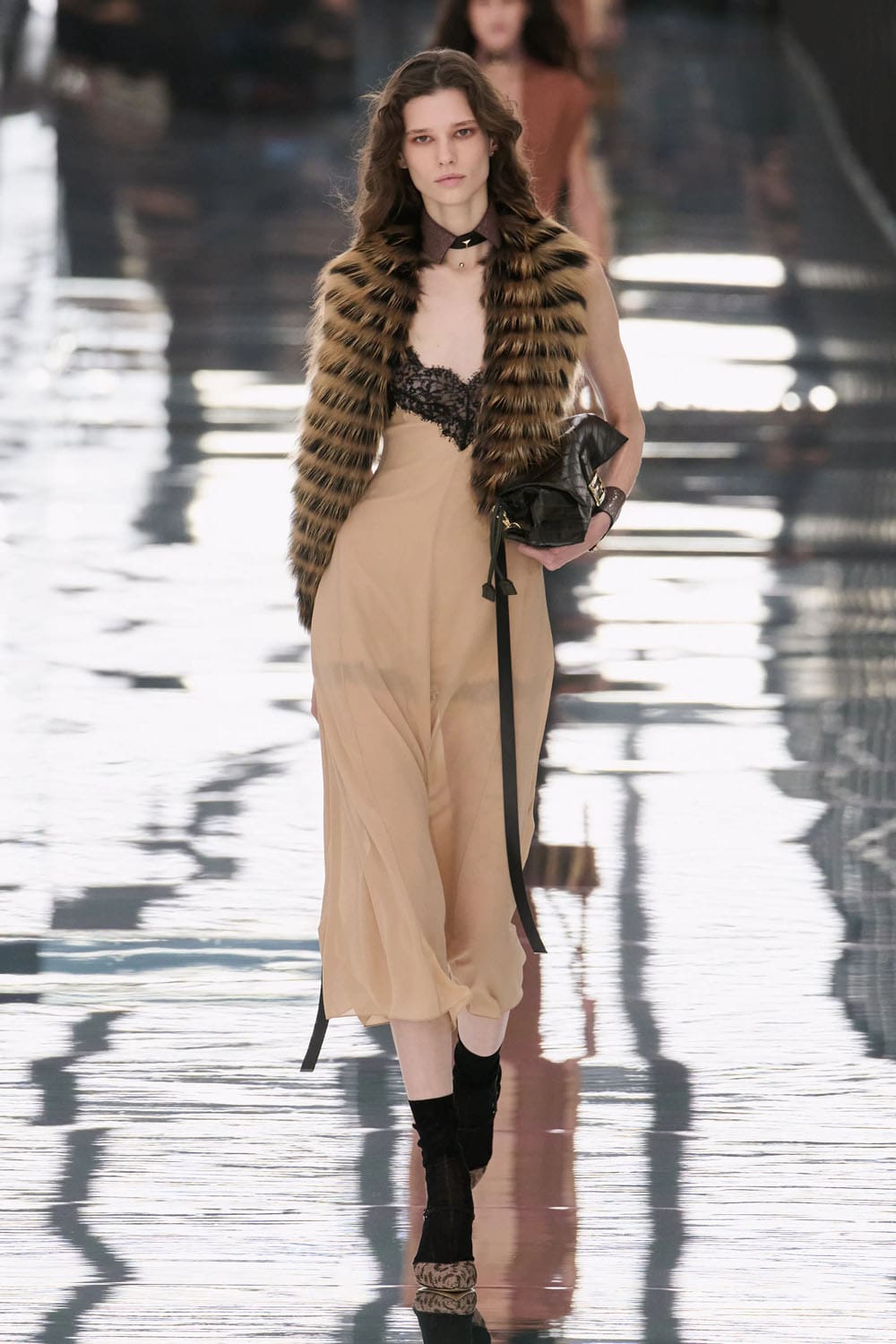
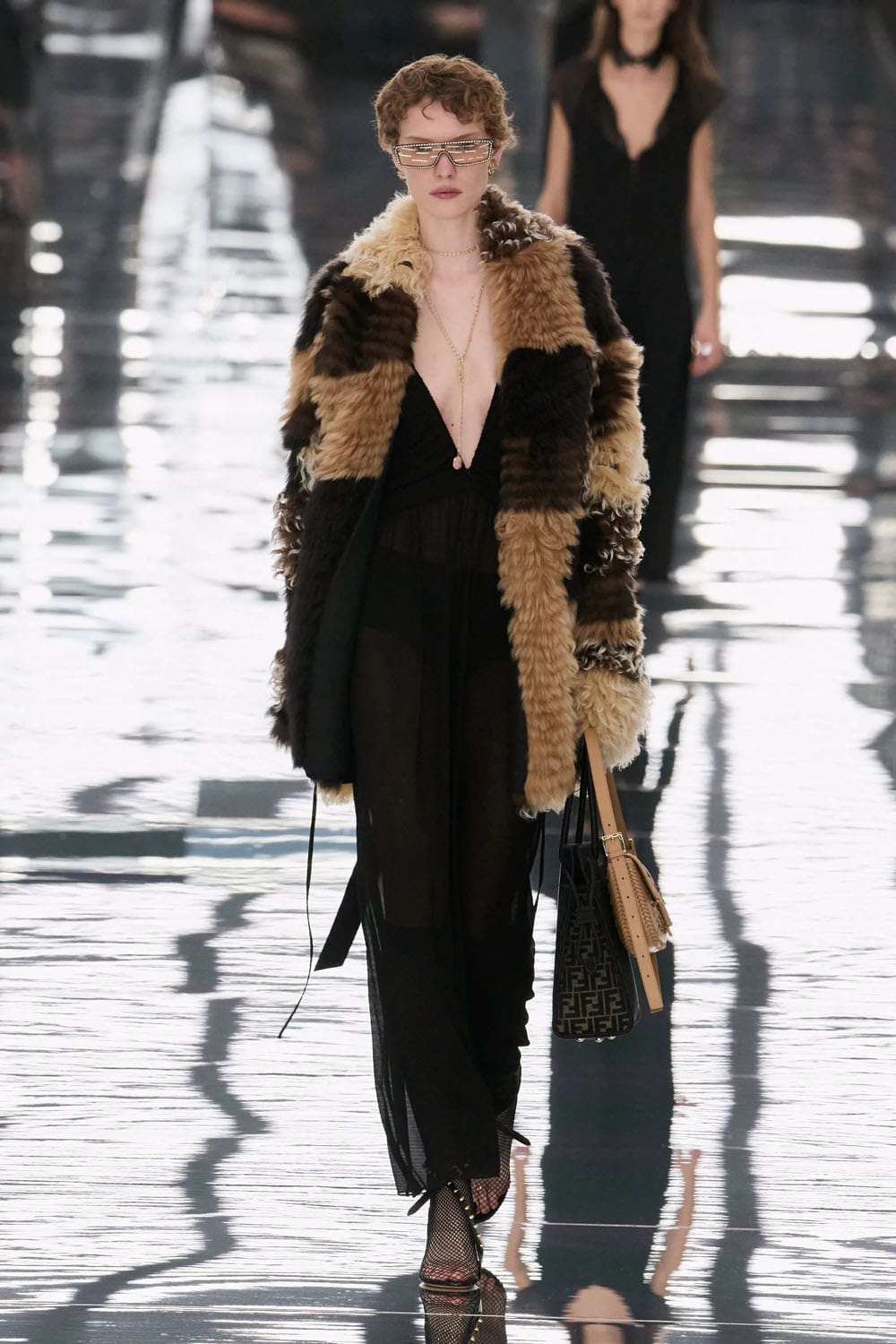
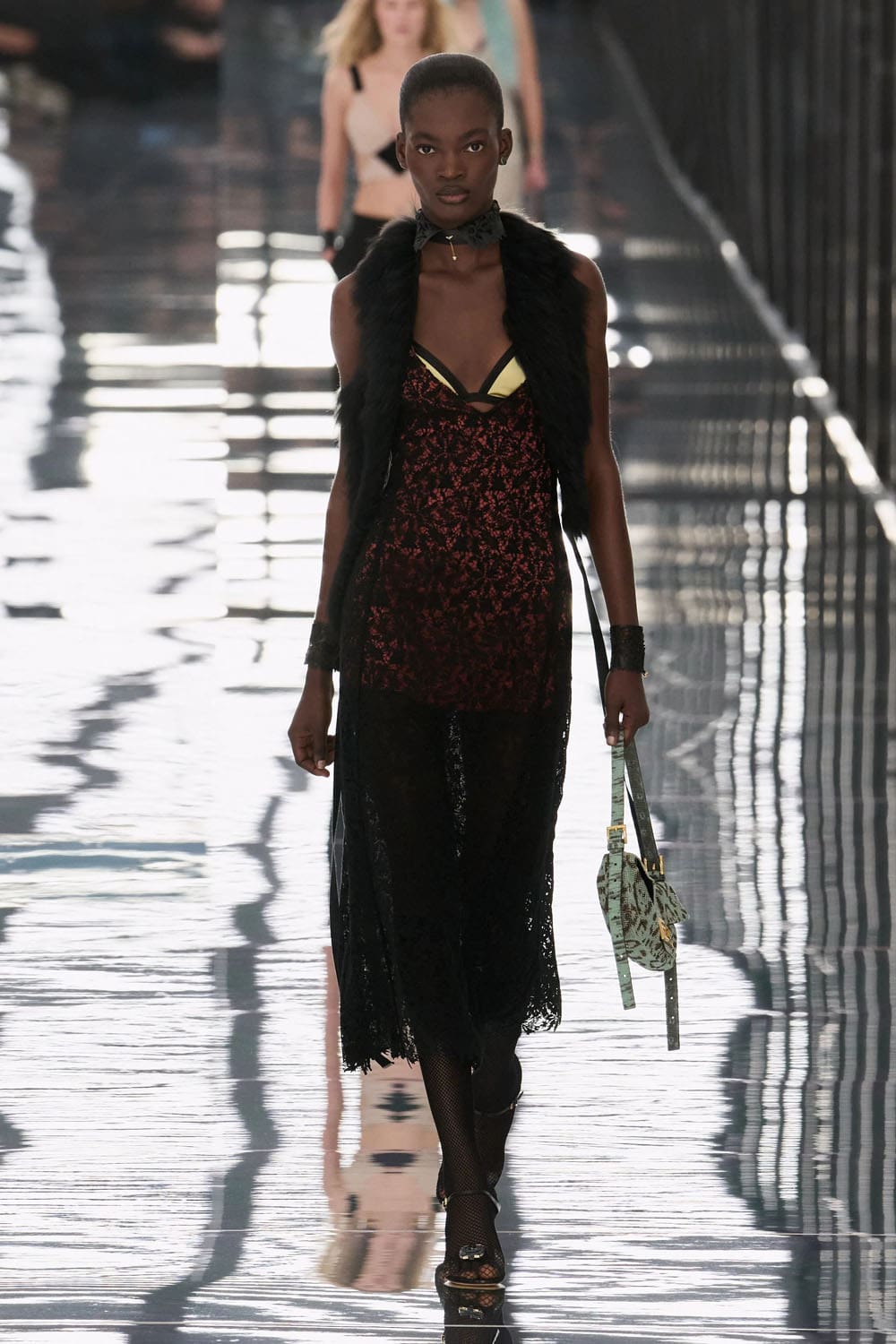
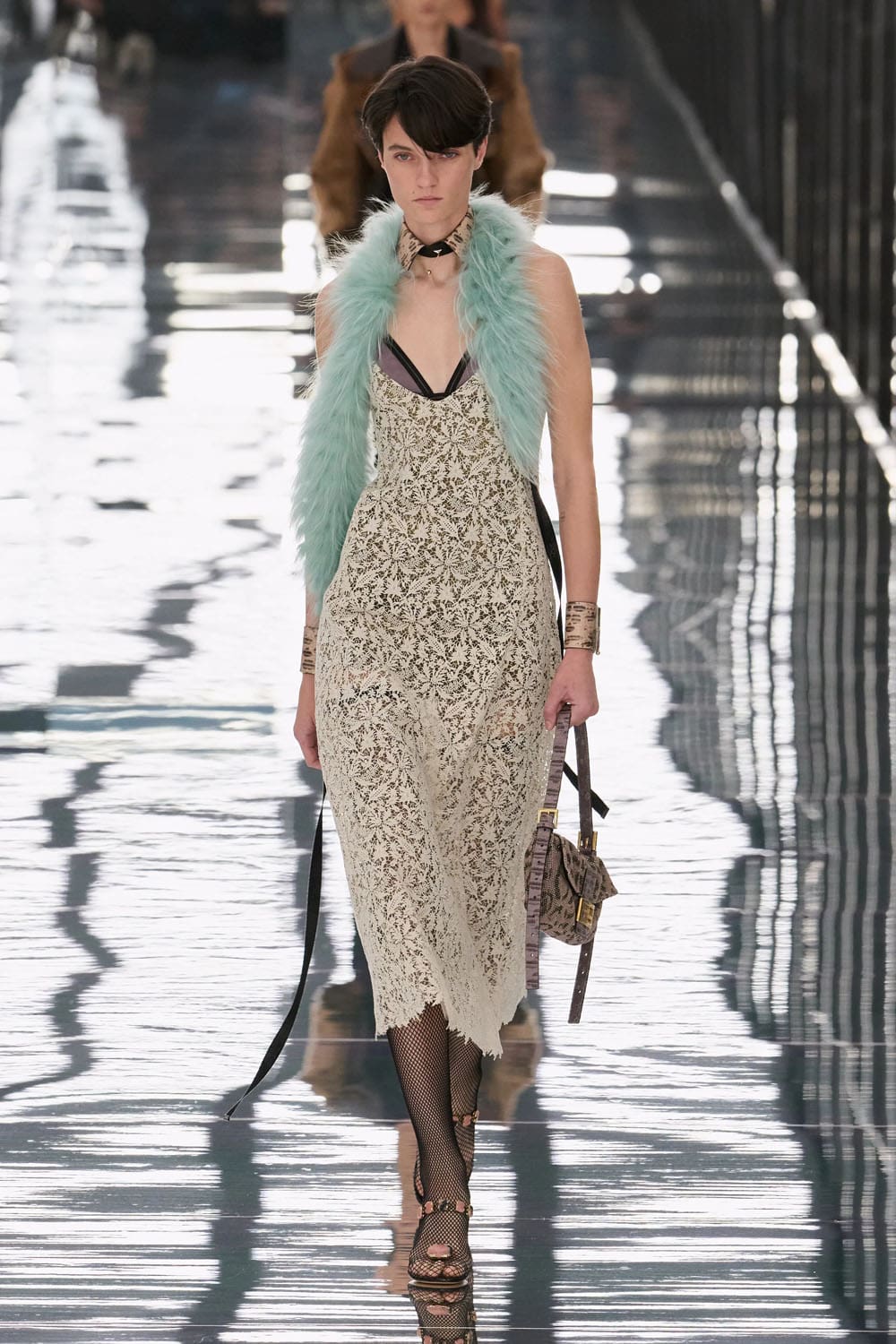
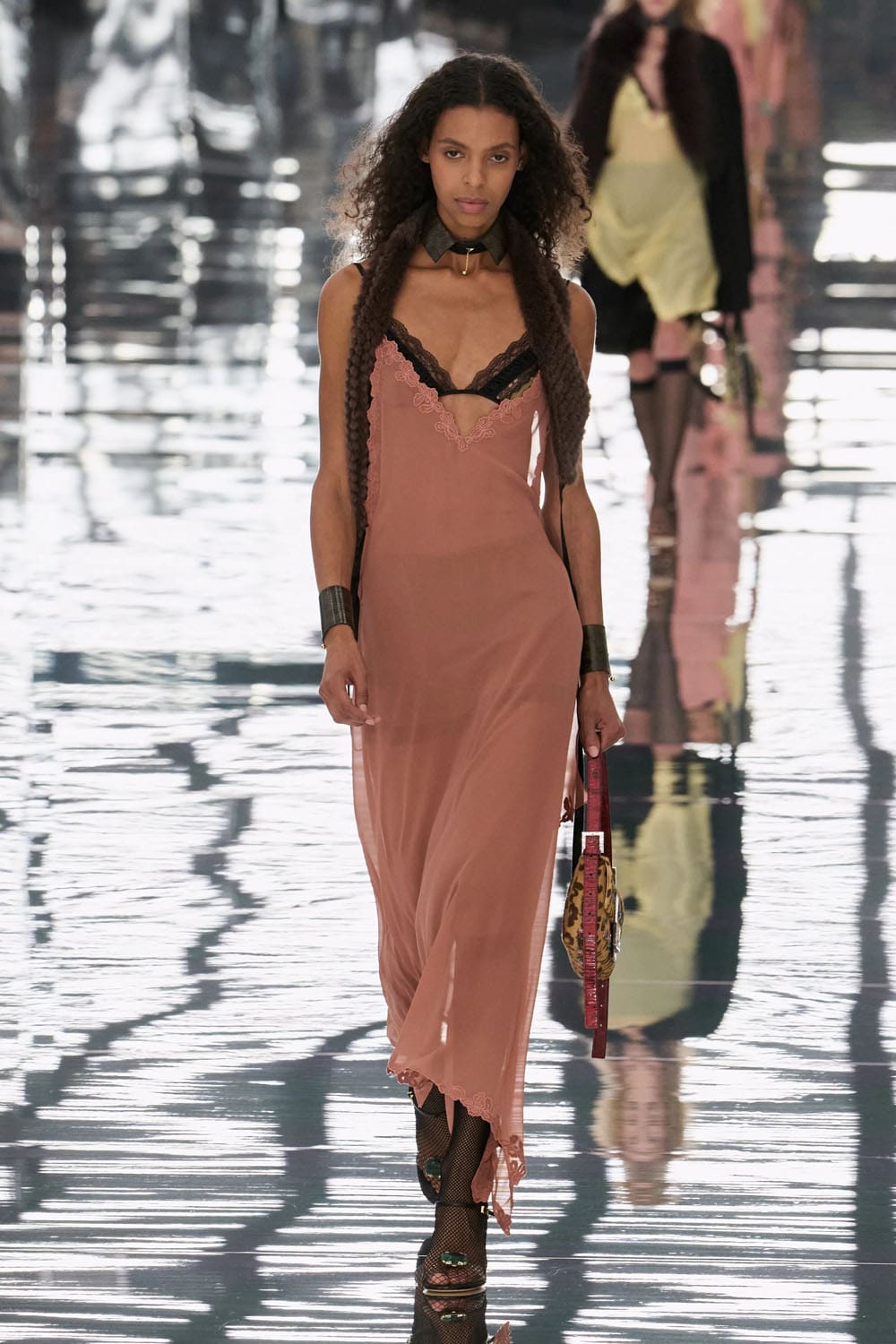
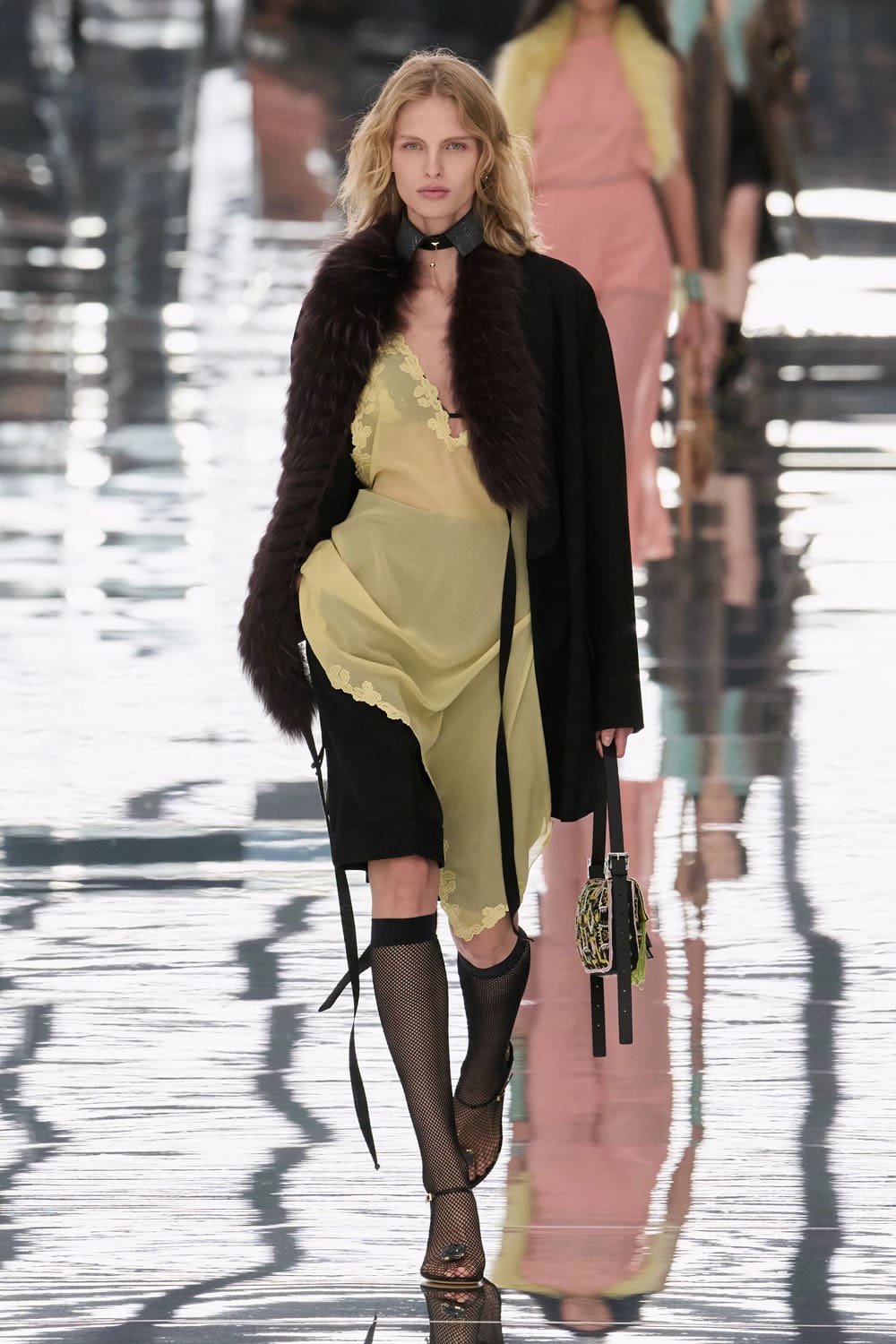
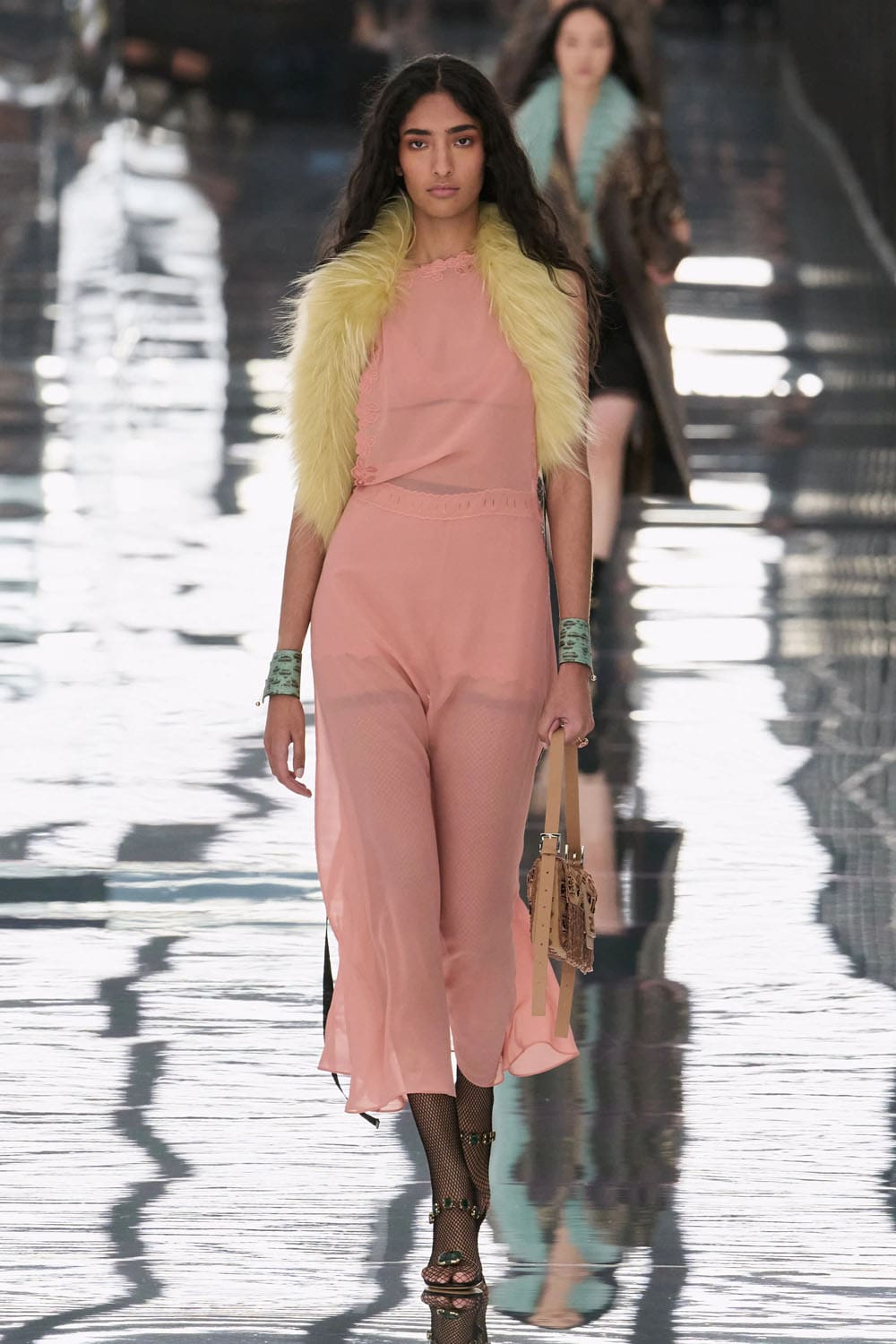
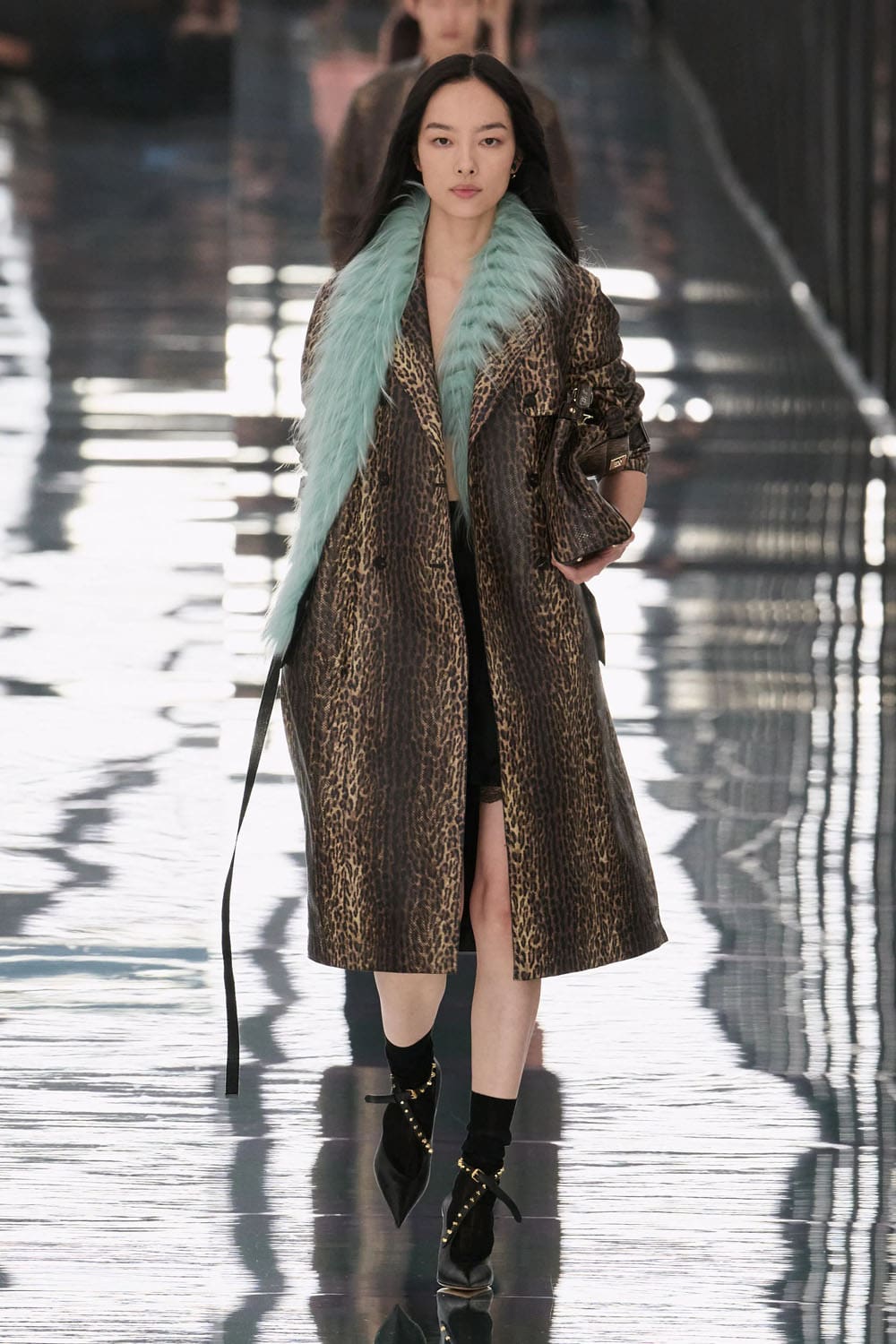
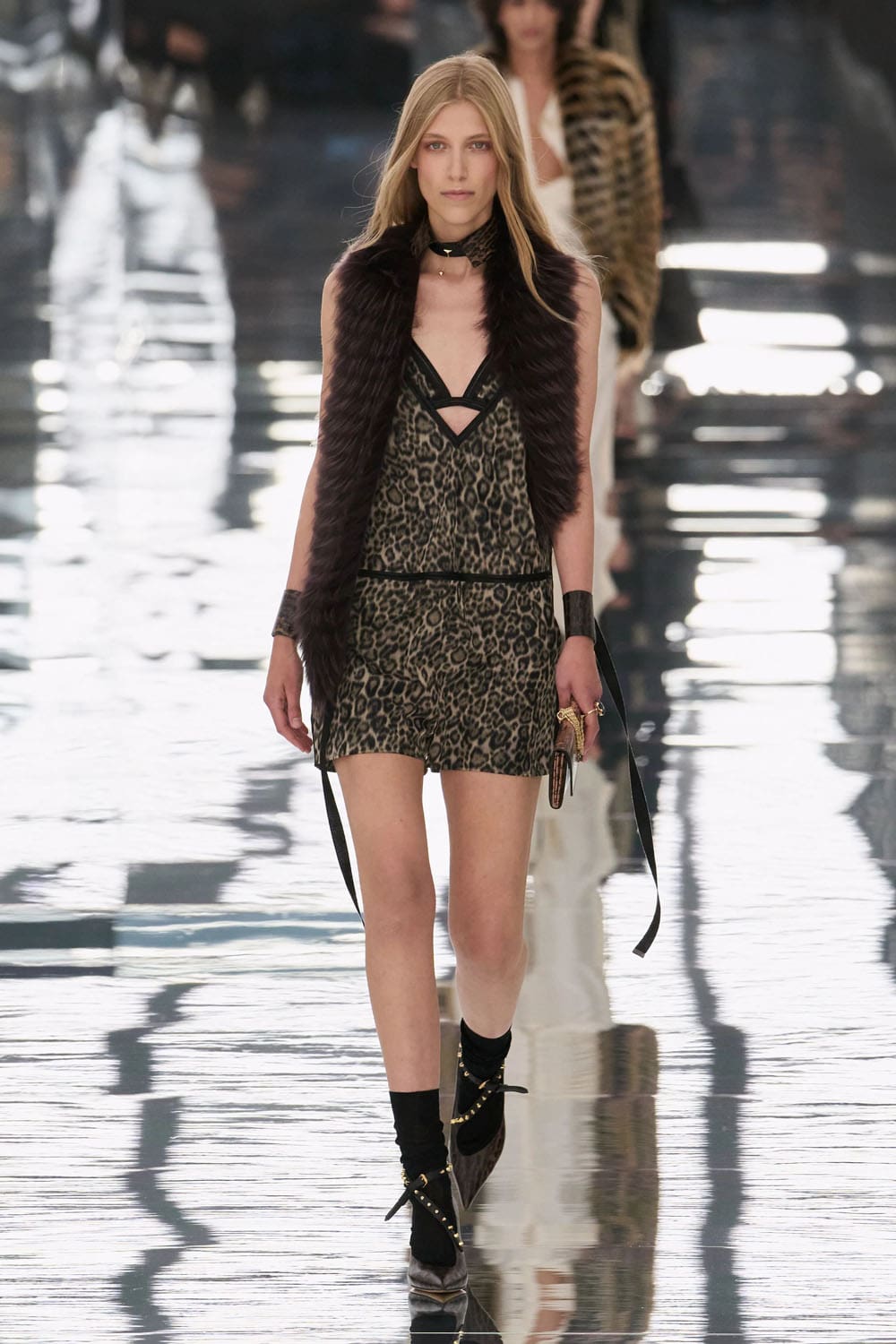
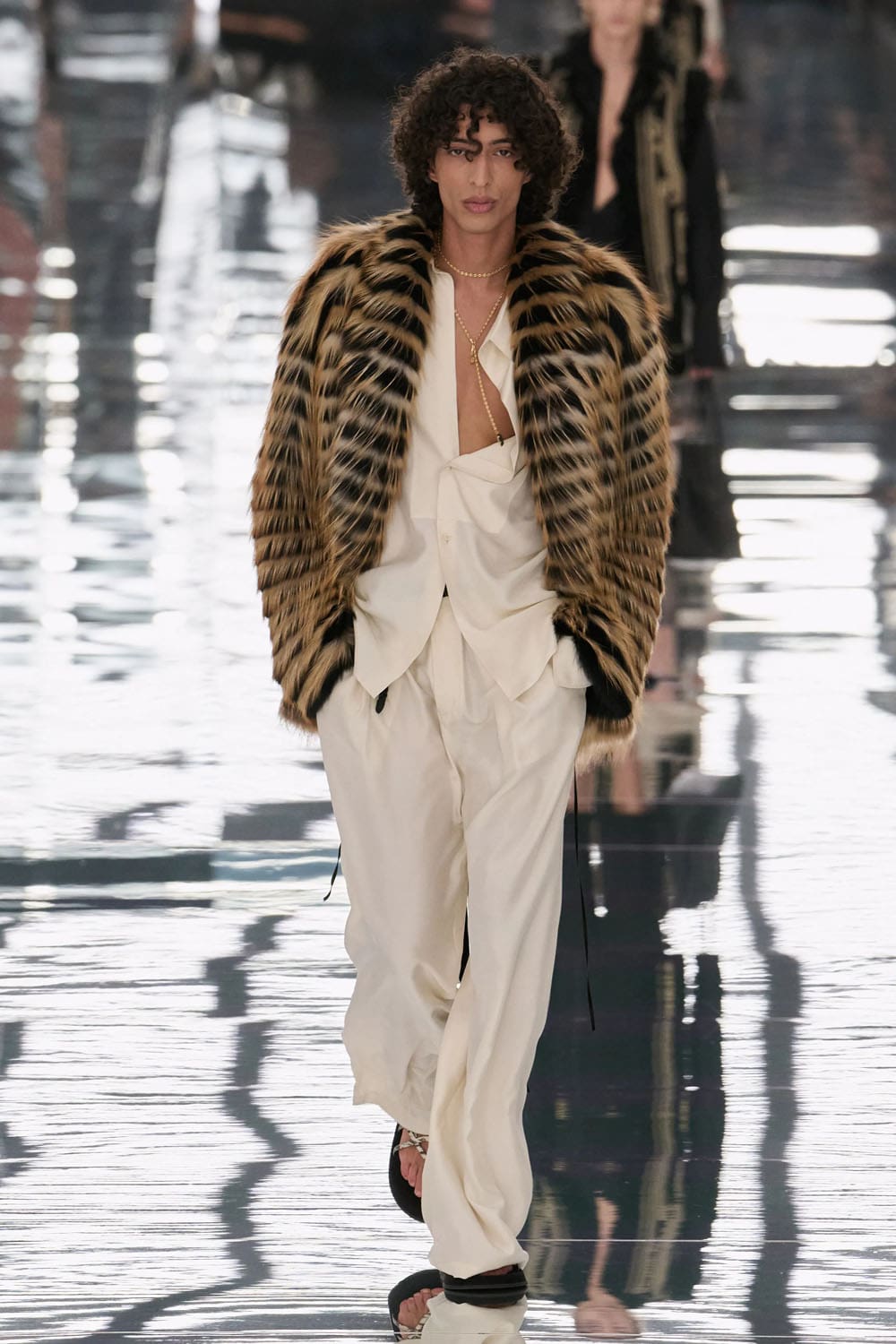
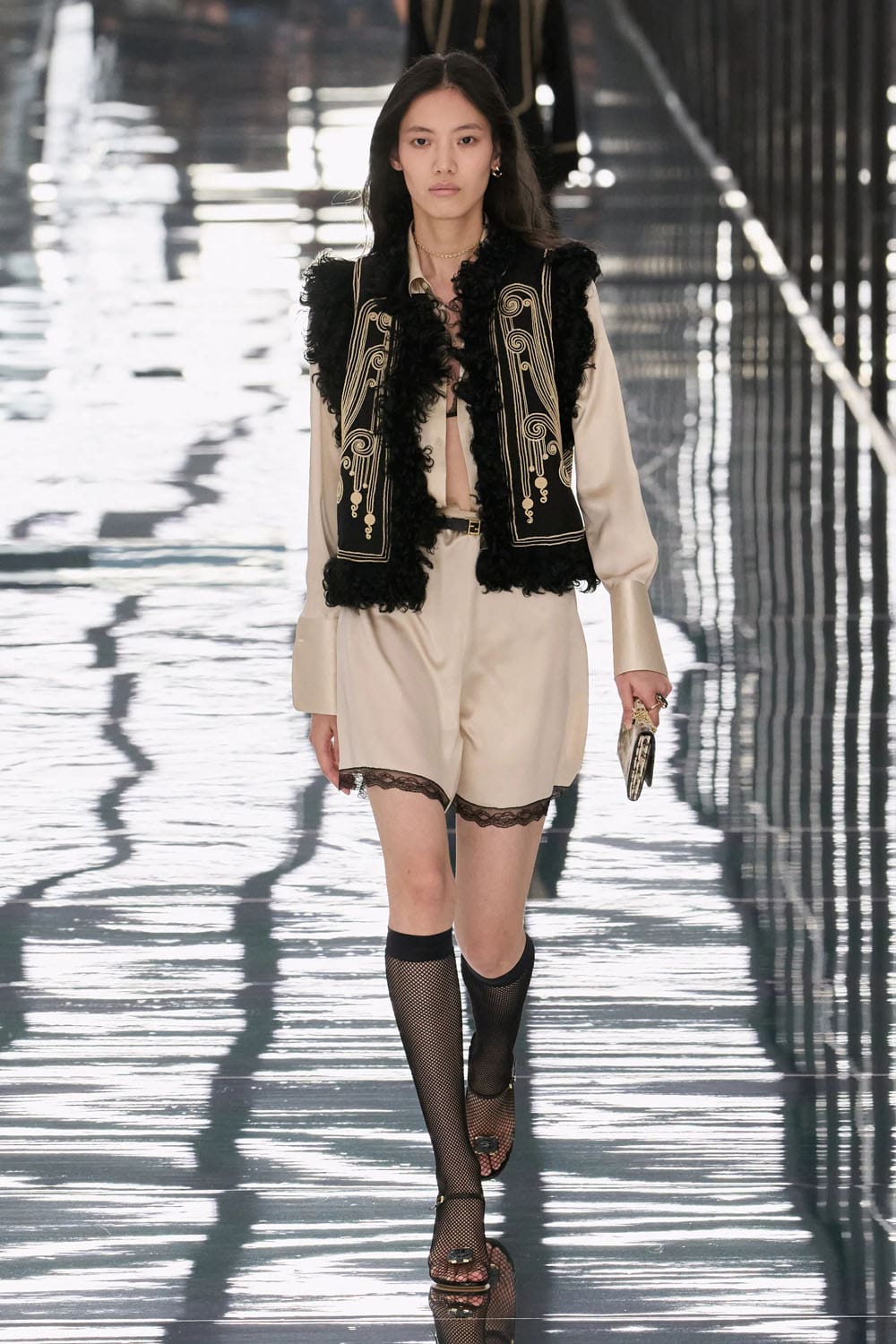
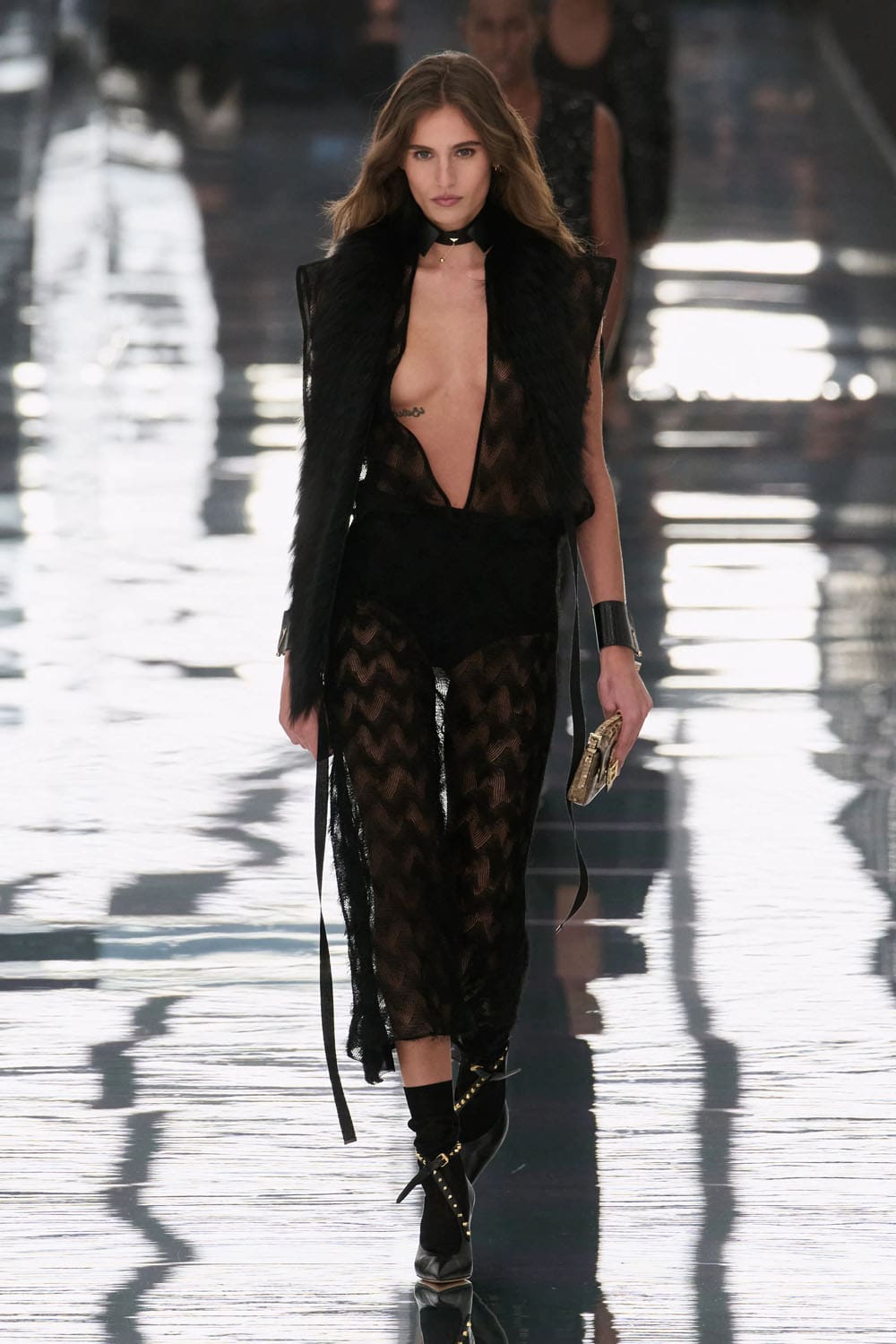
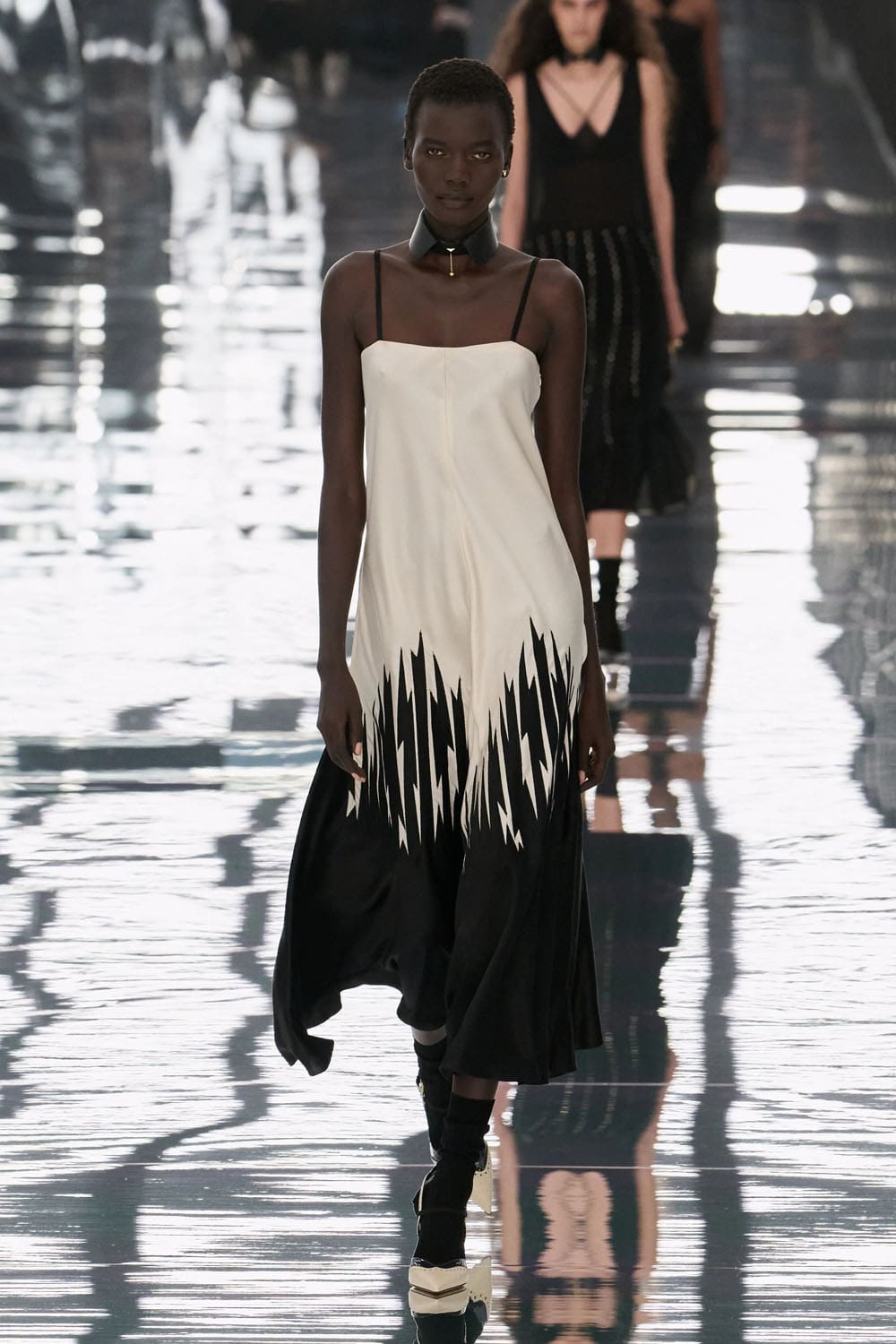
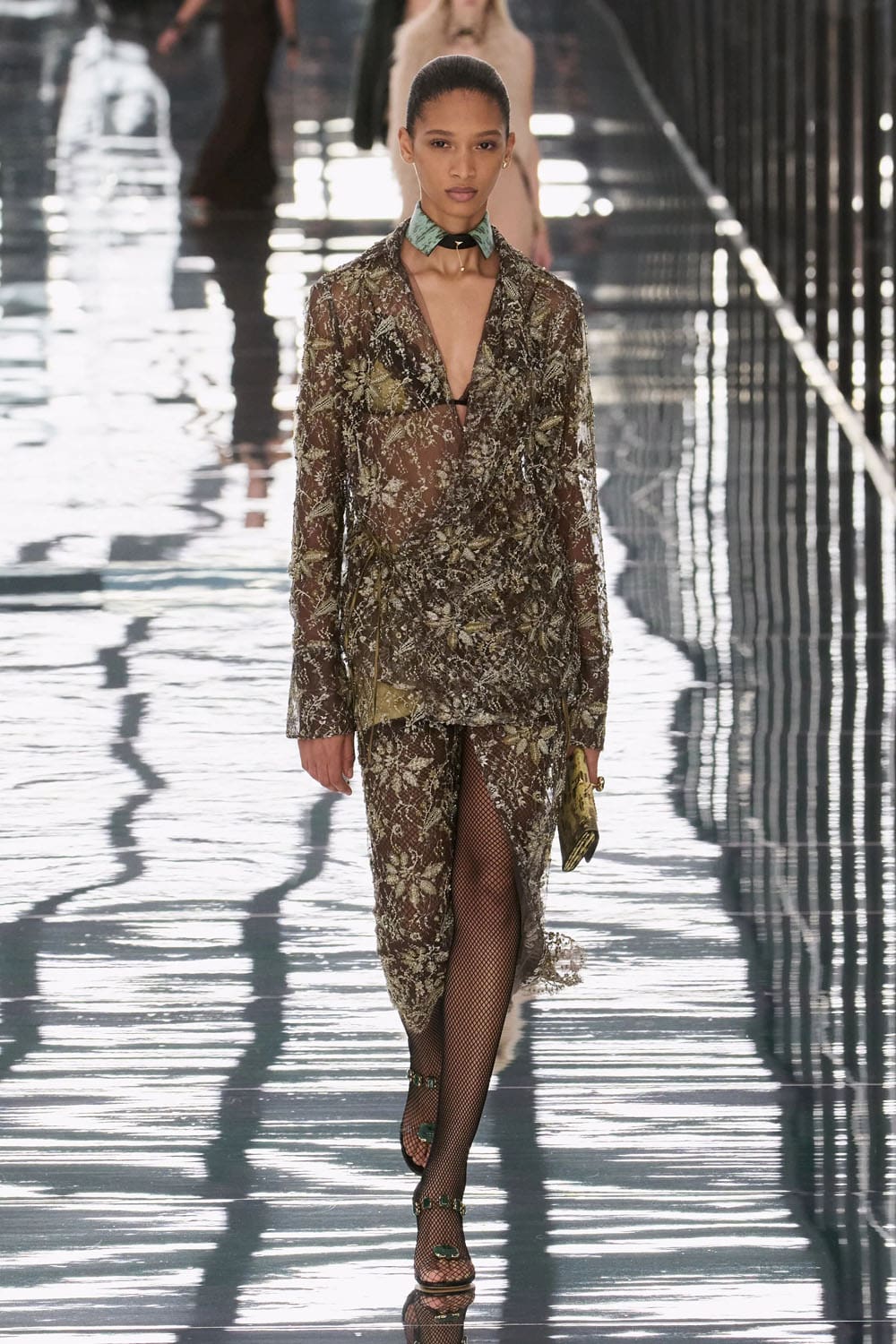
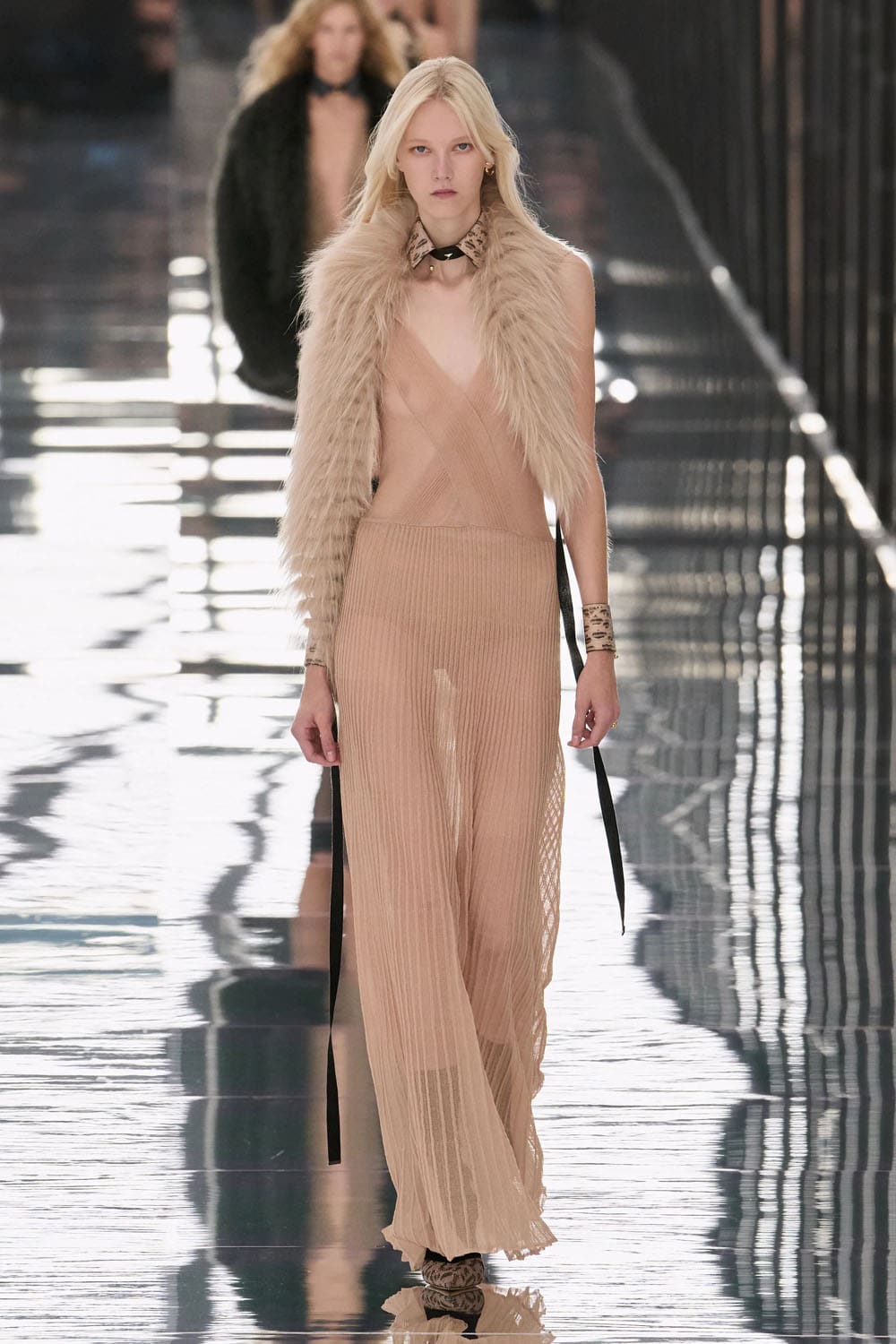
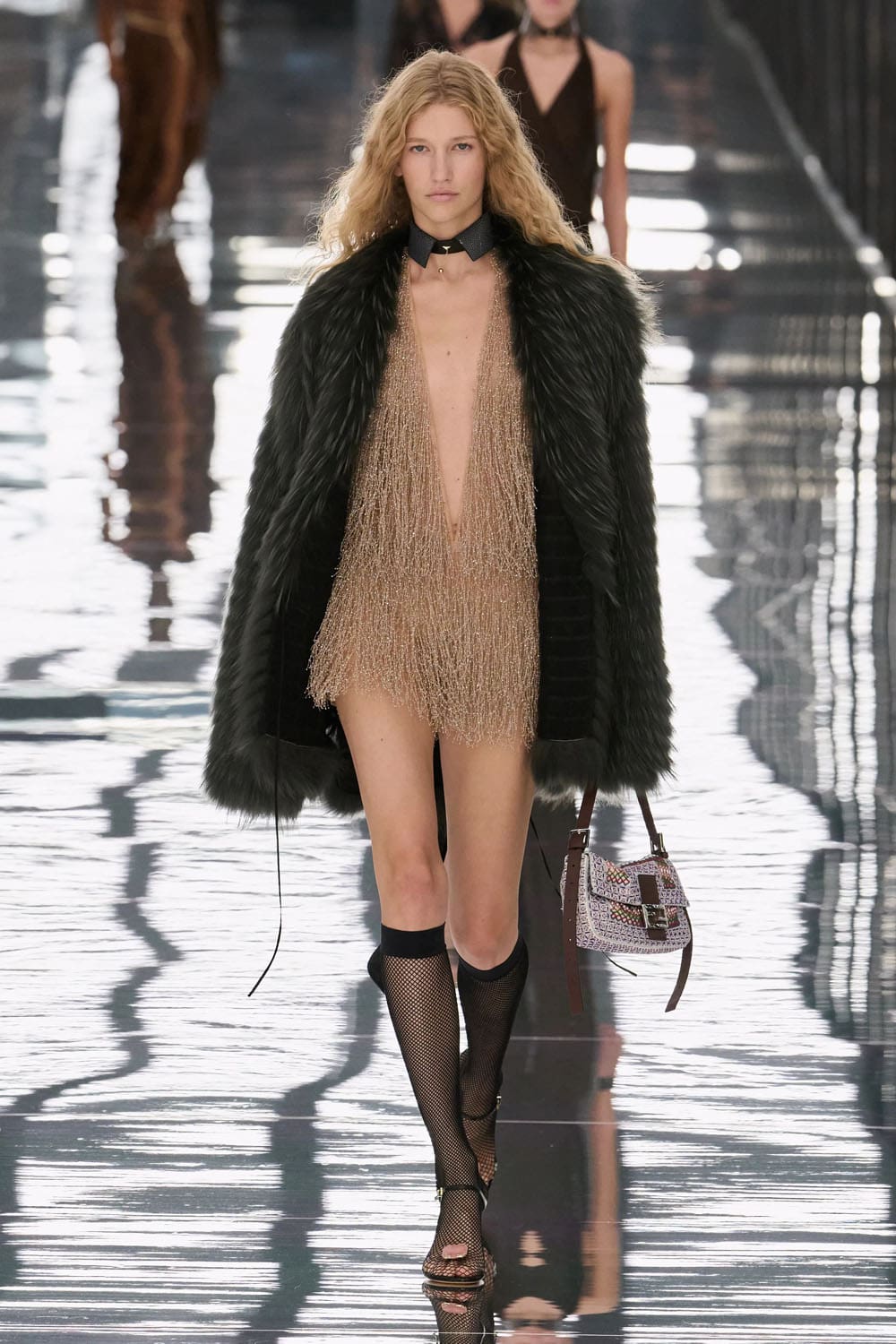
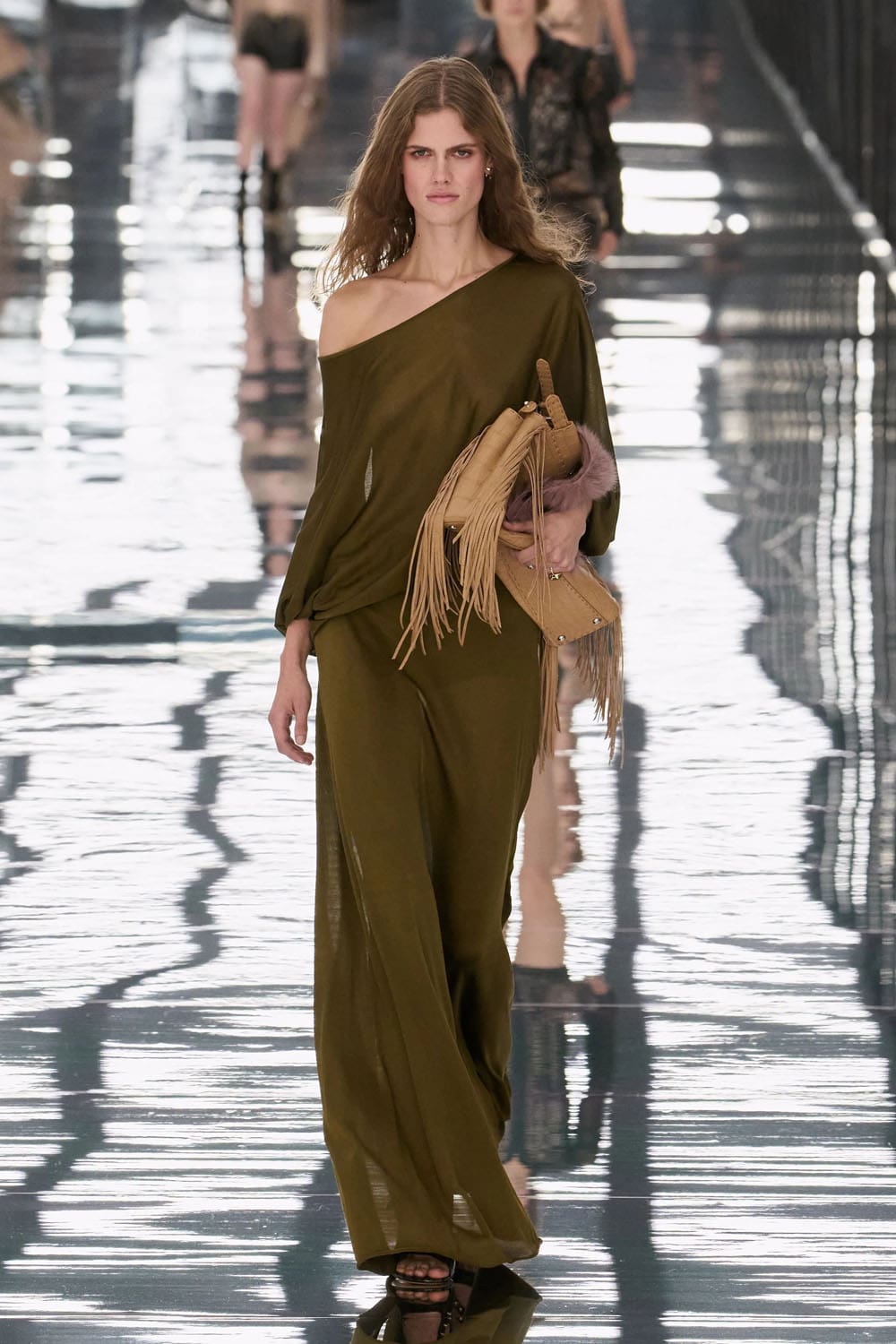
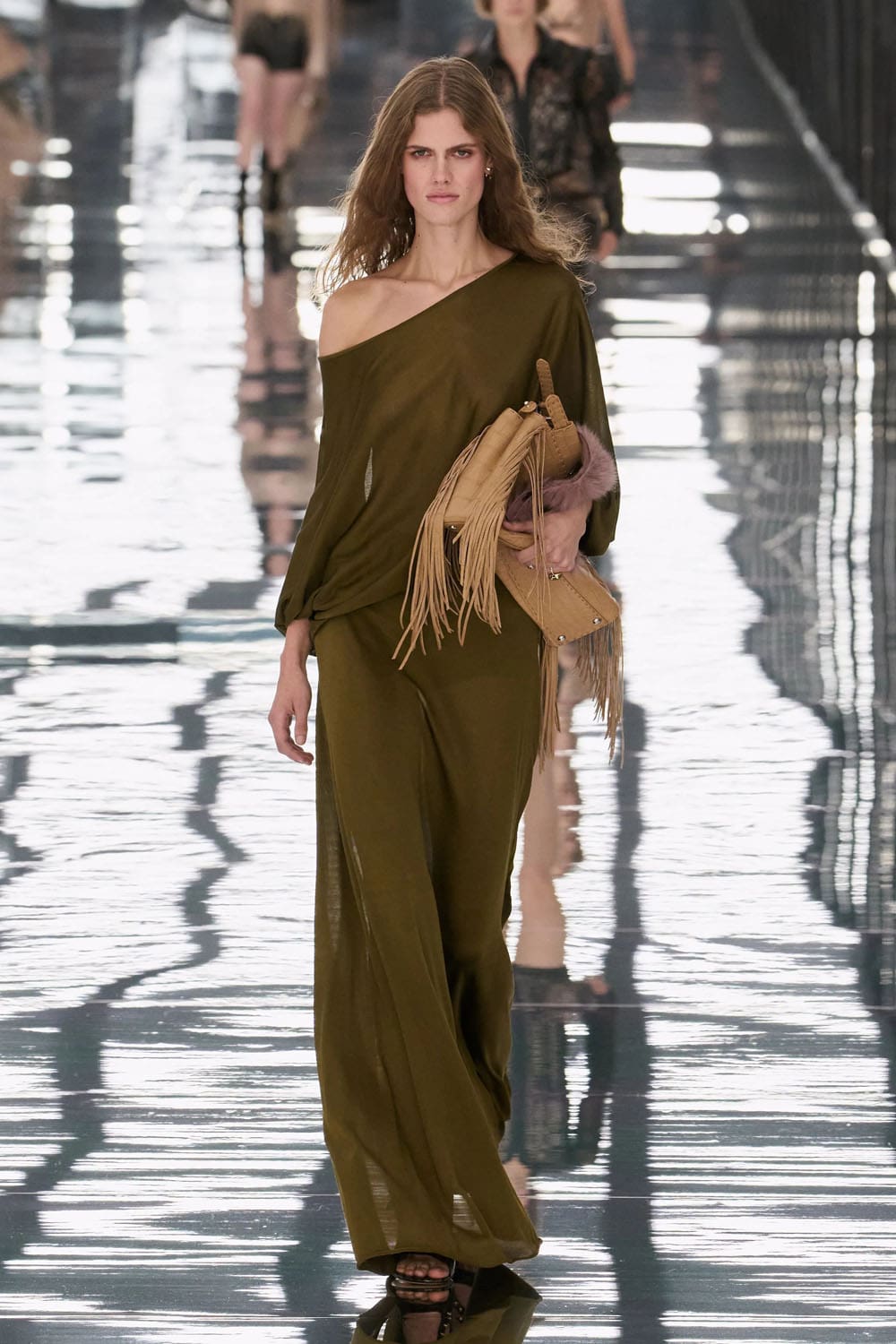
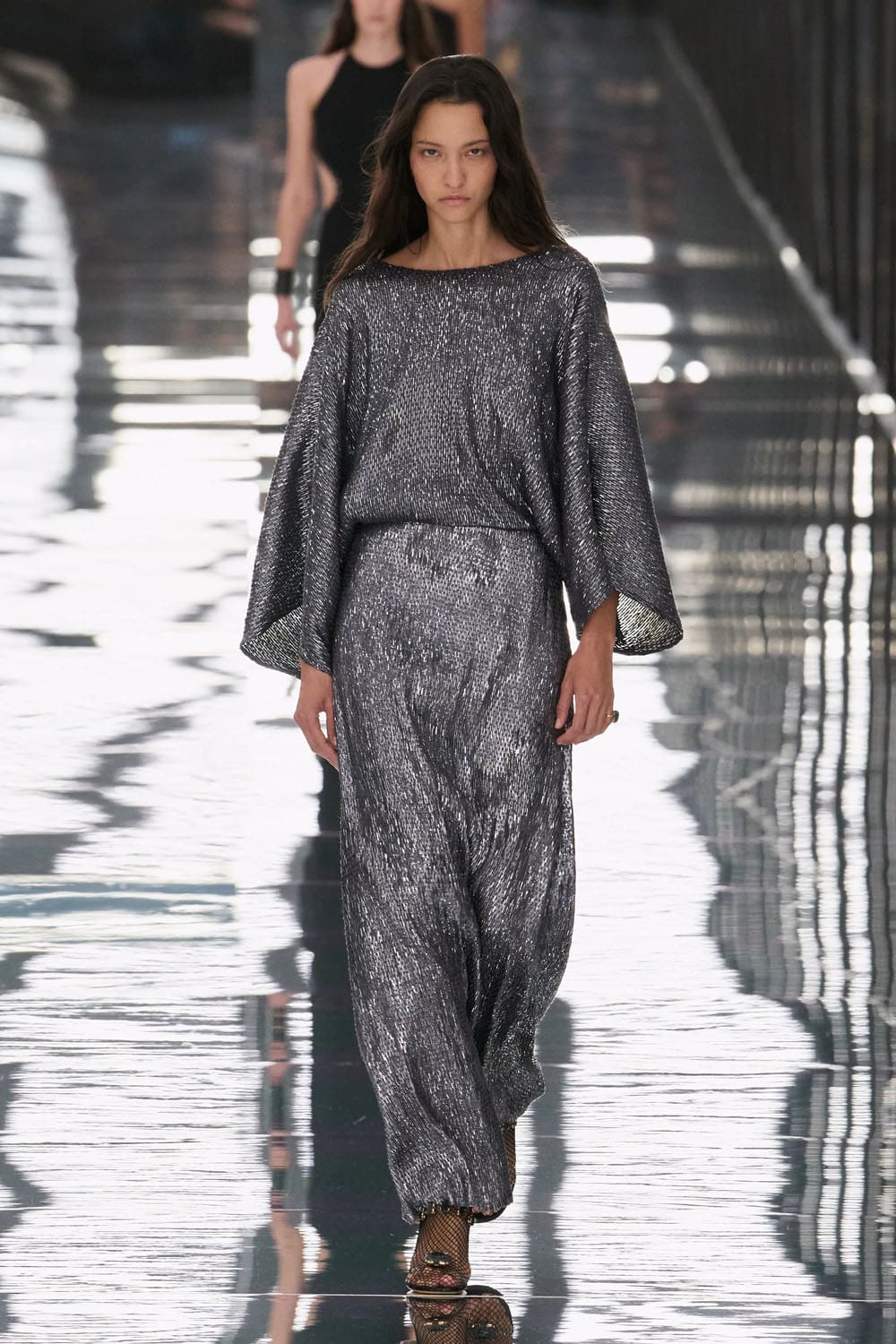
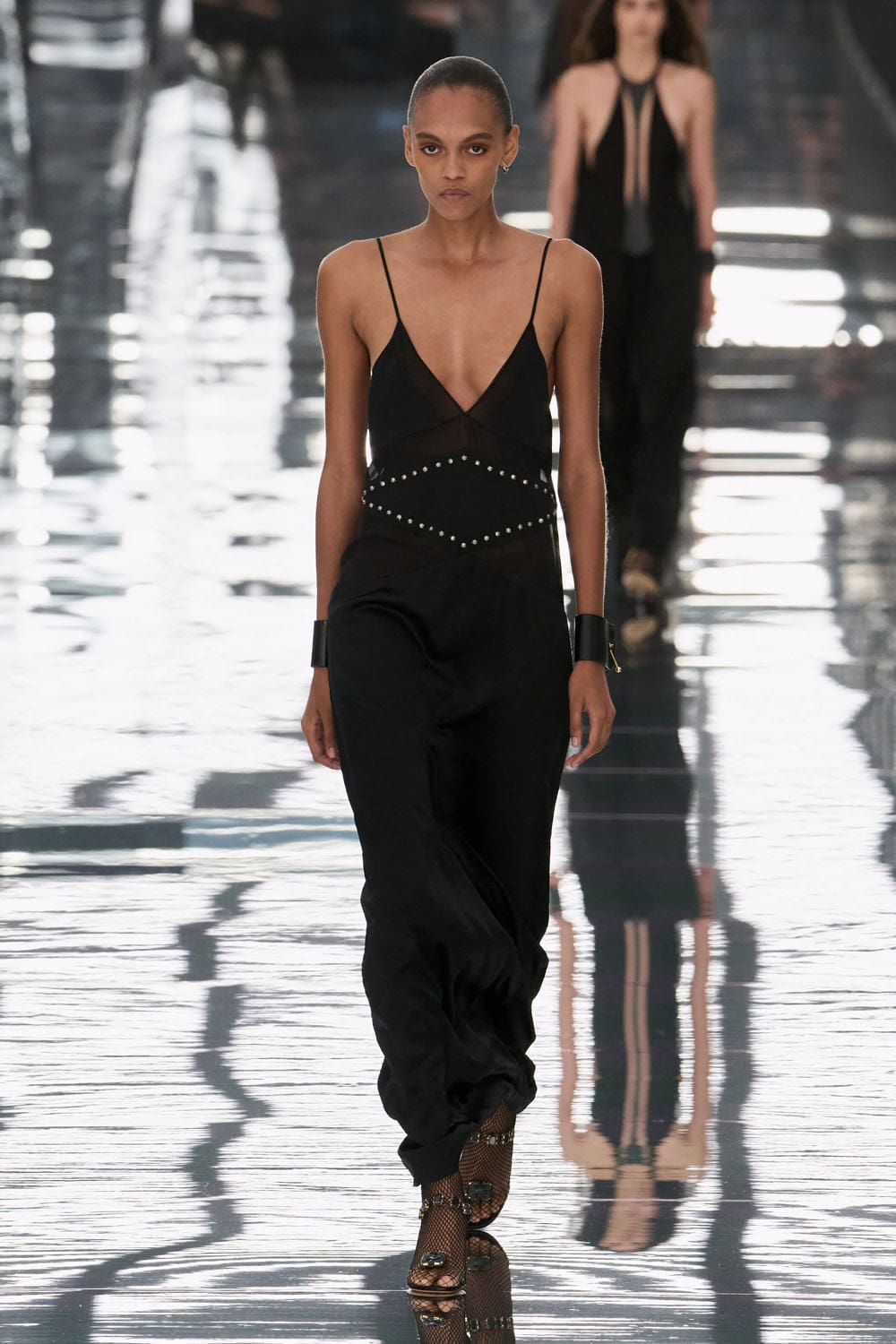
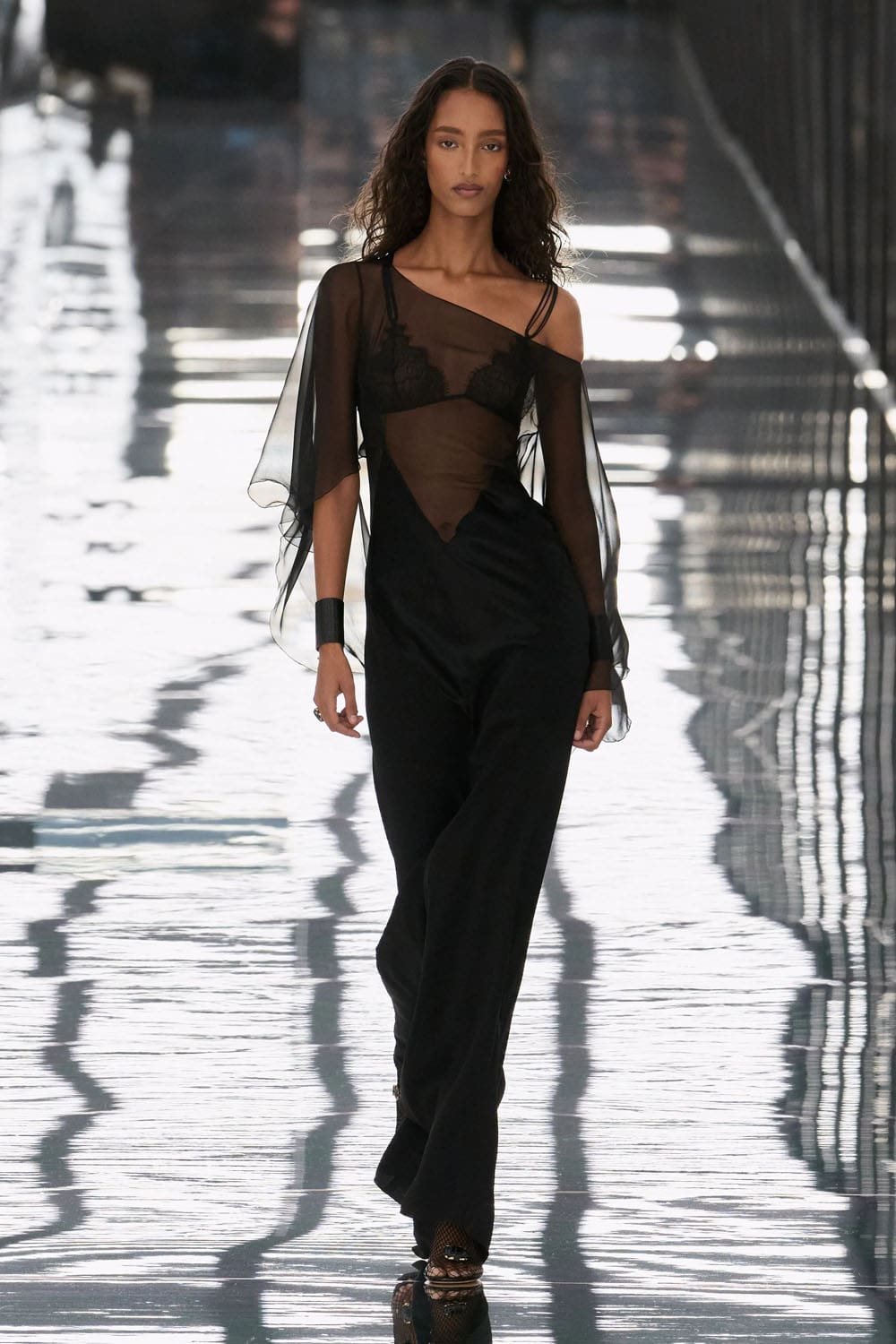
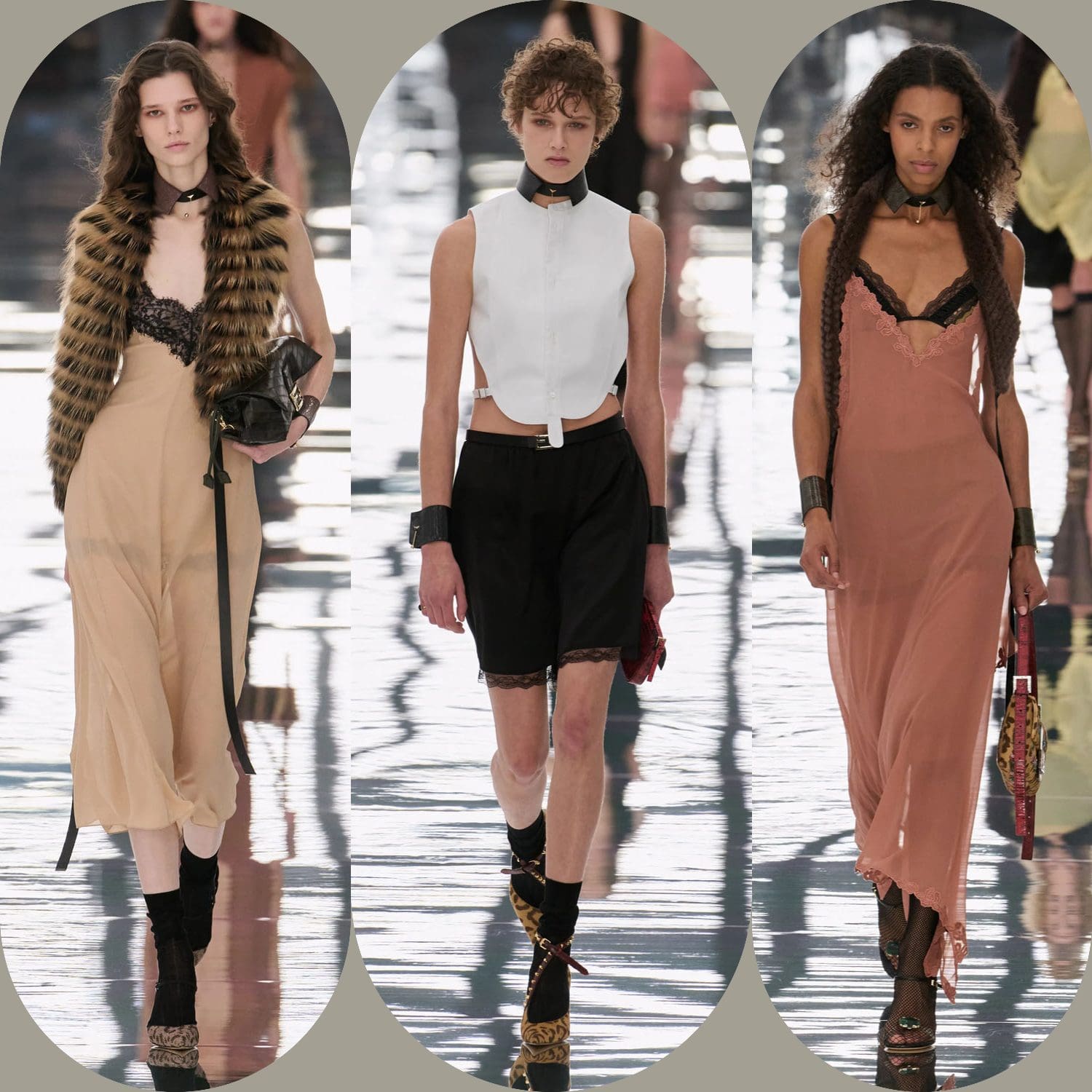
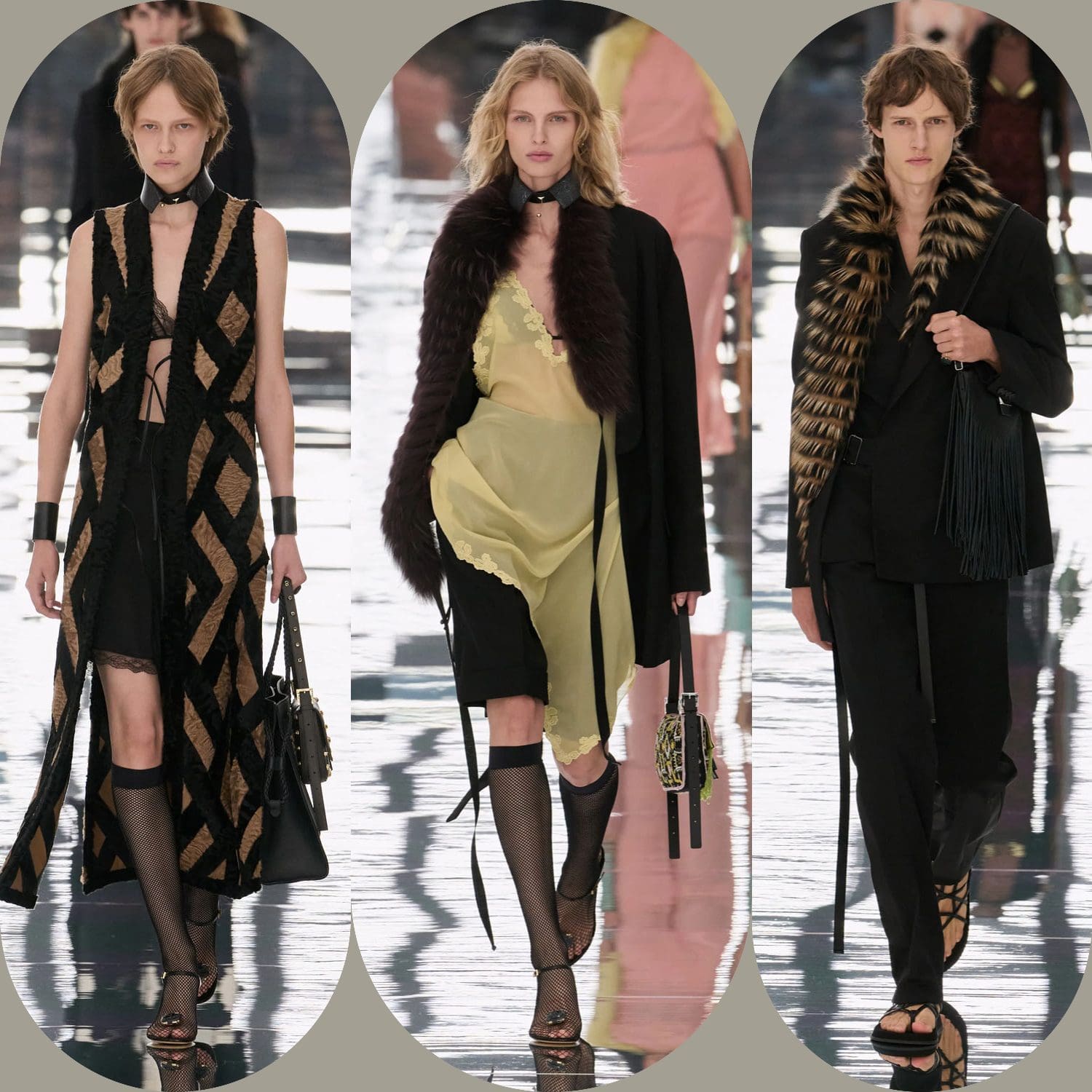
Then came the parade of nocturnal lounge dressing. Silk slip dresses and rompers in murky mustard and pale champagne trailed lace appliqués, half-hidden beneath bulky outer layers. In one breath, we were offered an olive-khaki playsuit flanked by a shocking mint-green fur scarf tossed carelessly over one shoulder; in the next, a taupe nightgown was crowned with a striped mink shrug and an oversized black leather pouch clutched under the forearm like an overdue legal brief. If Carrà ever stepped onto a stage wrapped in an oversized fur wrap while dressed in bedroom negligees, history chose to politely forget it.
The Puzzling Anatomy of Daytime Boudoir
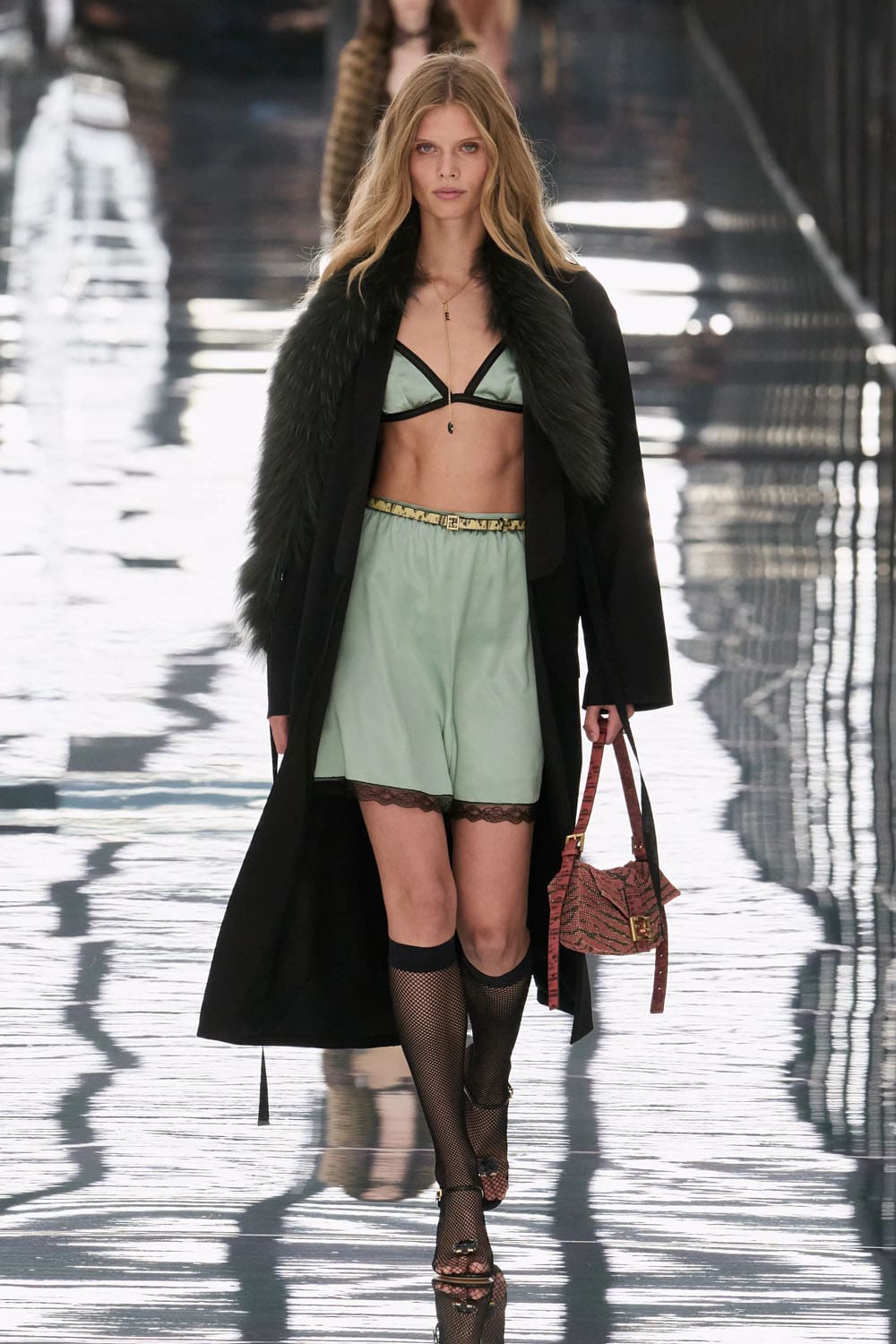
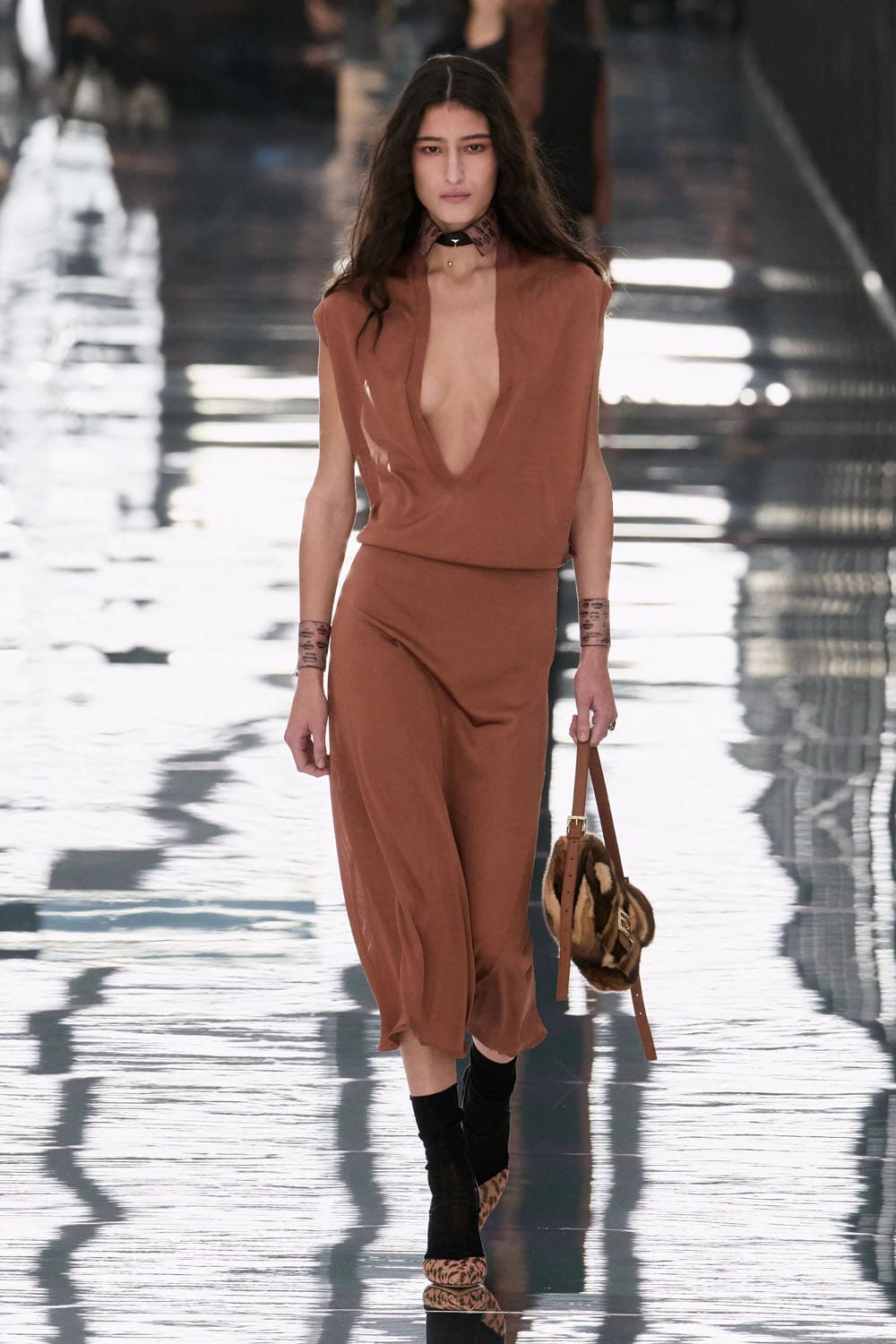
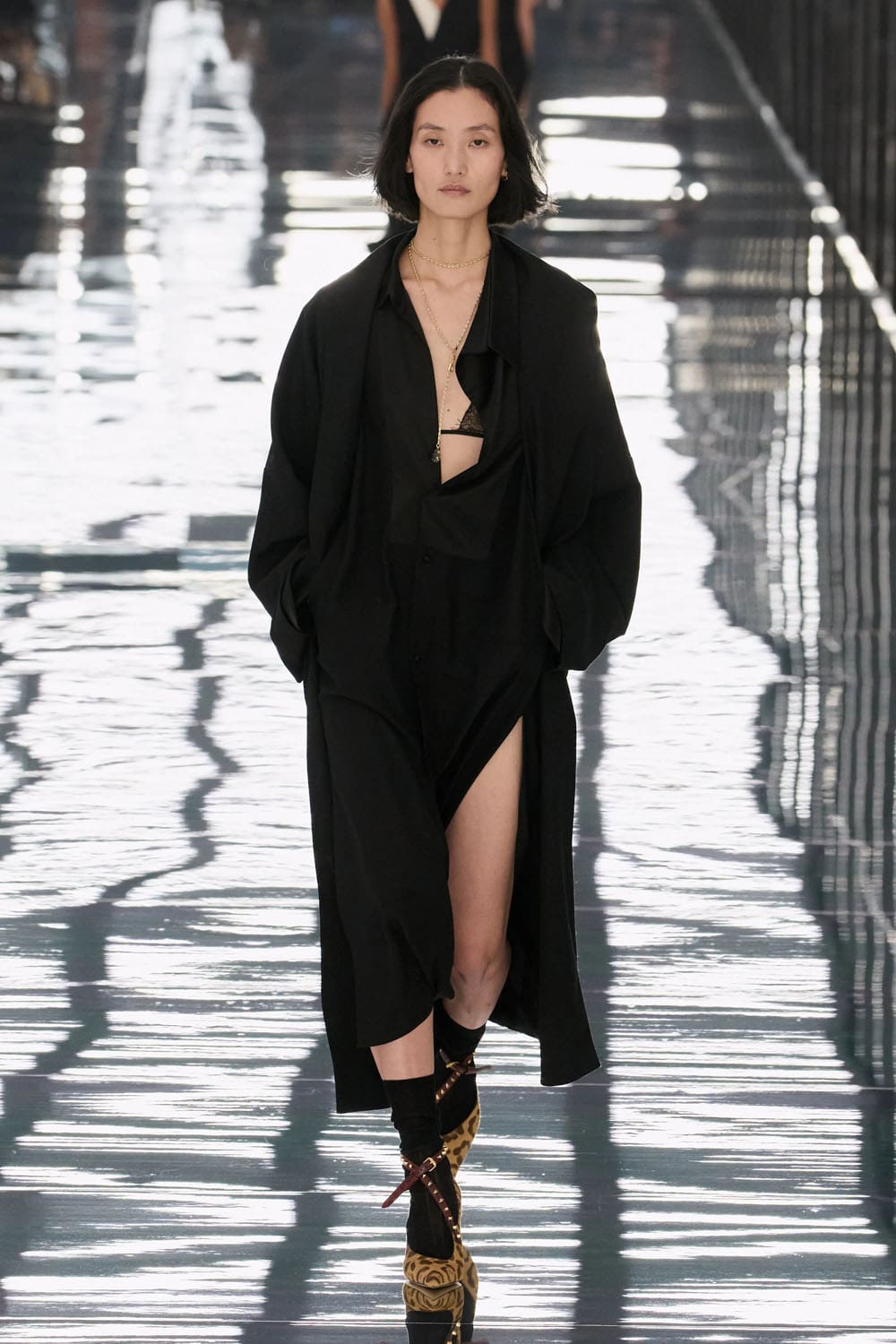
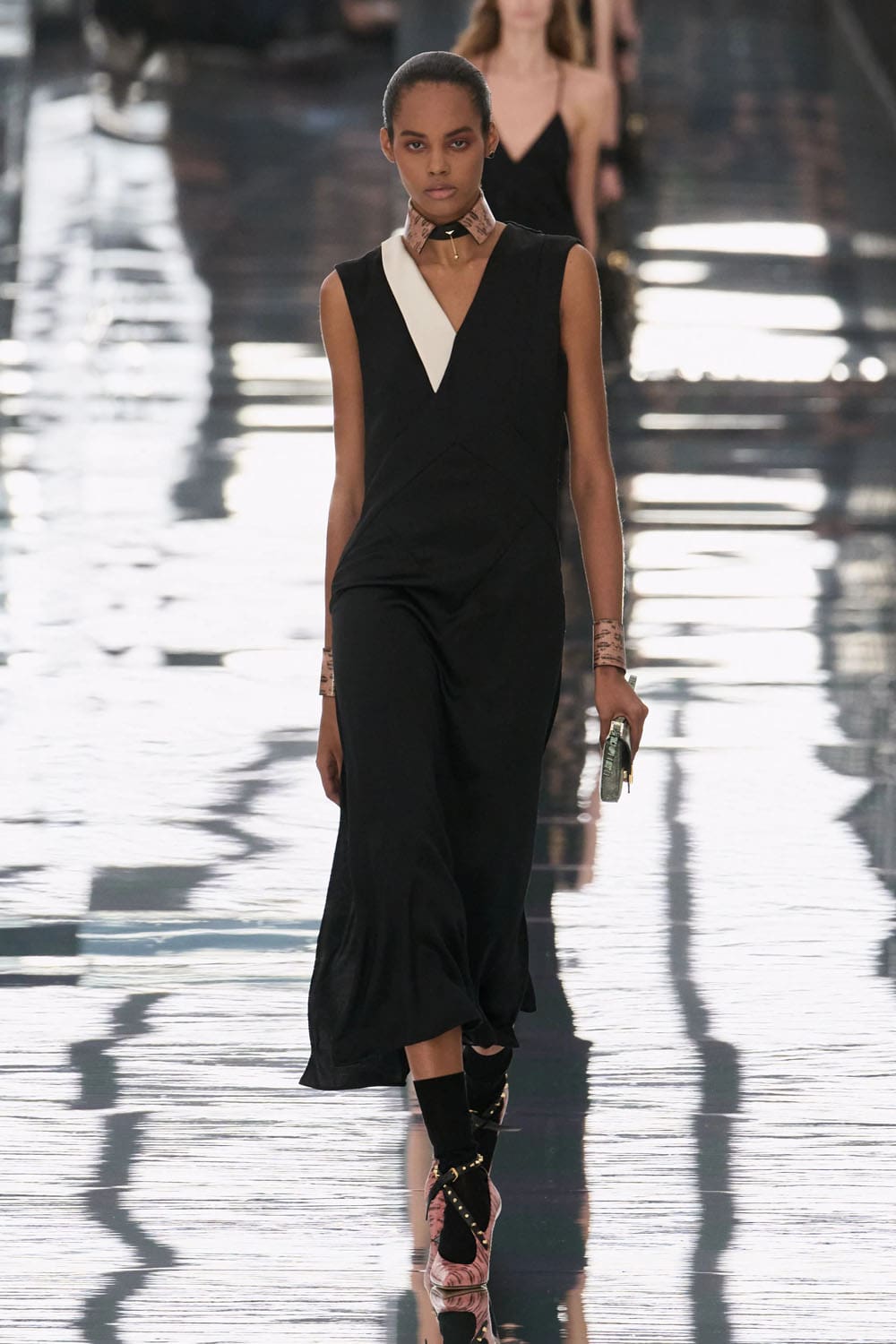
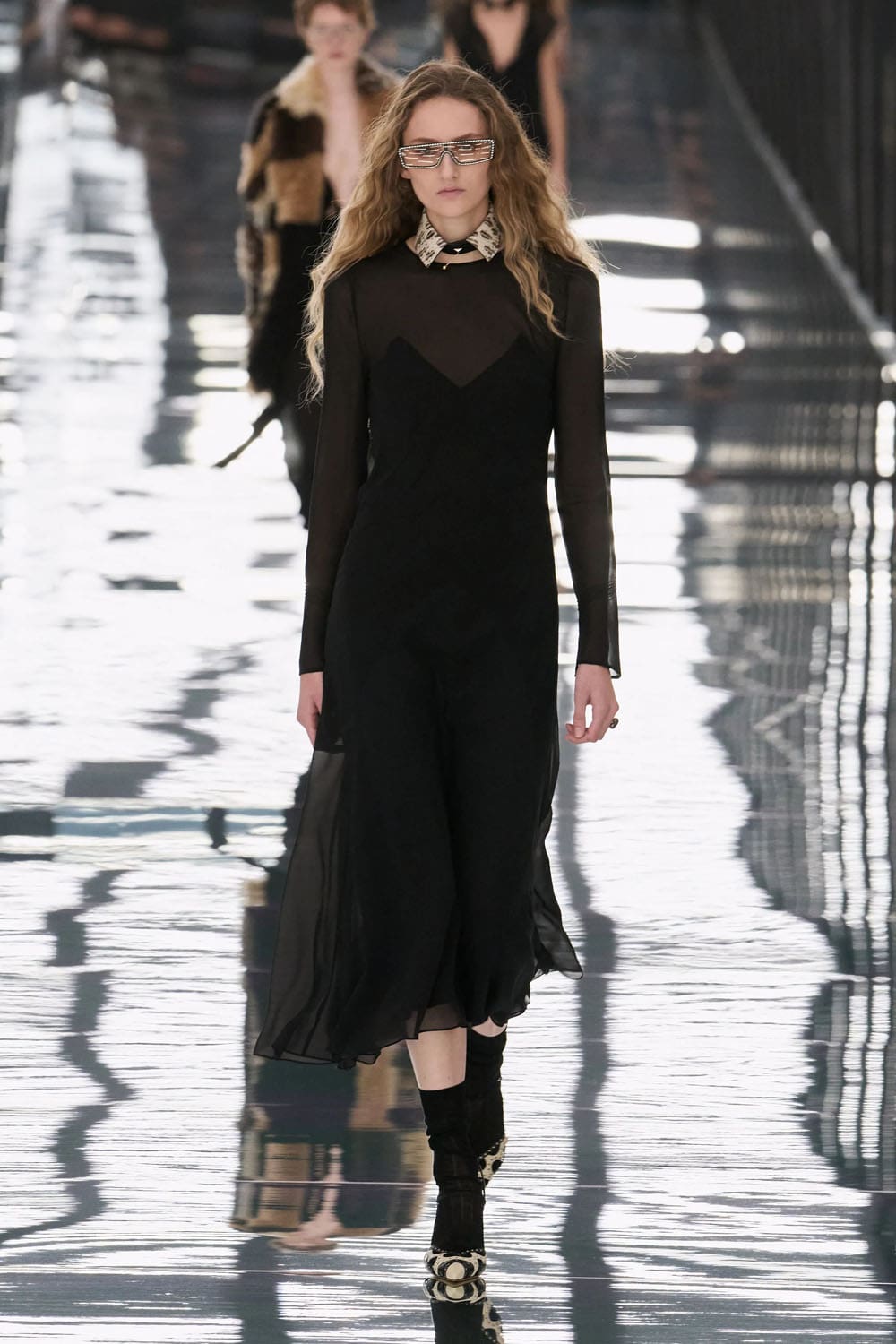
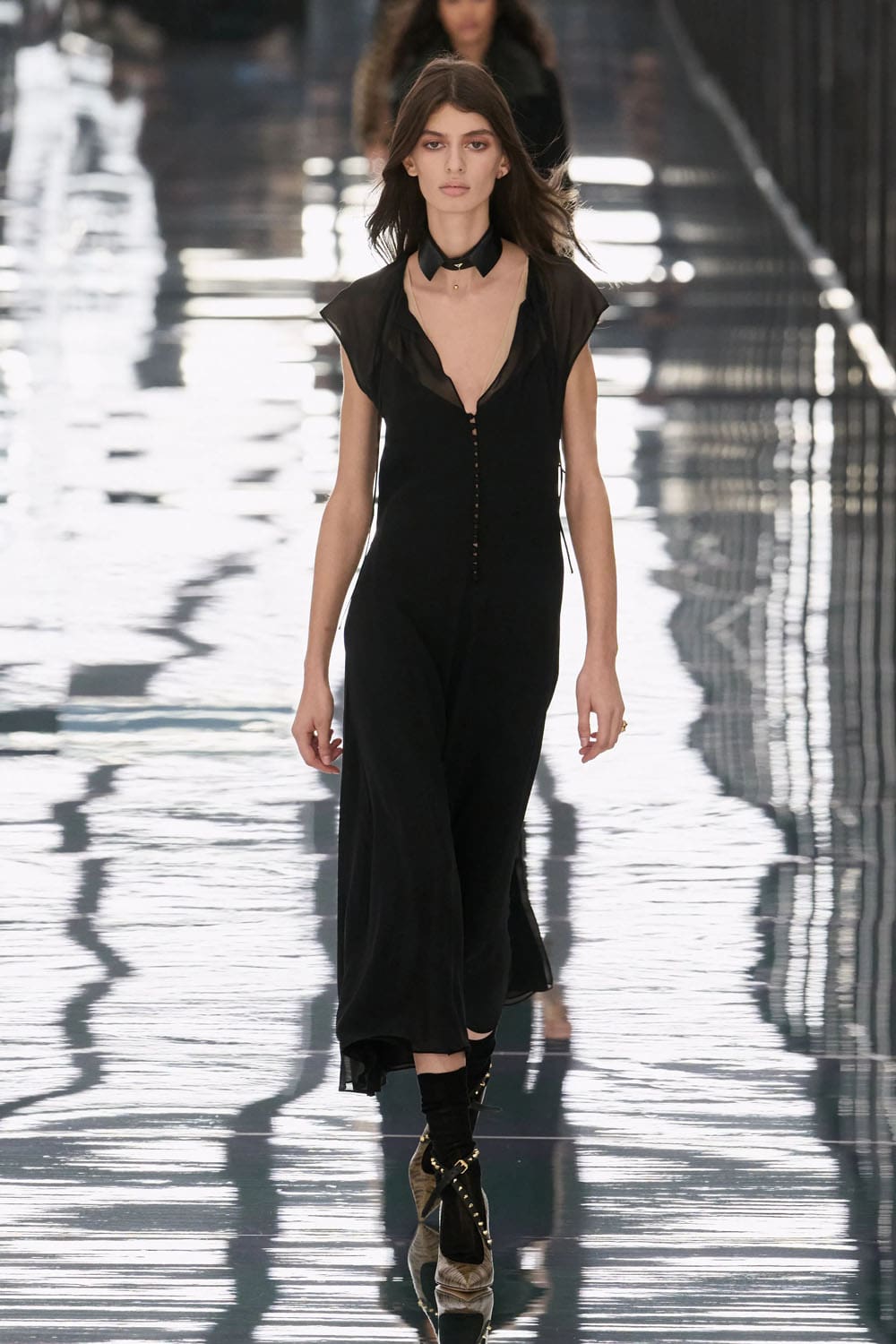
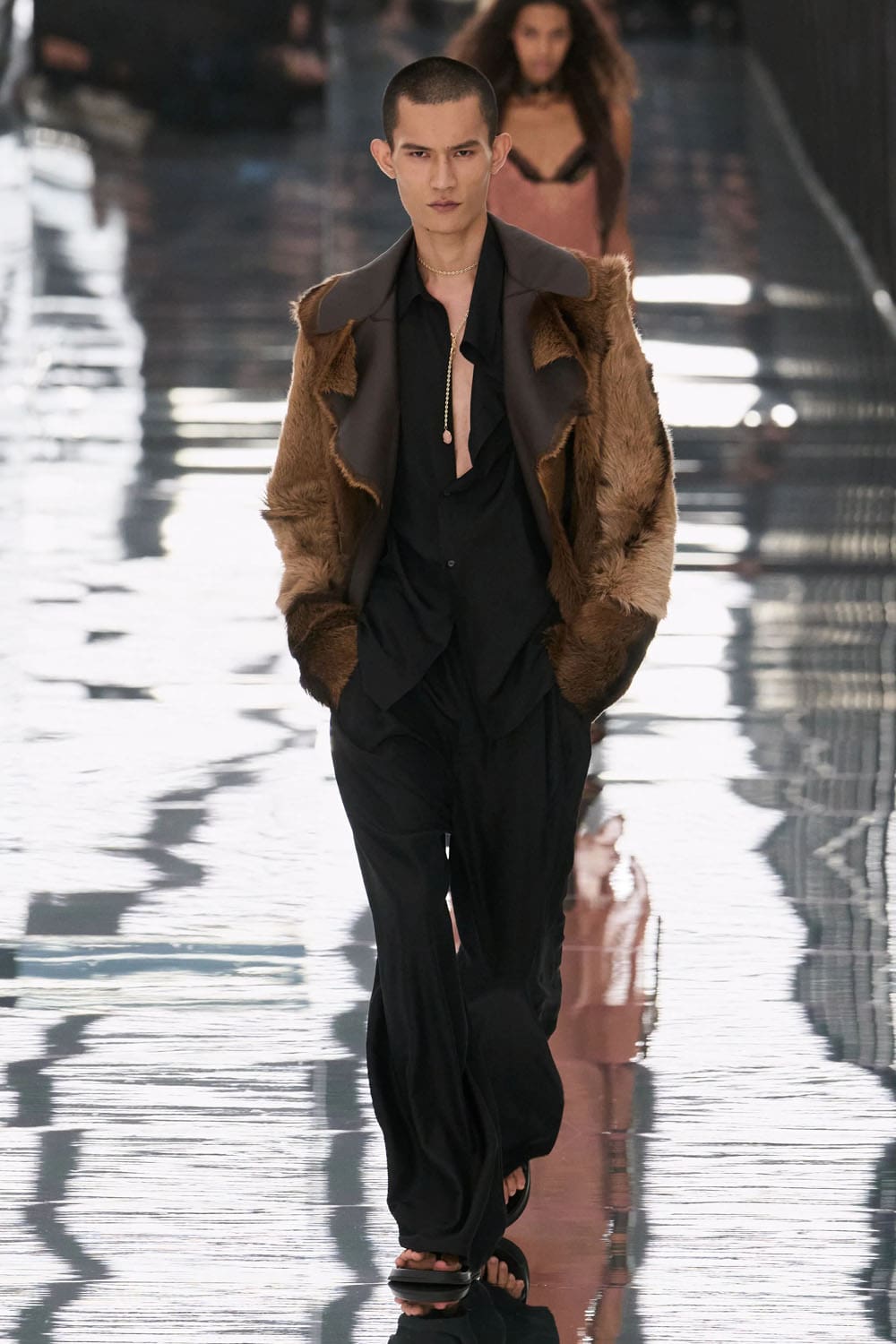
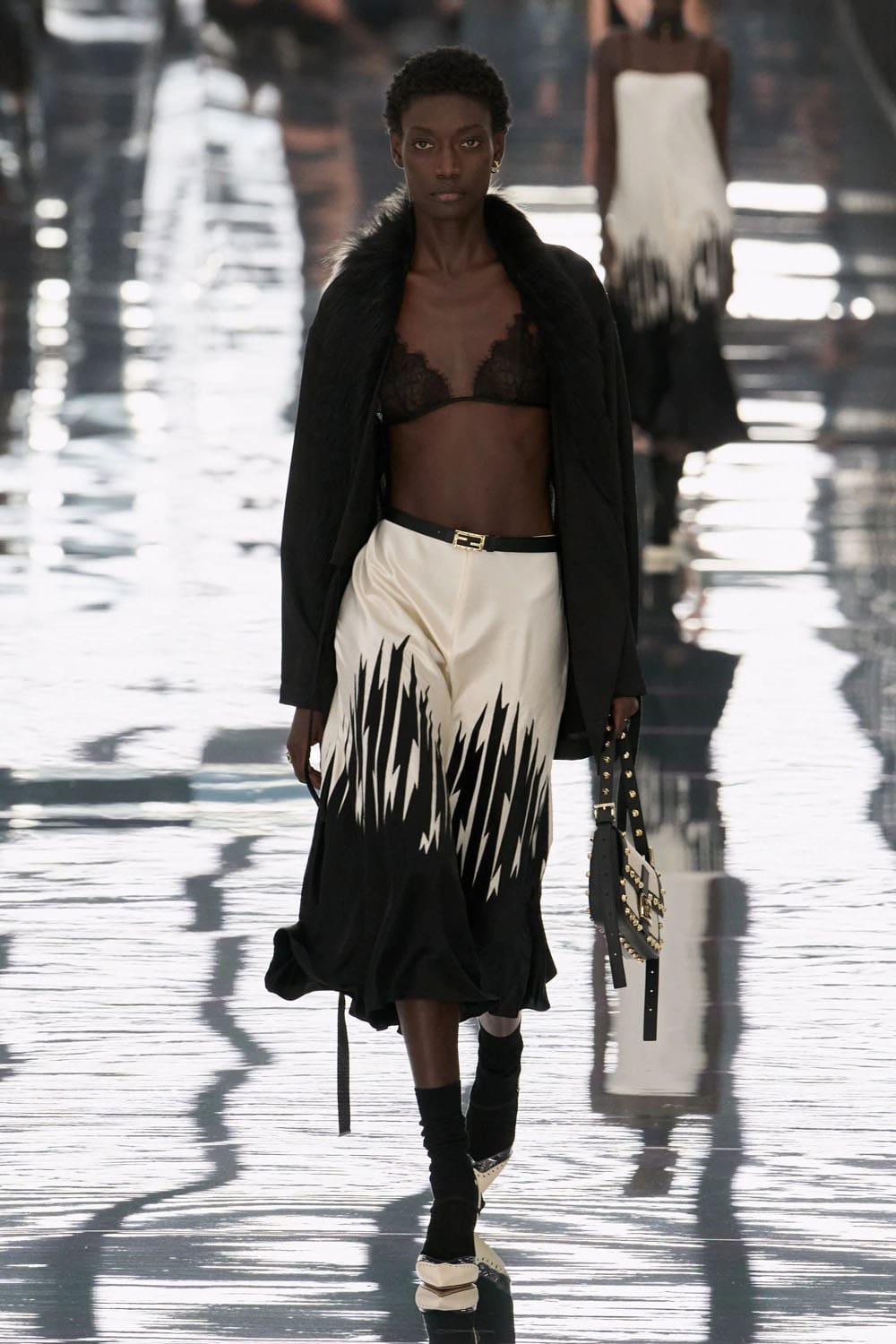
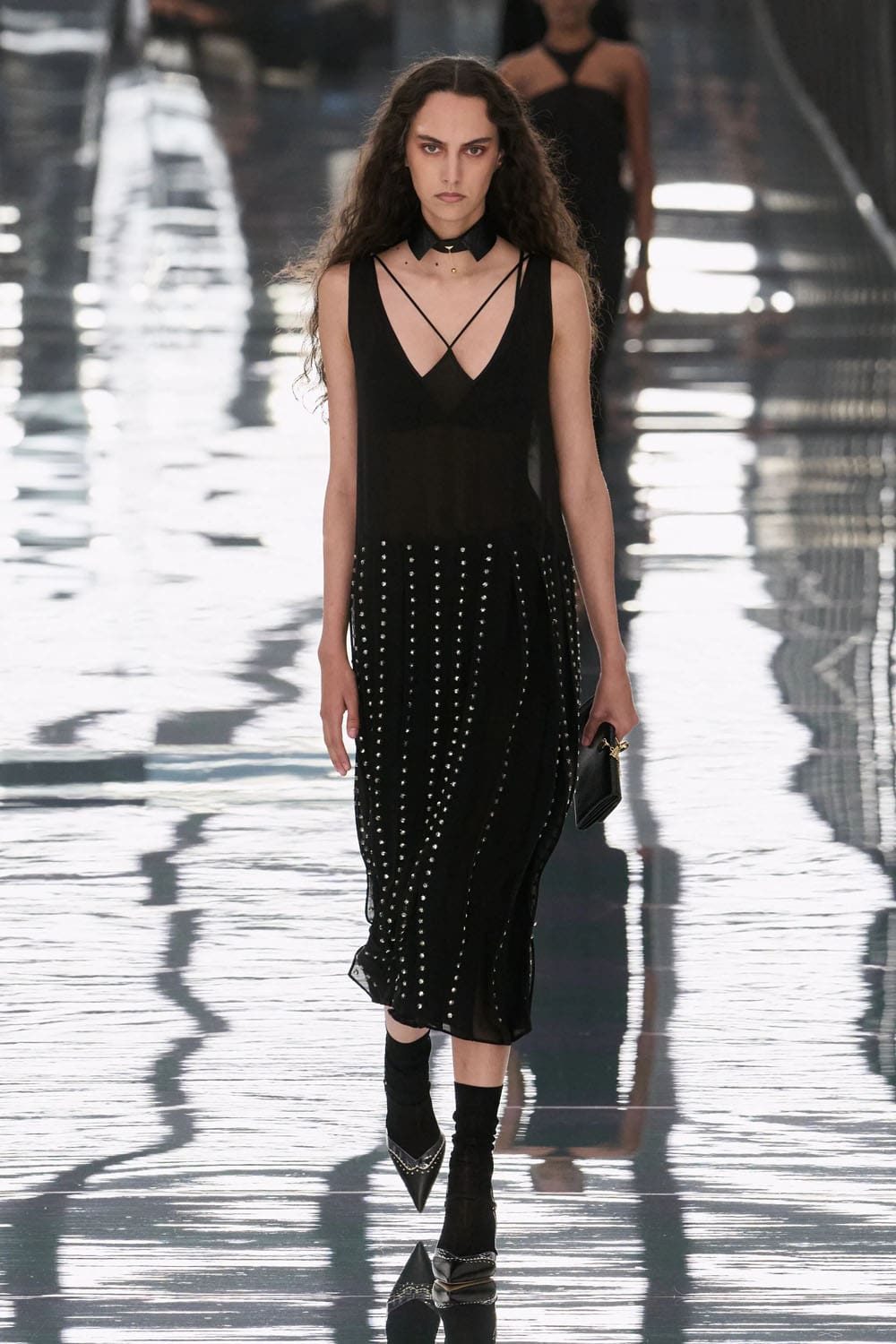
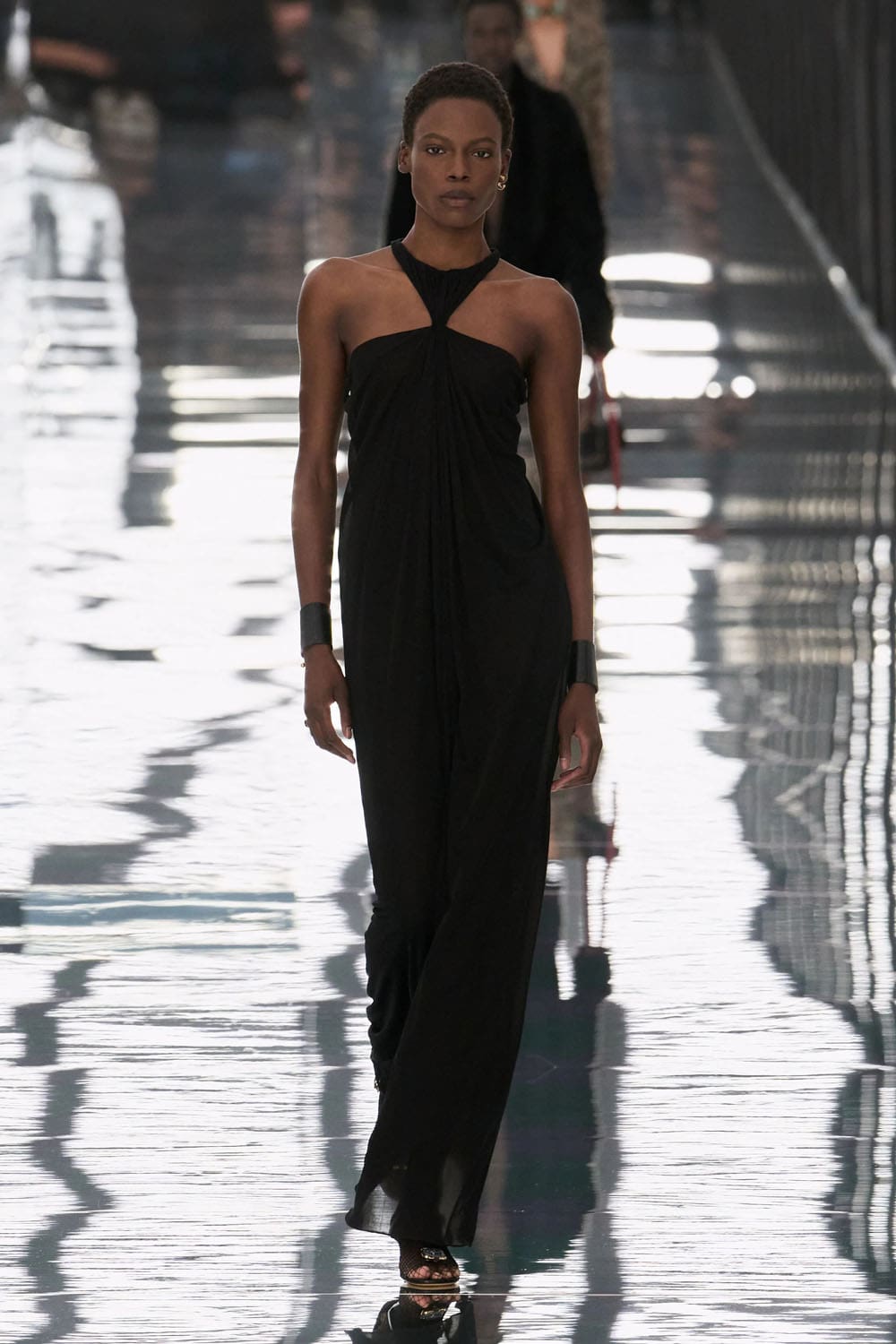
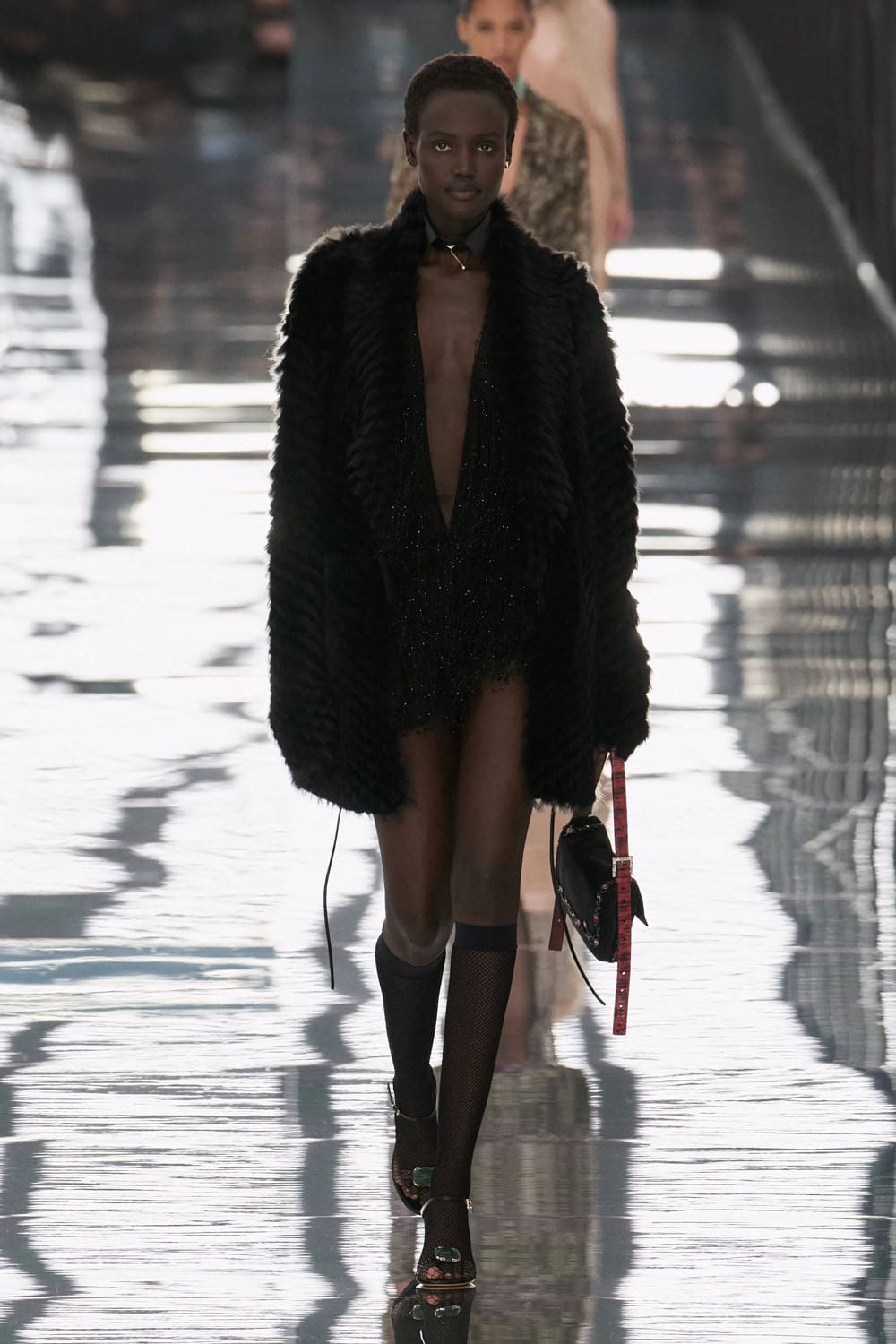
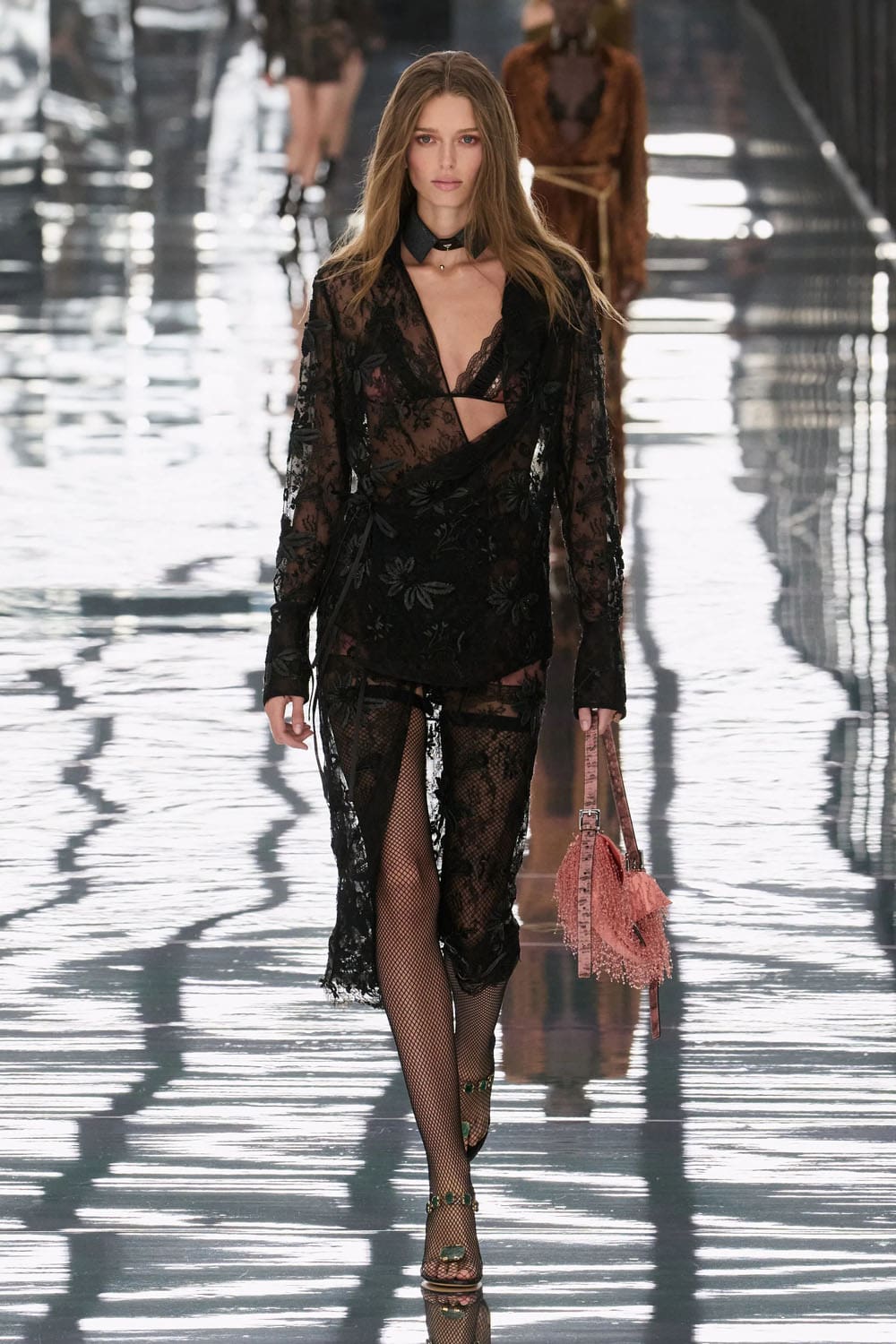
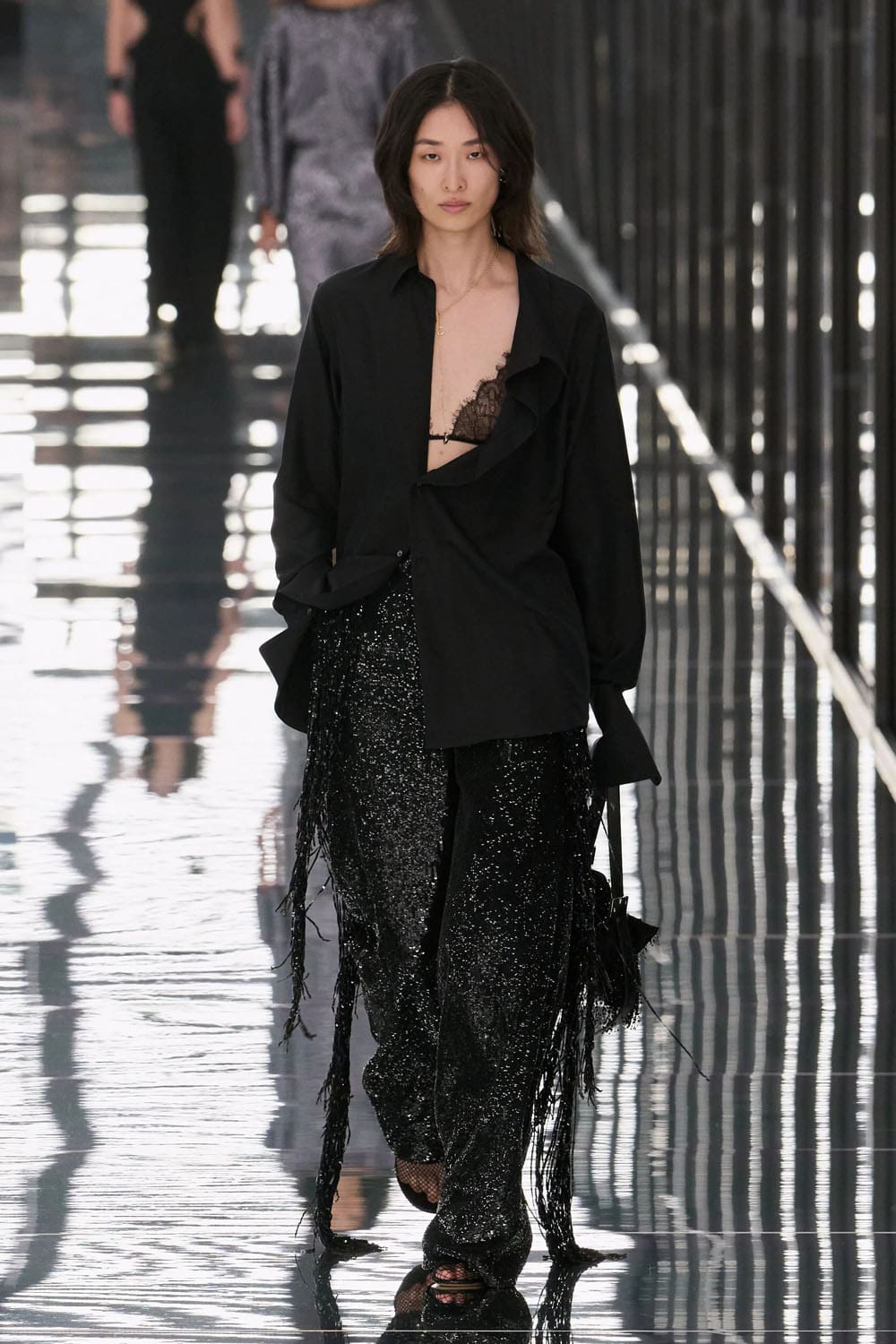
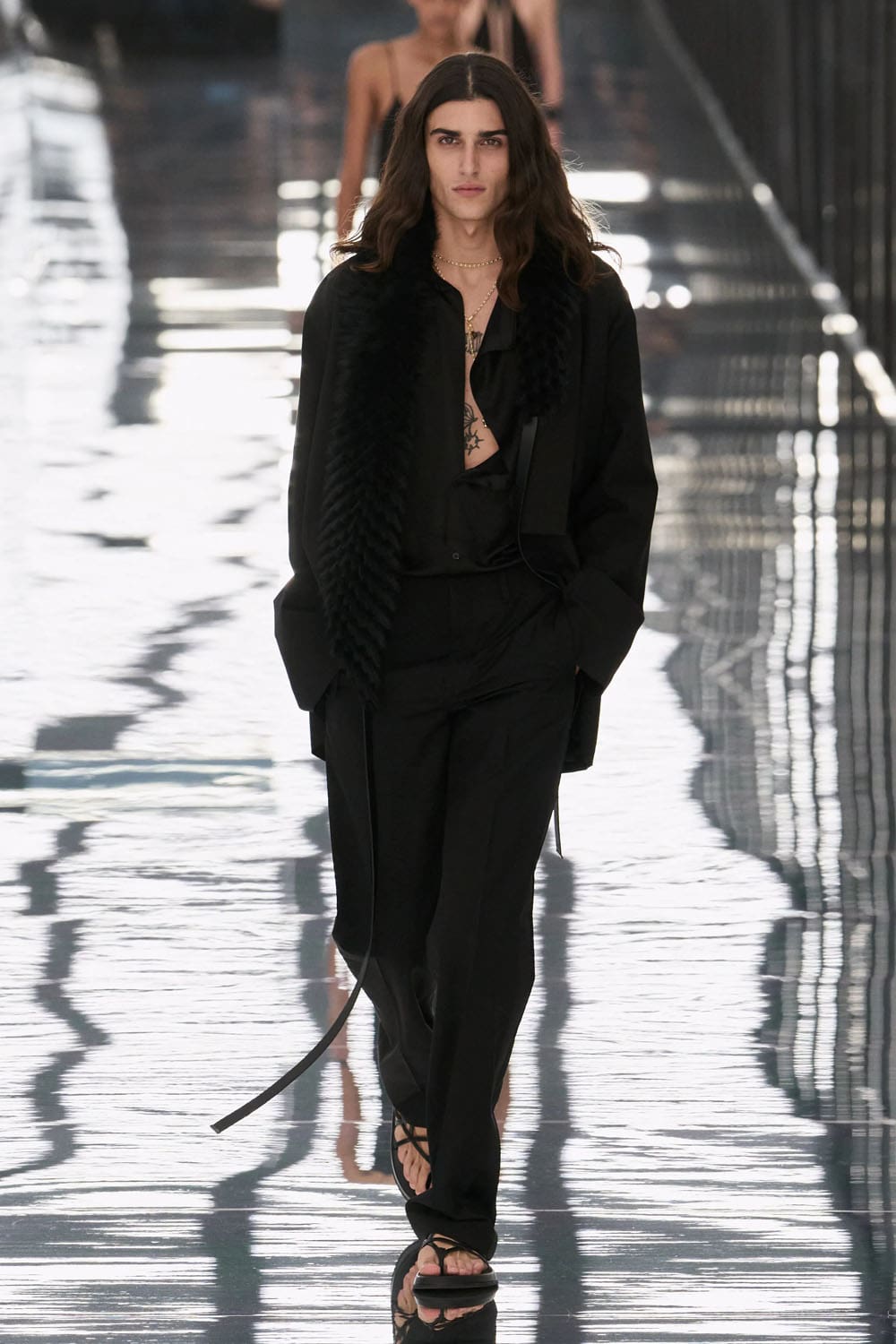
To complicate the narrative of the liberated female form, the styling choices seemed perpetually at war with basic sartorial cohesion. The oversized black shirt-coat, cut with wide lapels and dropped shoulders, blew wide open to reveal a lace brassiere and a thigh-high slit that dragged its hems across the floor. Beside it, a sleeveless black button-down day dress fastened with a stern leather choker collar strove for an austere, almost monastic gothicism. One struggled to locate the common thread between these stark black vestments and a cream floral lace dress paired with another cartoonishly turquoise feather boa.
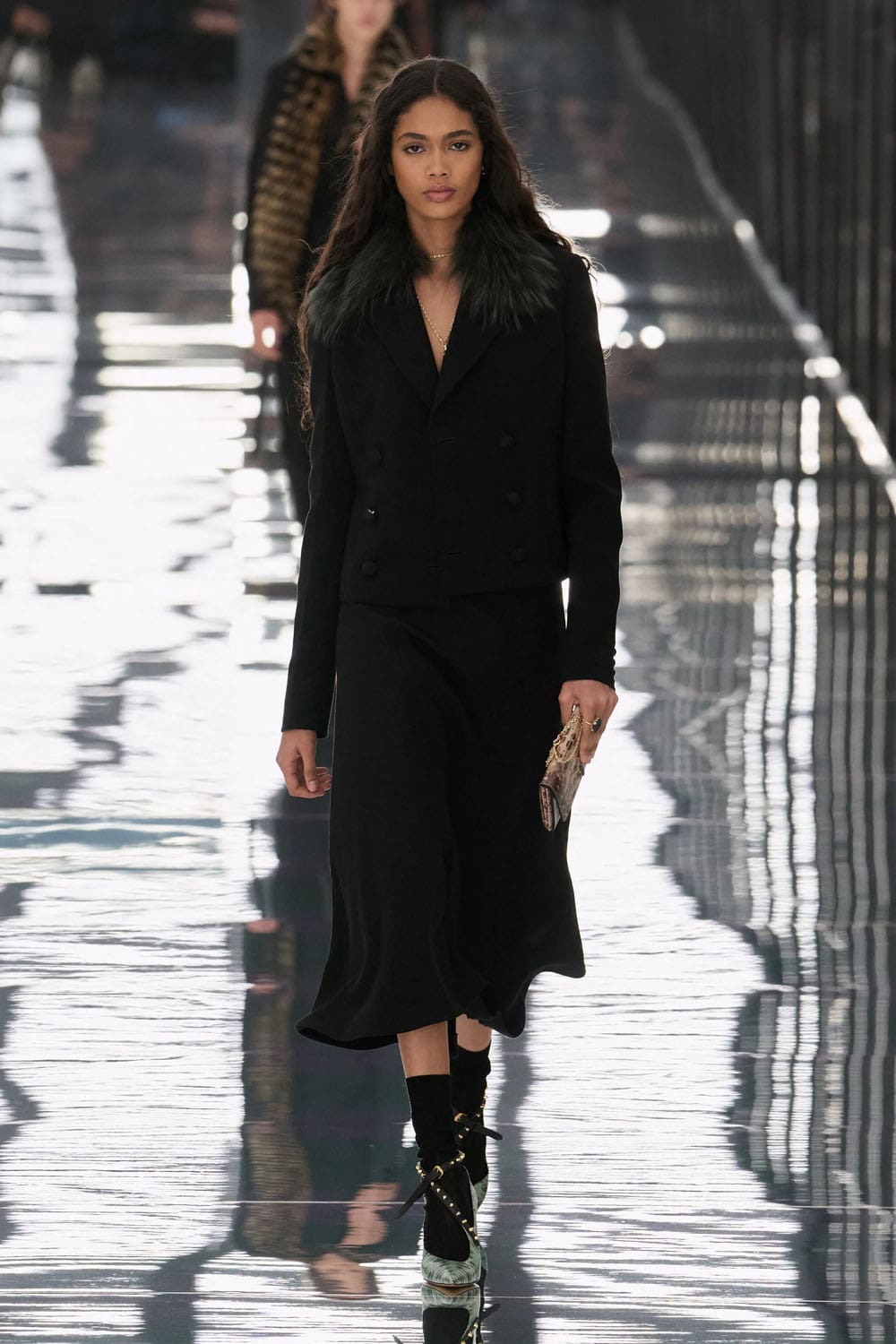
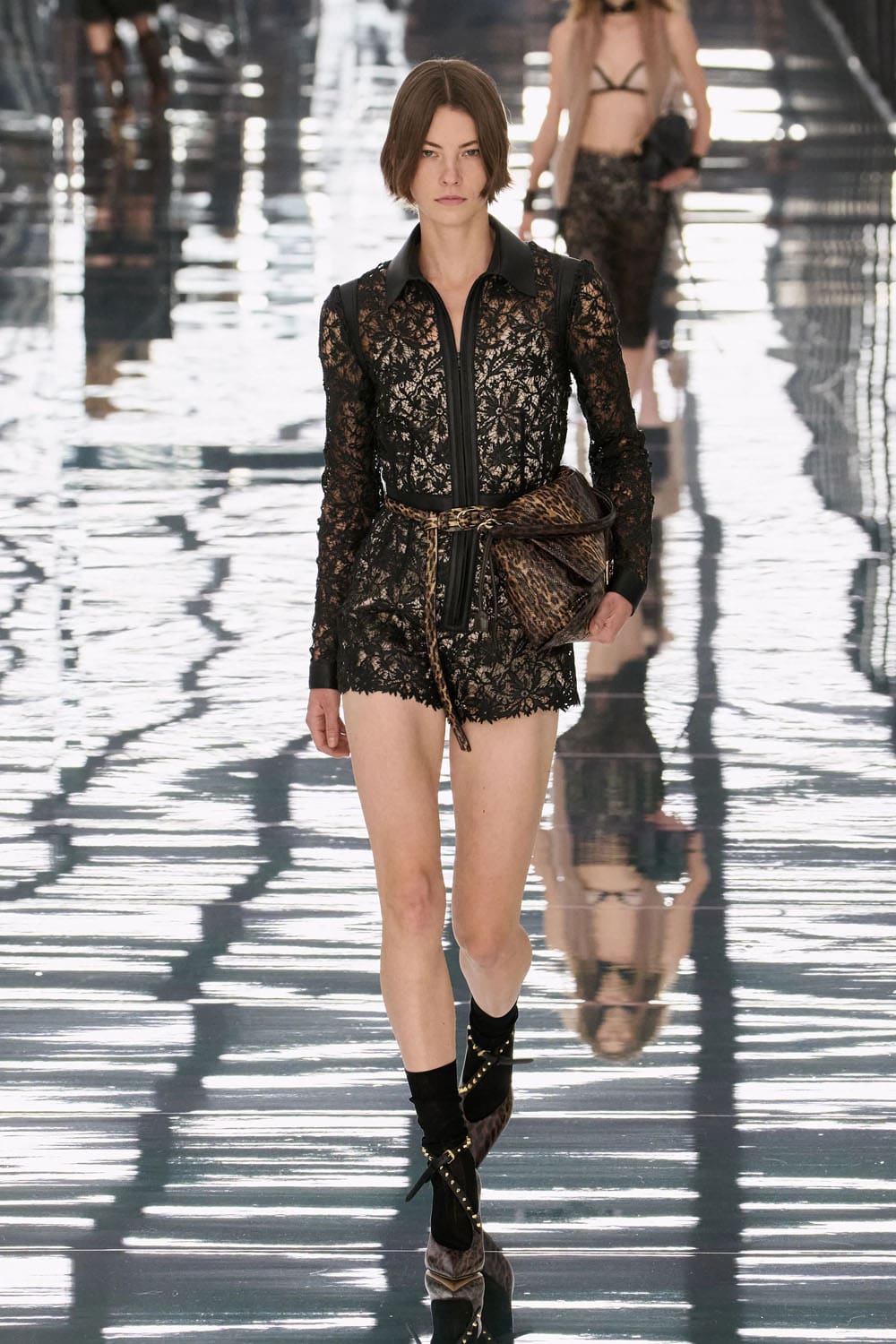
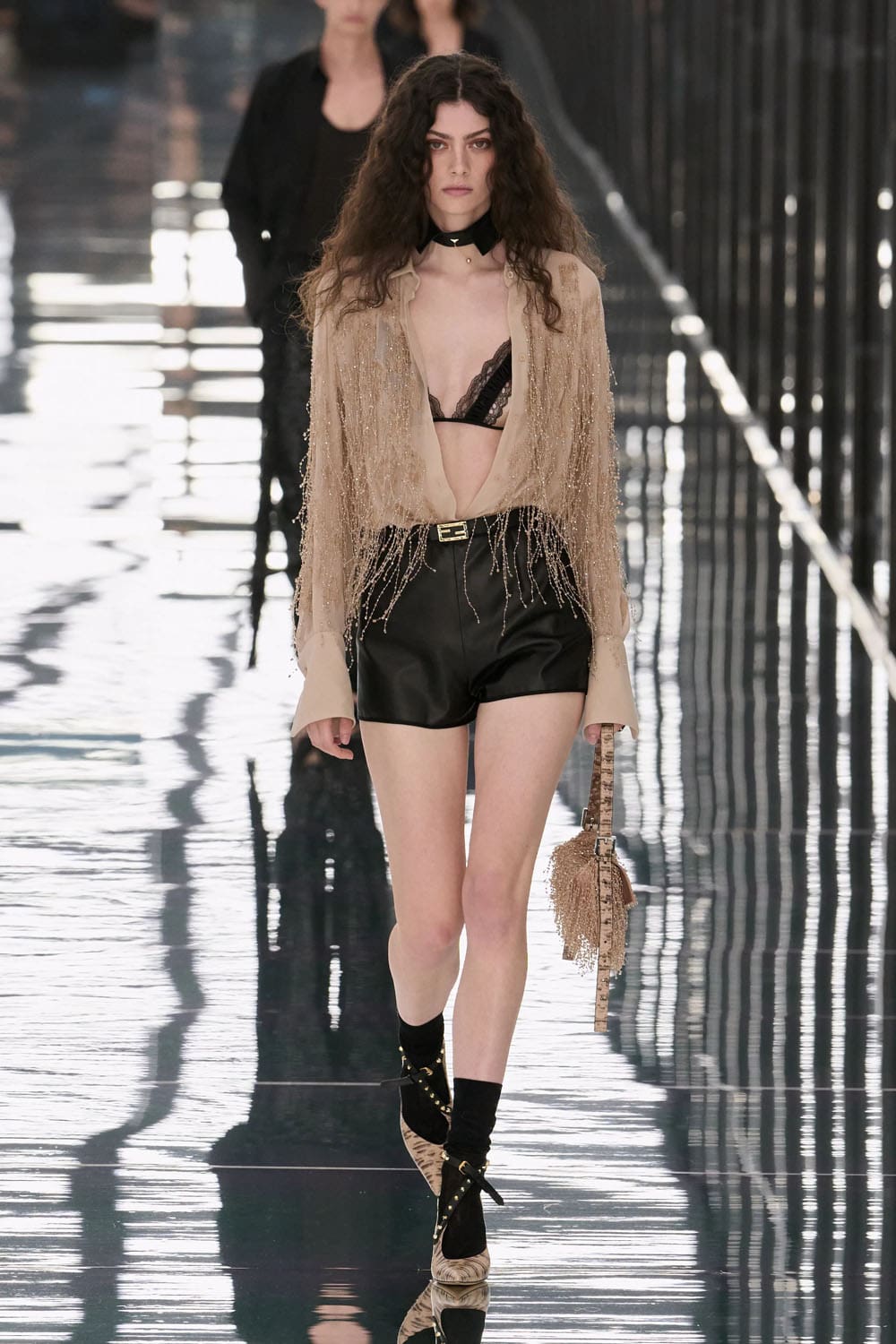
Nothing, however, bewildered the senses quite like the footwear. The models strode down the mirrored expanse balancing on spiky ankle-strap stilettos—often rendered in leopard print or slick patent—worn over ribbed black sports socks and knee-high fishnet hose. This curious styling tic, which has wandered between ironic streetwear and runway afterthought for over a decade, provided an incongruous clash. One had to ask: are we sprinting to catch a tram in the suburbs, or are we descending the staircase of the Studio 54 VIP lounge? The combination produced a deliberate aesthetic discord that stripped the silhouettes of whatever innate elegance they fought to claim.
Resizing the Baguette, Forgetting the Song
Somewhere in the visual fog, Chiuri promised a refreshed micro-edition of the house’s sacred Baguette, engineered with surgical precision to carry nothing beyond a smartphone. Given the optical gymnastics demanded by the mirrored labyrinth, you could easily have missed it among the flurry of clutches, boxy mini-bags, and oversized fur parcels. Perhaps that was the overarching strategy of the set: when the narrative foundation is built upon borrowed motifs, it helps to keep the audience slightly disoriented.
Fendi possesses one of the most astonishing artisanal workshops in luxury fashion, capable of transforming pelts and silks into sublime feats of modern craft. Yet when an intellectual framework involving mirrors, relational philosophy, and national cultural icons is invoked, the clothing must ultimately justify the rhetoric. Milan did not witness the electric liberation of Raffaella Carrà, nor an insightful critique of contemporary existence. Instead, we were treated to a runway that functioned as a literal mirror: reflecting what everyone else had already designed, packaged with highbrow notes, and tied with an inescapable pair of black athletic socks.
フェンディ 2027年春夏コレクションの全ルックを見る